13 Best Knowledge Base Software to Try in 2026


The way customers look for answers has shifted for good. Now, most people try to solve problems themselves before contacting support, and a growing number of these searches occur within AI assistants that draw from help content.
This makes a well-structured knowledge base one of the most valuable investments a support team can make.
After extensive research and testing, we selected the 13 best knowledge base software options available in 2026, including both free and premium choices.
Let’s get started!
In This Guide
What Is a Knowledge Base?

A knowledge base is a self-service library of articles, FAQs, guides, and documentation about a product or service. Customers search it to answer their own questions without contacting support, and modern knowledge bases also feed AI assistants and chatbots that generate answers directly from that content.
Back in the old days and before the Internet, manufacturers used to ship products with a giant manual. It’s like a book with hundreds of pages that includes instructions about how to use the product. Of course, no one bothers to read them anyway.
Today, we have online knowledge base systems. Unlike those old bulky manuals, a knowledge base web site is much more innovative. It provides users a place to find answers to questions and guides related to a product, all by themselves.
We further explored about what is knowledge base through our in-depth guide
Main Features of Effective Knowledge Base

We rigorously test and research every product that we recommend through HeroThemes. Our review process. We may also earn a commission if you make a purchase through our links.
It’s important to know what kind of features to include in your knowledge base to make it more effective.
Start by making sure your KB software supports these features:
- Search Function
- Simple Backend Dashboard
- Easily Manageable Categories
- File Attachments
- A User Feedback System
- Analytics & Reports
- AI-powered search and answers
- AI-assisted article drafting and updates
- A chatbot that can be trained on your articles to deflect repetitive tickets
Types of knowledge base
Knowledge bases can be divided into two types:
1. Internal knowledge base
A password-protected system that can only be accessed by employees or with login credentials.
This can include resources such as company policies, training guides, SOPs, necessary tools access, and news.
For example: A knowledge base that is created specifically for the HT and recruiting team that contains all the requirements for hiring and onboarding new employees.

2. External knowledge base
A public system that anyone can access. This can include help articles, FAQs, user manuals, product documentation, online community and forum.
For example: A knowledge base that is created to solve common customer issues and answer FAQs about their product.
Top Knowledge Base Software in 2026
Let’s dive in and find out the best knowledge base software for your needs.
1. Heroic Knowledge Base

A 13 year old WordPress knowledge base plugin with the most advanced features. Features that you can expect from advanced SaaS platforms can be achieved with this plugin.
From a user friendly dashboard to an AI chatbot, Heroic KB gives you complete control over your knowledge base.
Heroic KB has evolved considerably over the years and now powers tens of thousands of businesses, with self-service search, analytics, and article feedback built in.
Benefits of Using Heroic KB
- Affordable Pricing: Compared to other knowledge base software, WordPress is much cheaper to set up and use.
- Extensibility: You can easily add and extend features using WordPress plugins. Including third-party integrations like Zapier and HubSpot.
- Choose Your Own Design: With thousands of WordPress themes to choose from, you can change the knowledge base design however you like.
- Easier Management: Easily manage articles, media, and categories using the beginner-friendly WordPress admin dashboard.
- Full Control: When using WordPress, you’re in full control of your knowledge base. You don’t have to abide by the rules of a corporate company.
Downsides of Using Heroic KB
- Small learning curve and WordPress environment can be overwhelming for new users.
Pricing
Heroic KB offers premium plans only, starting at $67/year. There is no user limit on any plan, so a team of four or five support agents can save hundreds of dollars a year compared to per-seat SaaS alternatives.
Because it runs on WordPress, you can also pair it with the HelpJet AI agent to add conversational answers on top of your articles.
Try it with confidence with a 14-day money back guarantee.
2. Stonly
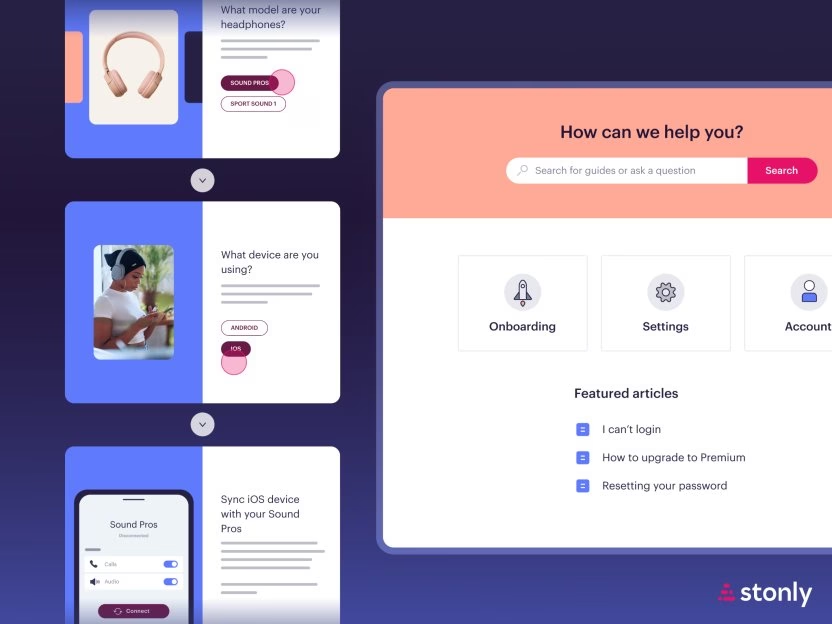
Stonly is an interactive knowledge base platform that’s designed to do more than just publish static help articles. Instead of presenting blocks of text, Stonly guides users step-by-step through interactive tutorials and supports workflows that adapt based on user input.
It’s especially useful for teams that want to reduce support ticket volume while also improving self-service effectiveness.
Benefits of Using Stonly
- Interactive Knowledge: Create step-by-step guides that make complex topics easy to follow and understand.
- Omnichannel Embeds: Use Stonly guides in apps, knowledge bases, CRMs, or widgets.
- AI-Powered Search: Deliver reliable and accurate answers to customer and agent questions with generative AI.
- Analytics and Insights: Track how users interact with your content and find opportunities to improve.
- Agent-Facing Help: Create internal guides to support your team with complex workflows.
- Flexible Use Cases: Perfect for troubleshooting, SOPs, onboarding, and internal process documentation.
Downsides of Using Stonly
- Learning Curve: The editor is powerful but can take some time to get used to.
- Cost: Pricing can be steep for small teams. Advanced features are locked behind higher-tier plans.
Pricing
Stonly offers a free Basic tier (limited monthly guide views and up to five published guides) and a Small Business plan around $249/month, with Enterprise pricing available on request.
Its AI Knowledge Agents can monitor your sources and suggest updates, which suits mid-market and enterprise support teams.
3. KnowledgeOwl
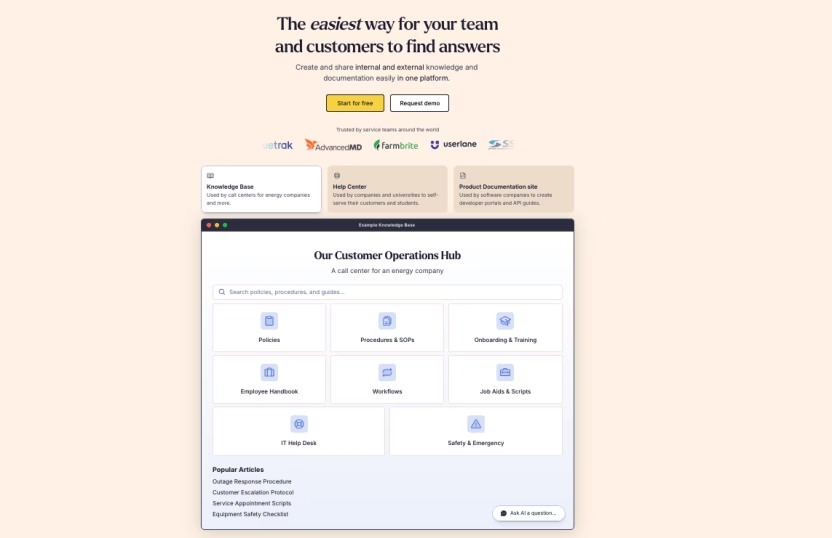
KnowledgeOwl is a cloud-based knowledge base platform built by a team that actually uses the product every day.
Unlike many tools that spread themselves thin, KnowledgeOwl focuses on one thing and does it well: helping teams create, manage, and share knowledge effectively.
It’s a strong choice for teams that want straightforward knowledge base solutions without the headache of managing hosting, and who value real human support during onboarding and beyond.
Benefits of using KnowledgeOwl:
- Pure SaaS, no infrastructure needed: No WordPress installation, no hosting to manage, no plugin updates. You sign up and start building, ideal for teams without dedicated technical resources.
- Migration and onboarding support included: Every plan comes with content migration help and onboarding calls until launch. A good option if you’re switching platforms and don’t want the transition to become a project in itself.
- Pay for authors, not readers: Pricing scales with the number of people creating content, not the number reading it. Unlimited readers are included on every plan, even if they require a login.
- Responsive, human support: Consistently one of KnowledgeOwl’s most praised features: real people, fast responses, and genuine knowledge base experience behind every answer.
- Custom branded theme implementation included: The team will set up your branded theme at no extra cost, helpful if you want a polished look without writing CSS yourself.
Downsides of using KnowledgeOwl:
- Higher starting price: At $100/month, it costs more upfront than plugin-based solutions. Teams already invested in WordPress may find better value staying in that ecosystem.
- Knowledge base only: KnowledgeOwl doesn’t include ticketing, live chat, or help desk tools. If you need those alongside your KB, you’ll need to connect them via native integrations, Zapier, or their open API.
Pricing
KnowledgeOwl pricing starts at $100/month for one author and one knowledge base. With additional authors at $25/month and extra knowledge bases at $50/month. Higher tiers add HIPAA compliance, SSO, and priority support.
Discounts are available for yearly commitments, and purpose-driven organizations receive a 25% discount.
A 30-day free trial is also available with no credit card required.
4. HelpJet
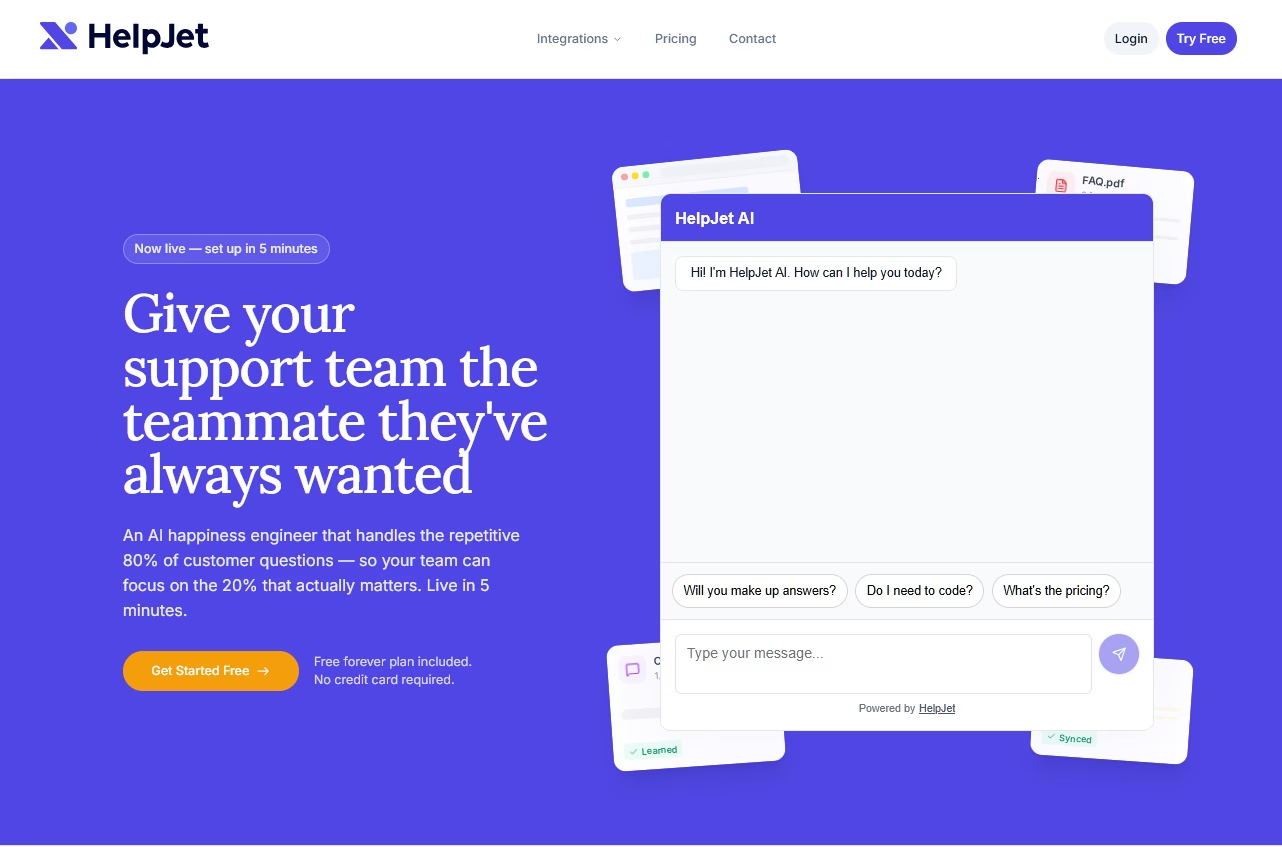
HelpJet AI chatbot that syncs with your knowledge base software or content. By doing so it can effectively answer customer questions. Solving them before they become tickets.
The value HelpJet delivers scales with how much documentation you’ve already written. As it’s a purely AI chatbot (no live chat functionality) that uses your data and inputs to better guide customers.
Benefits of Using HelpJet
- Fast deployment. About 5 minutes from signup to working chatbot.
- Natural-language answers from your content with context-aware follow-ups.
- Free plan that’s actually usable for a small-scale pilot.
- Flat pricing with no per-agent fees.
- Doesn’t force you to rebuild or migrate existing content.
Downsides of Using HelpJet
- Not full fledged knowledge base software.
Pricing
HelpJet is free to start with. The free plan covers 1 bot and 100 conversations per month. Paid plans start at $29/month, which offers 3 bots and 1000 conversations per month.
Treat HelpJet as a chat layer on top of a real knowledge base rather than as the knowledge base itself. Pair it with the Heroic Knowledge Base or another dedicated knowledge base (KB) tool to get the structural and SEO value of a proper KB, plus the conversational user experience (UX) that customers increasingly expect.
5. Tidio
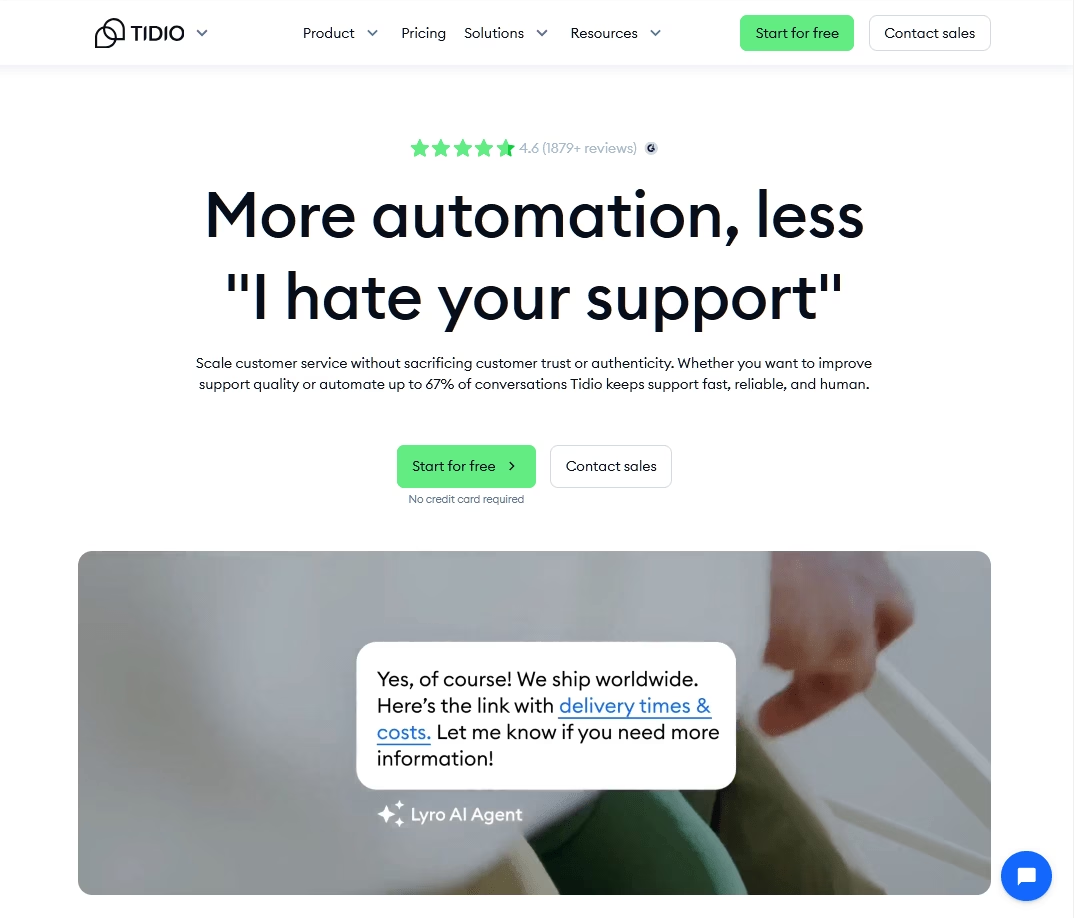
Tidio is an all-in-one customer service platform that combines a knowledge base with live chat and AI-powered help desk tools.
It is ideal for eCommerce businesses looking to centralize support and automate responses through a unified dashboard.
Its standout feature, Lyro, is an AI agent that uses your knowledge base articles to provide instant answers, reducing ticket volume.
Benefits of Using Tidio
- Unified Dashboard: Manage all support channels and your knowledge base in one interface.
- AI Automation: Train Lyro AI on your KB to resolve common queries automatically.
- eCommerce Native: Native integrations with Shopify, Wix, and WooCommerce.
- Easy Setup: A user-friendly editor for quick article creation without technical expertise.
- Proactive Support: Guide users to relevant help articles using proactive chatbots.
Downsides of Tidio
- Metered AI: High volumes of AI conversations can lead to additional monthly costs.
- Tiered Features: Full knowledge base functionality is reserved for the Growth plan and above.
Pricing
Tidio has a free plan for basic chat. Knowledge base features begin on the Starter plan ($24.17/month), with the Growth plan ($49.17/month) offering expanded support automation. A 7-day free trial is available.
6. Document360

Document360 is an extremely simple knowledge base solution, designed for doing nothing but creating well-organized knowledge base systems. It is trusted by many leading brands such as Microsoft and Harvard University as well.
The cloud-based app features a beautifully minimal and clean user interface for making both private and public knowledge bases. It also includes an easy-to-use markdown editor.
To set up your knowledge base using Document360 all you need to do is signup for an account. The platform works completely online and lets you access it even from mobile devices from anywhere in the world.
Benefits of Using Document360
- Ease Of Use: Document360 puts a complete focus on content and offers a very simple user interface to manage and organize your knowledge base.
- Markdown Editor: Document360 editor supports markdown for easier content writing and editing.
- Intelligent Search: The search system supports auto-suggestions when typing in the search box.
- Private Or Public: You can also create private knowledge bases to serve your team as well as public knowledge bases for customers.
- Analytics: Going beyond the user analytics to collect the feedback on the article, it is more granulated to the team, search and user analytics. Search analytics collects all search queries, also the failed searches.
Downsides of Using Document360
- Limited Features: Unlike WordPress and ZenDesk, you can’t use Document360 as a complete customer support system.
- Lack of Integrations: Document360 third-party integrations are limited to just a few apps like FreshDesk and Google Analytics.
Pricing
Document360 moved to a fully sales-led, quote-based pricing model and discontinued its free tier, so you now request a demo rather than seeing published rates.
7. HelpSite

HelpSite is simple knowledge base software that helps you publish a beautiful KB with your FAQs and articles, within minutes.
It can create publicly-accessible support sites, a private internal-only KB, or a mix of both. It offers a powerful and fast search box, is mobile friendly, and provides a contact form that automatically suggests users answers as they type.
Your KB can be fully customized and hosted on your own domain name. HelpSite is an affordable knowledge base SaaS and even includes a forever free plan. They offer helpful support via email.
Benefits of Using HelpSite
- Easy to use: HelpSite is probably the easiest way to get a knowledge base site online in minutes and has a very simple user interface. It has a very fast search box which makes it easy for your visitors to find what they need.
- Private or Public: HelpSite offers an extensive set of options for choosing between making your content public, partially private, or fully internal-only.
- Fully Customizable: The layout of your HelpSite KB can be fully customized (using HTML/CSS) to match your organization’s brand and the site’s URL can use your custom domain.
- Smart Contact Form: HelpSite provides a contact form that automatically suggests relevant articles as users type their message, saving time for both you and them.
Downsides of Using HelpSite
- No ticketing tools: HelpSite is a hosted knowledge base and nothing else. If you’re looking for an all-in-one solution with a ticketing system and live chat, HelpSite is not for you.
Explore: Step-by-step Guide to Create a Ticketing System - No built-in analytics: HelpSite doesn’t offer built-in analytics, so you’ll have to plug in an analytics provider like Google Analytics if you want to track your article view stats.
Pricing
HelpSite offers a forever free plan if you’re just getting started or paid plans starting at $15/month.
Its most popular plan is Gold at $50/month which allows full design customization, up to 5 knowledge base sites, 50 team members, 2500 articles, and options between public or private KB access.
8. LiveAgent

LiveAgent is a fully featured help desk and live chat software. It enables you to streamline all of your communication channels into one unified dashboard, which can be easily accessed by your whole customer support team.
The software is a great choice for businesses of all sizes and industry types.
It integrates with over 40 third party applications and has over 150 million end-users worldwide. LiveAgent is equipped with over 179 help desk features including a built-in call center, gamification features, reporting and analysis tools, automation, as well as knowledge base/customer portal management tools.
Benefits of using LiveAgent
- Fully Customizable Software: Almost everything in LiveAgent is fully customizable. Customize your dashboard theme and colors, alert sounds, app language, live chat buttons, pre-chat forms, customer portals, and knowledge bases.
- Advanced Tools: In addition to being a knowledge management solution, LiveAgent is a fully-featured help desk software with over 179 features.
- Competitive Pricing: LiveAgent offers three paid plans, as well as a forever free plan.
- Stellar Customer Support: LiveAgent’s customer support is available 24/7 with an average email response time of 30 minutes.
Downsides of using LiveAgent
- Advanced Software: Might require a bit of a learning curve for some users.
Pricing
LiveAgent offers a free plan plus paid tiers from $15 to $69 per agent/month (billed annually). Even the entry Small plan bundles ticketing, live chat, a knowledge base, and an AI Answer Assistant, which is strong value for support-led teams.
9. Helpjuice

Helpjuice is a popular SaaS platform that specializes in knowledge base software. They provide software that’s geared towards companies with big teams. It also features a very beginner-friendly knowledge management system.
One of the best features of Helpjuice is its customer support service. They even provide free customization to set up your knowledge base fast and easy. And promises a 5-minute response time to your support tickets.
Benefits of Using Helpjuice
- Beginner-Friendly: Helpjuice features a very simple user interface and a beginner-friendly editor. You can use it to create, format, and edit content without an effort.
- Google-Like Search: Helpjuice claims its search function to be as innovative as Google search.
- Multiple Designs: Unlike most other platforms, Helpjuice lets you choose from dozens of themes to customize your knowledge base design.
- Analytics: Helpjuice provides deep insights into your knowledge base statistics, including for searches.
Pricing
Helpjuice’s Knowledge Base plan now starts at $249/month for up to 30 users, with the AI-Knowledge Base tier (AI Writer, AI Search, and an AI chatbot) at $449/month and an Unlimited AI plan at $799/month.
That makes it one of the pricier options on this list for small business owners.
10. HubSpot Service Hub

HubSpot’s Service Hub brings all of your customer service data and channels together into one central place.
Customers of all sizes trust the product for its knowledge base, conversational tools, help desk, customer feedback surveys, reporting, and more.
With Service Hub’s Knowledge Base functionality, you can easily build a library of help articles so customers can help themselves.
Once you’re in the app, HubSpot is designed to make it easy to get started, regardless of your experience with creating a knowledge base. You can import articles with one click from other tools, create templates, and start building out answers to your customer’s questions.
Benefits of Using HubSpot
- Easy-to-use and customizable: Easily create knowledge base articles and templates. Customize the look of the knowledge base to match your brand, and organize everything using categories & tags.
- All-in-one platform: Service Hub includes all the tools a customer service team needs — from help desk to live chat and surveys. Plus, everything is built on top of HubSpot’s CRM, giving your business one unified view of customer interactions from Marketing to Sales to Service.
- Multi-language support: Create and manage a knowledge base to answer your customers’ in their preferred language.
- Analytics: See what terms customers are searching for, monitor performance of articles, and see video engagement — to analyze your efforts and see where you need to create new articles.
- Private or public: Restrict article access to make pages accessible by only certain people.
Downsides of Using HubSpot
- Expensive for smaller companies: Service Hub has a free tier, but the knowledge base is locked to Service Hub Professional (from $90 per seat/month billed annually, or $100 per seat/month on monthly billing) and Enterprise, plus a mandatory one-time $1,500 onboarding fee and a 5-seat minimum.
11. ZenDesk

When it comes to creating customer support platforms and support ticketing systems, ZenDesk is one of the leading experts available today. The platform also doubles as a knowledge base system as well.
The ability to set up feature-rich knowledge base systems is not the only use of ZenDesk. You can also manage customer support and integrate your knowledge base with support tickets as well.
Much like Helpjuice, you can easily get started with ZenDesk by signing up for an account and following its step-by-step instructions.
Benefits of Using ZenDesk
- Complete Suite: ZenDesk comes with a complete list of tools for creating an effective customer support system.
- Support Tickets: In addition to creating knowledge base systems, you can use ZenDesk to manage customer support tickets, chat, and more.
- Advanced Tools: ZenDesk also includes a CRM tool called Sunshine for managing your customers as well.
- Better Designs: ZenDesk features modern and beautiful knowledge base designs.
Downsides of Using ZenDesk
- Expensive: Compared to Helpjuice, ZenDesk is much cheaper. But it still asks for a greater price to provide customer support.
- Advanced System: It requires a bit of a learning curve to get started using the platform.
Pricing
Zendesk’s knowledge base, Guide, is included in its Suite plans.
Suite Team starts at $55 per agent per month, while Suite Professional costs $115. AI agents and Copilot are billed as add-ons.
Guide is powerful, but it can become costly once you add seats and AI resolutions.
12. ServiceNow

ServiceNow is a complete platform that allows companies to digitize their customer management and workflows. It includes solutions to cover IT, Employee, and Customer workflows.
You can use the ServiceNow platform to create a private knowledge base for your company team. As well as public knowledge bases to serve customers.
However, ServiceNow is much more than just a knowledge base software. It even includes an app store with integrations made specifically for creating advanced knowledge databases.
Benefits of Using ServiceNow
- Advanced Tools: In addition to knowledge bases, you can use ServiceNow to offer better customer support with automated workflows, chatbots, and more.
- Innovative Search: The platform also features a brilliant search function that matches terms with previous incidents to provide better results.
- Machine Learning: With machine learning, the platform will also offer similar articles to customers and employees to find solutions to problems more easily.
- Service Portal: With Service Portal integration, you can create a portal where users can access your knowledge base, customer support, support tickets, and more from one place.
Downsides of Using ServiceNow
- Too Advanced: With so many tools and app engines bundled together, the platform can be overwhelming to small startups and businesses.
- Expensive: With pricing well hidden from the public, the company is likely to charge different rates from different customers.
13. ProProfs Knowledge Base

ProProfs Knowledge Base is a powerful tool that’s noted for its unique features, smart settings, and robust integrations.
The tool is of immense help when it comes to creating an online knowledge base, documentation, manuals, help sites, FAQs, and more.
It assists you in all aspects of knowledge management right from content authoring and designing to customizing and finally publishing it.
The software is extremely easy to use – no HTML or coding skills required and plays well with powerful tools like Zendesk, Freshdesk, Wufoo, Salesforce desk, Google Analytics, and more.
Benefits of Using ProProfs
- Easy to Use – Thanks to its simple user interface, setting up a knowledge base is a breeze with this software.
- Feature-rich – The tool has almost all features you can think of. From content authoring and publishing to customization and collaboration, name anything you want, and ProProfs has got it covered.
- Plays well with other tools – ProProfs integrates beautifully with third-party tools like Zendesk, Freshdesk, Wufoo, Salesforce Desk, Google Analytics, and more.
- Simple pricing – ProProfs uses per-author pricing that starts around $49 per author/month (billed annually) alongside a limited free plan, and it now includes an AI assistant and AI search for content creation
Downsides of Using ProProfs
- Advanced Customization – Users might be required to have some knowledge of scripting (Javascript, HTML, CSS) to make use of the advanced features.
Best Third-Party Integrations for Knowledge Bases

With third-party app integrations, you can bring more unique features to your knowledge base to make it more useful to both you and your customers.
Here are just a few great third-party apps you should be able to integrate with your knowledge base. Keep in mind that not all knowledge base software will support these apps and services.
- Heroic Inbox: A WordPress plugin to create a self-hosted helpdesk system and manage email inboxes.
- Zapier: Zapier is like a hub of all the apps you can ever think of. It allows you to connect your website with more than 1500 popular services. With this integration, you’ll be able to connect all the other apps with ease. WordPress supports Zapier as well.
- Salesforce: With Salesforce integration you’ll be able to connect your knowledge base system with your customer support and marketing systems.
- AIOSEO: AIOSEO is another useful WordPress plugin that will help optimize your knowledge base articles to rank well on search engines.
Frequently Asked Questions
Why Create a Knowledge Base?
Knowledge base systems provide a convenient self-help service to users. More importantly, it helps save businesses lots of resources otherwise spent answering common user questions.
“51%1 of customers prefer support through an online knowledge base.”
Another benefit of making a knowledge base is discoverability. A knowledge base gives your business a huge boost in SEO to rank well on Google. You can rank for search terms like questions related to your product using your knowledge base articles as well.
Difference Between SaaS and WordPress Knowledge Systems
The SaaS knowledge base services and platforms that allow you to manage your database online through their own website fall into the category of web-based apps. The self-hosted category includes software such as WordPress that you set up and manage by yourself.
In addition to the management differences, another key difference between these two systems is pricing. Self-hosted WordPress-powered systems are much cheaper and more flexible than cloud-based apps and SaaS platforms.
How To Create a Knowledge Base With WordPress
Setting up a knowledge base website using WordPress is really easy.
- Find a host (we recommend Kinsta).
- Install WordPress. You can also get help from your hosting provider.
- Install the Heroic KB plugin and follow the setup wizard.
- You are done!
We also have an in-depth guide to build a knowledge base with WordPress, check that out.
Which Knowledge Base Software Is Best?
If you’re just starting out or planning to switch knowledge base software, we’d recommend using WordPress to build your knowledge base.
With the flexibility WordPress provides, you’ll be able to easily extend your knowledge base further as your business grows. Also, you can save a huge chunk of your budget as well.
Software like Heroic KB will provide you with all the necessary functionality at a moderate cost.
Other than this, all the mentioned knowledge base software in this list will do the job just fine.
Let us know your thoughts below and keep exploring our blog to learn more about knowledge bases and customer service.
Further Reading
Knowledge Base Management: Best Practices & Strategies
Key Knowledge Base Benefits for Support, Marketing, and Sales Teams
13 Best WordPress Knowledge Base Plugins
What Is IT Knowledge Base? And How to Create One
12 Best Wiki Software For 2026
11 Best Remote Support Software for 2026
Top 8 Knowledge Base Chatbots (With Free Options)
References
- Customer support data from Social Media Today ↩︎





Leave A Comment?
You must be logged in to post a comment.