Top 10 Countries for Customer Service and BPO Outsourcing in 2026


Choosing among the top customer service and BPO outsourcing countries has never been harder, and that's part of the problem.
The Philippines, India, Colombia, Poland, Mexico — each of these major BPO countries makes a compelling case. Each one also comes with trade-offs that most comparison guides quietly skip over
In this guide, we will list the 10 best countries for customer service and BPO outsourcing. With honest assessments covering cost, English proficiency, technical depth, time zone fit, and which type of company each destination actually suits.
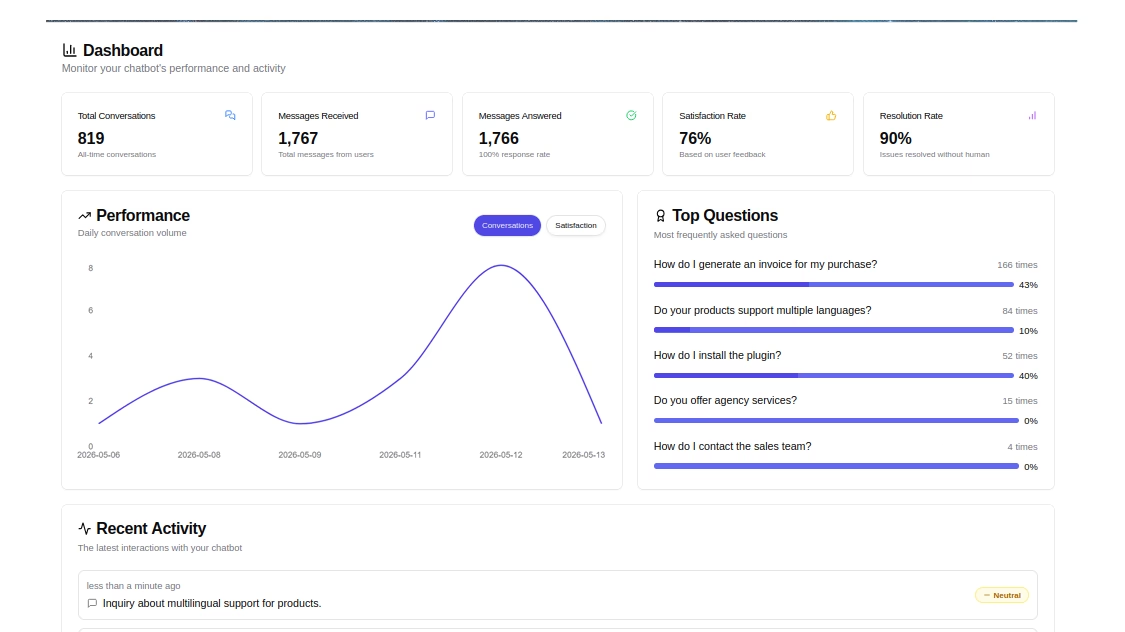
HelpJet – FREE AI Chatbot
Resolve common questions instantly, so your outsourced team can focus on higher-value support.
In This Guide
- The Global BPO Outsourcing Market in 2026
- What Makes a Country Ideal for BPO and Support Outsourcing?
- The 10 Best Countries for SaaS Customer Service Outsourcing
- 1. Philippines: The BPO Capital of the World
- 2. India: Technical Depth at Scale
- 3. Colombia: The Nearshore Breakout Star
- 4. Mexico: Closest Proximity, Deepest LATAM Pool
- 5. Poland: Premium EU Nearshore
- 6. South Africa: Western-Aligned English at Offshore Prices
- 7. Romania: Fast-Rising CEE Value
- 8. Egypt: Multilingual North African Hub
- 9. Kenya: The Emerging East African Frontier
- 10. Brazil: LATAM’s Largest Talent Pool
- 1. Philippines: The BPO Capital of the World
- Rising Hubs Worth Watching
The Global BPO Outsourcing Market in 2026
The BPO industry is massive and growing. Grand View Research valued the global market at $358.6 billion in 2026 and projected it to nearly double by 2033, with North America accounting for the largest share.
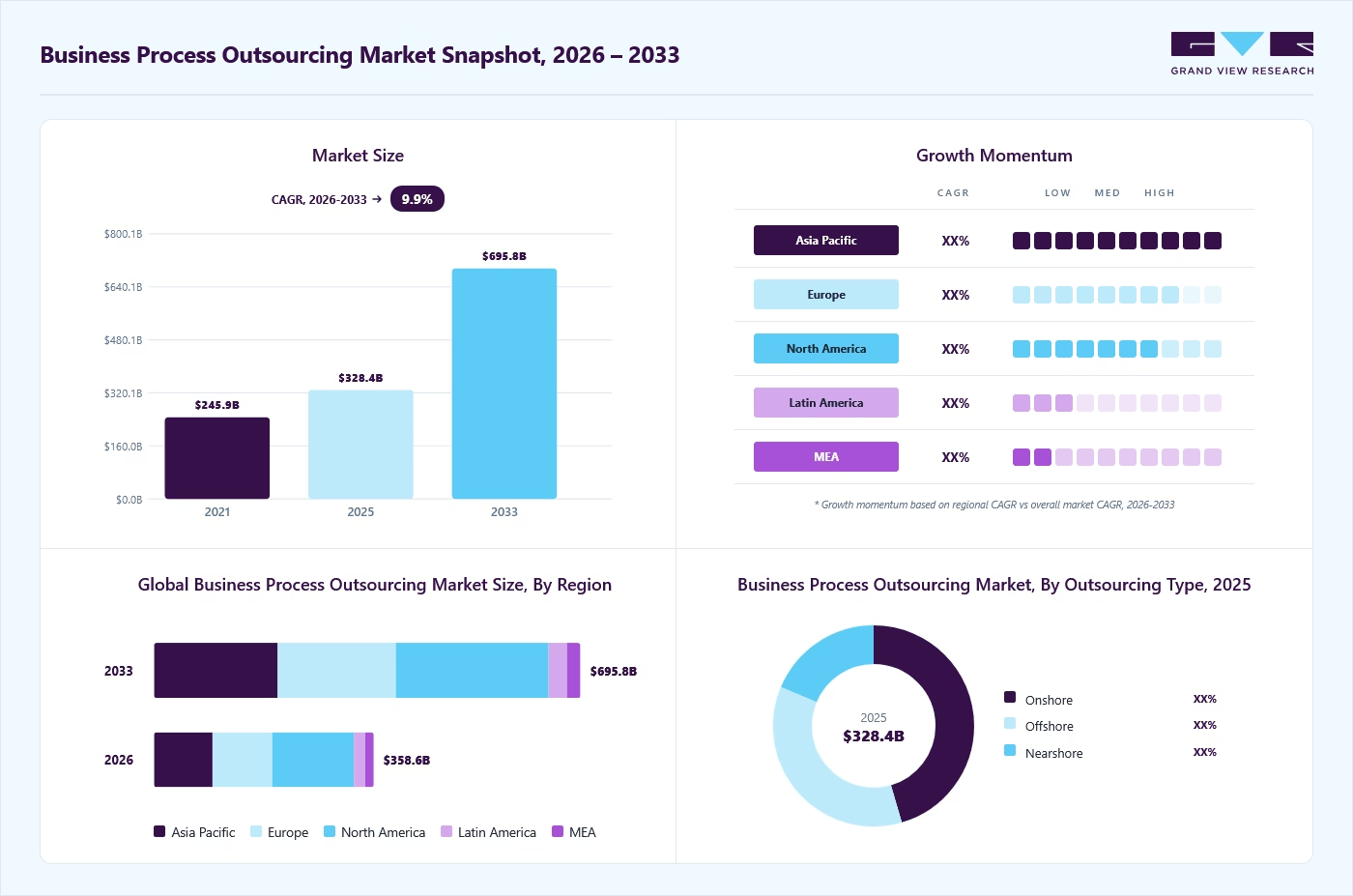
Understanding which country is the leader today in the global BPO market and which outsourcing countries are gaining ground starts with these numbers
Three shifts are reshaping the top outsourcing countries in 2026:
- US companies are giving nearshore markets a closer look
- AI is taking more repetitive Tier-1 work,
- SaaS companies are asking outsourcing partners to understand products instead of simply following scripts.
Understanding these shifts will shape every decision in this guide.
The Nearshoring Acceleration
For years, the basic outsourcing map was easy to explain. US companies sent large volumes of support work to India or the Philippines because the talent was available and the rates were attractive.
That still works.
Often called the BPO capital of the world, the Philippines remains one of the easiest outsourcing countries to recommend for large-scale English customer support.
Colombia and Mexico now give US companies something offshore teams cannot: customers and agents can be online at roughly the same time, without asking the provider to build a night shift around the US workday.
Nearshore pricing usually sits between offshore and onshore rates ($12-23/hour), which makes the trade-off easier to justify when a support team needs frequent contact with product, sales, or engineering.
You are paying more than you would in the lowest-cost offshore markets, but you may save hours of handoffs, scheduling friction, and delayed escalations.
The Philippines and India still offer the scale and talent depth that smaller markets cannot match.
The point is that SaaS companies no longer have to treat geography as a simple choice between cheap offshore labor and expensive local hiring.
AI’s Real Impact (Not the Hype)
AI is taking routine support work away from human agents, especially Tier-1 volume:
- Password resets
- Order questions
- Basic product FAQs
- Refunds
- Other predictable requests
The kind of work automation can handle well when the underlying knowledge is accurate.
Which in the end reduces tickets. Leaving tougher work to human agents:
- Troubleshooting
- Escalations
- Account-specific problems
- Edge cases
- Conversations where judgment matters
For SaaS companies, this shift is a net positive. The work being outsourced is getting more interesting and more valuable, which means the quality floor is rising.
Countries with deeper technical talent pools (India, Poland, Romania) benefit from this shift, while countries that built their BPO industries on script-following Tier-1 volume face more pressure to upskill.
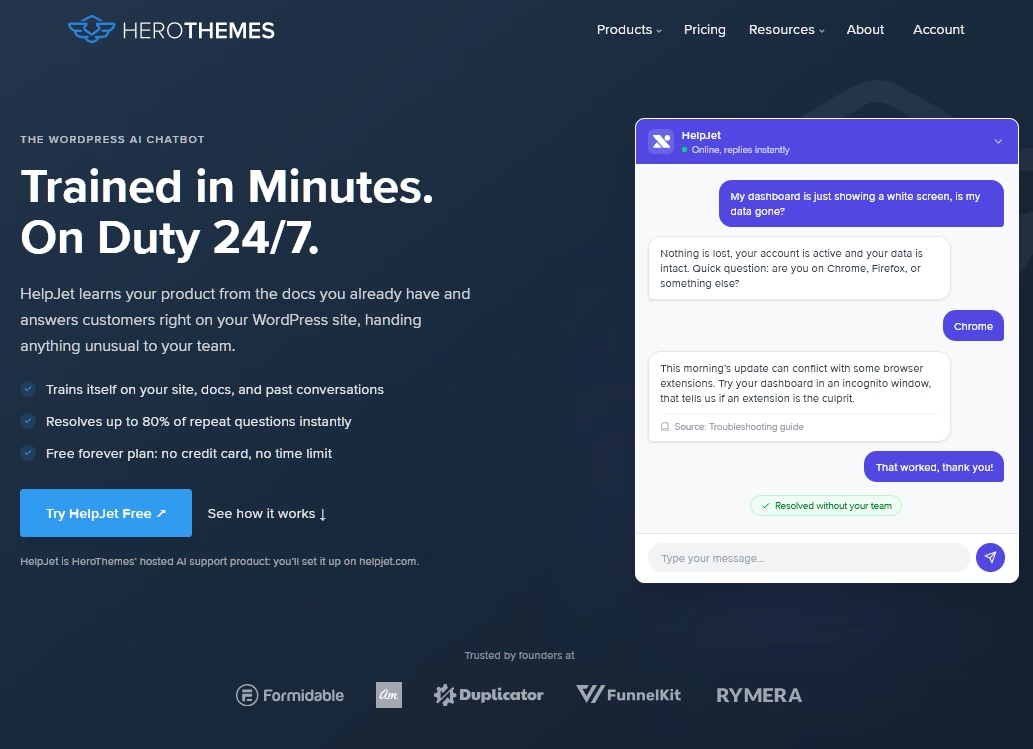
Pro tip: Build your knowledge base and pair it with AI chatbot software like HelpJet before you scale either side of this model. This will help you determine which tasks to outsource and which you can automate with AI.
Software Support Is Fundamentally Different
A customer service operation for a retailer can succeed with a fairly narrow playbook: Where is the order? Can I return it? When will I get my refund?
SaaS support is different.
A customer may be asking why an integration failed, why a workflow is not triggering, or why a feature behaves differently after a configuration change.
The agent has to understand the product well enough to troubleshoot the problem, explain it clearly, and know when to involve engineering.
That makes support part of the customer relationship, not just an expense line.
Agents who understand the product, tools that surface customer context (subscription tier, usage data, past interactions), and a quality standard that goes well beyond “ticket closed.” This is why the major BPO countries are investing heavily in technical training.
If you're still building your internal support processes, our detailed guide on improving customer service covers the strategies that matter most before you hand anything to an external team.
What Makes a Country Ideal for BPO and Support Outsourcing?

We rigorously test and research every product that we recommend through HeroThemes. Our review process. We may also earn a commission if you make a purchase through our links.
Before jumping into specific outsourcing countries, you need to understand what separates a good BPO destination from a cheap one.
Here is what I would evaluate first before choosing a customer service outsourcing destination:
- English proficiency and accent neutrality: For written support, clarity often matters more than accent, but voice support raises the bar.
- Labor cost: The core reason outsourcing exists. Offshore agents typically run 40-70% cheaper than US in-house equivalents, but “cheap” without quality means you're paying twice, once for the bad support, and again to fix the damage.
- Timezone coverage: Offshore Asia works for follow-the-sun and overnight coverage. Nearshore Latin America teams make real-time collaboration much easier for US companies.
- Technical talent availability: Does the country produce graduates with IT and computer science backgrounds? For SaaS, this is non-negotiable.
- SaaS tooling experience: Look for hands-on experience with a help desk platform such as Heroic Inbox, make sure the provider is comfortable with that workflow too.
- Cultural alignment: Agents must be able to read tone, explain problems without sounding defensive, and adapt to the expectations of your customers.
- Government support for BPO: Tax holidays, special economic zones, and infrastructure investment signal long-term commitment to the industry.
- Infrastructure reliability: Internet uptime, power redundancy, and modern office space. A $6/hour rate is meaningless if agents drop calls twice a day.
- Data privacy and compliance: Review the rules that apply to your customers and product before you shortlist a market. SaaS companies may need to consider GDPR, SOC 2 requirements, ISO 27001 controls, HIPAA, PCI DSS, or local privacy laws.
- Political stability: Wars, coups, and sustained unrest create business continuity risks that cannot be fully mitigated by any contract clause.
The 10 Best Countries for SaaS Customer Service Outsourcing
After weeks of research, there is no single answer to which country is the leader today in the global BPO market.
The Philippines is excellent for customer-facing English support at scale. India is stronger when technical depth matters. Poland is a better fit for a European SaaS company that needs multilingual, GDPR-aware support.
Think of the list as a set of tools.
The best choice depends on what you need the team to do.
Note: The pricing information provided here is collected and calculated based on job pricing data from third-party providers like Indeed, and It may vary slightly. It is best used as a reference.
1. Philippines: The BPO Capital of the World
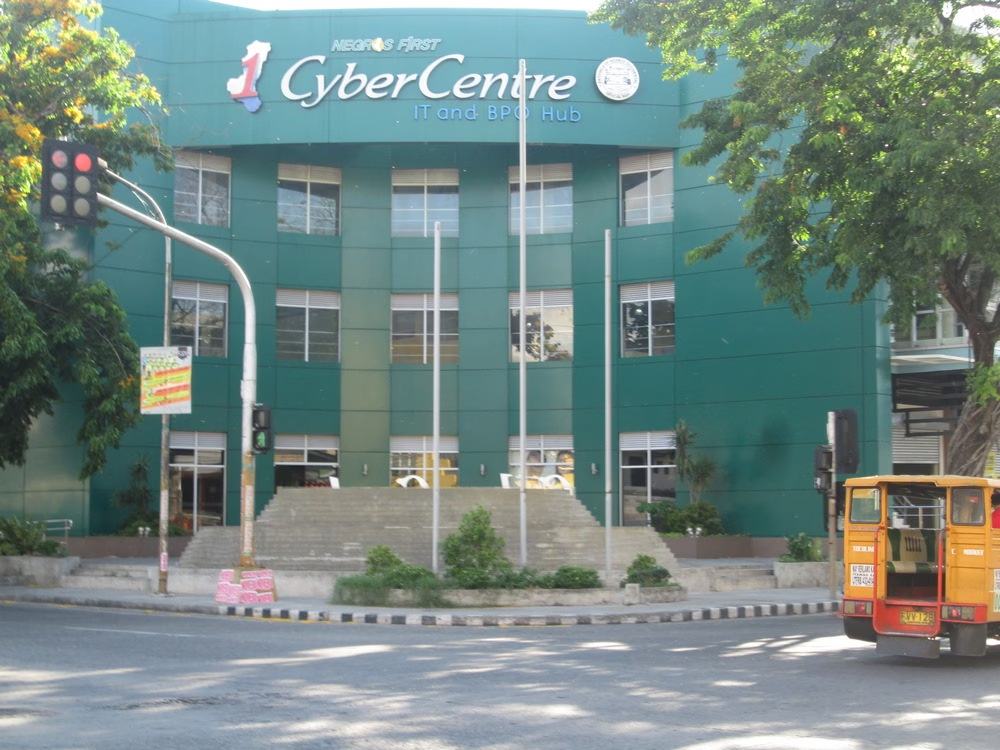
The Philippines remains one of the easiest places to recommend for large-scale English customer support. The IT-BPM sector employs 1.9 million workers and generates over $40 billion in annual export revenue, accounting for a significant chunk of the national economy.
The market has been built around BPO for years, so you get a deep provider ecosystem, an established training infrastructure, and a large pool of people who are comfortable working with international customers.
What makes outsourcing customer support or BPO from the Philippines work well?
- English proficiency: EF EPI 2025 score of 569 (“high proficiency”), ranking 28th globally and 2nd in Asia behind Malaysia. Accents are generally neutral, and cultural alignment with US customers is strong.
- Massive talent pool: 1.9 million BPO workers means you can scale from five agents to 50 without switching providers or locations.
- Government support: PEZA income tax holidays (four to six years), followed by a 5% special corporate income tax on gross income. The CREATE Act lowered corporate tax from 30% to 25%. Full work-from-home allowed without losing incentives.
- Cost: Local BPO agents earn roughly ₱21,000-32,000/month. Offshore billable rates commonly fall between $6-14/hour for customer support ($8-14 fully loaded via large BPOs).
- Provider depth: Large providers such as Concentrix, TaskUs, and Teleperformance operate there, alongside SaaS-focused firms such as SupportNinja, Boldr, and Peak Support.
- 24/7 coverage and follow-the-sun operations.
What to Watch For
- Attrition: Voluntary attrition in Philippine voice CX historically runs 30-60%+. That means your carefully trained agents may leave before they hit full productivity.
- Infrastructure outside metro Manila is weaker. Internet and power reliability can vary by location, so ask how the provider handles outages and remote-work continuity.
- Most AI-exposed market. The Philippines built much of its BPO industry on Tier-1 voice, which is exactly the work AI is automating fastest.

2. India: Technical Depth at Scale
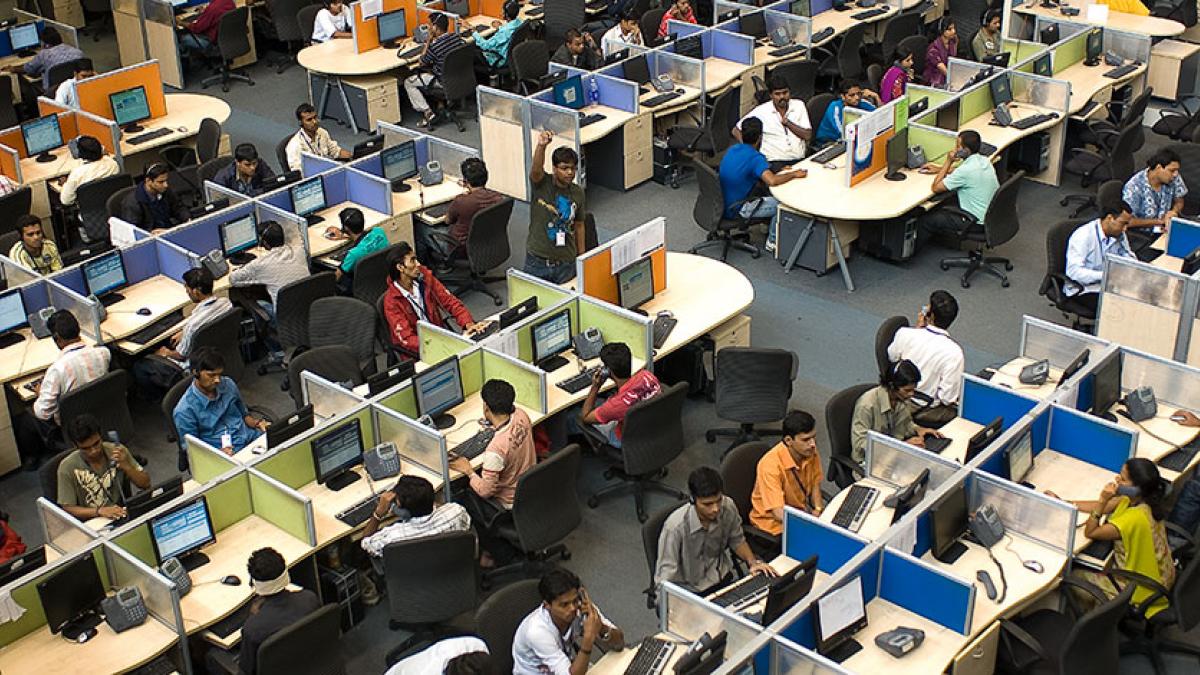
Among the top software support outsourcing countries, India is difficult to beat when the support work looks more like troubleshooting than call-center work.
India's IT services industry is the largest in the world by headcount, and the sheer volume of engineering graduates means finding agents with computer science or software backgrounds isn't unusual here.
What makes India stand out:
- Technical literacy runs deep. India produces over 1.5 million engineering graduates annually. For software Tier-2/3 support, this means agents who understand software architecture, APIs, and database concepts.
- The cost advantage is real. Rates range from $6-16/hour, with most clustering around $7-14 fully loaded. That's roughly a seventh of what you'd pay for an equivalent US-based agent.
- Compliance is maturing. The Digital Personal Data Protection (DPDP) Act of 2025 adds compliance overhead but professionalizes the market. Many Indian providers already hold SOC 2 and ISO 27001 certifications.
- Provider infrastructure: Infosys BPM, WNS, Tech Mahindra, and Genpact all offer large-scale operations with enterprise-grade security.
What to Watch For
- Voice support remains a weaker spot. English communication can be excellent, but some US-facing voice programs still encounter accent and cultural-fit concerns. Written support is less sensitive to this.
- Attrition in voice CX runs roughly 30-40%, comparable to or slightly higher than the Philippines in some comparisons.
- Quality varies enormously between providers.
3. Colombia: The Nearshore Breakout Star
If you're a US-based company tired of the timezone math that comes with offshore outsourcing, Colombia deserves your attention as one of the fastest-growing outsourcing countries in Latin America.
Bogotá sits in the Eastern time zone (UTC-5), which makes it possible for a US-based SaaS company to work with an outsourced support team during the same broad business hours.
Why Colombia stands out:
- US-hours coverage without building a permanent overnight operation.
- Bilingual talent: English and Spanish capability can cover North American and Latin American customers from the same team.
- Cultural affinity: Strong US cultural connection, high empathy, and a service-oriented workforce culture.
- Growing BPO and technology market: Provider choice is improving as demand for nearshore support grows.
- Reasonable cost: You pay more than in low-cost offshore markets, but usually much less than building the same team in the US.
What to Watch For
- English proficiency is improving but still uneven.
- Smaller talent pool than the Philippines or India.
- Infrastructure in secondary cities lags behind Bogotá and Medellín.
Explore:
Best Customer Service Outsourcing Companies From USA
Top 14 Customer Service Outsourcing Companies in Canada
4. Mexico: Closest Proximity, Deepest LATAM Pool
Mexico is often the first nearshore market US companies consider, and for good reason. It's the closest option geographically, travel is straightforward, and the bilingual talent pool is the deepest in Latin America.
For a company, this physical proximity can be helpful as the relationship deepens. On-site workshops, leadership visits, training sessions, and product meetings are easier to arrange than those with a team on the other side of the world.
Key advantages:
- Same-day flights from most US cities. Real-time collaboration with your in-house team is effortless.
- Large bilingual workforce: Mexico's bilingual population is significantly larger than Colombia's, making it easier to scale English/Spanish support operations.
- Timezone overlap: Mexico City (UTC-6) aligns with US Central time. Border cities like Tijuana align with the Pacific.
- Competitive nearshore pricing: A dedicated 20-agent bilingual team runs approximately $47,000-77,000/month (roughly 40-55% below domestic equivalent.
What to Watch For:
- English varies by region.
- Security concerns in certain areas can complicate in-person visits and talent recruitment.
- Competition for bilingual talent is fierce, especially from US nearshore demand, pushing wages up.
5. Poland: Premium EU Nearshore
Poland represents something different from the previous four countries: not a cost play, but a quality play.
Home to over 1,900 service centers that employ more than 450,000 people, Poland is the most mature outsourcing hub in Central and Eastern Europe.
For companies serving Europe, Poland offers the combination of EU regulatory coverage, strong language skills, and a deep technology market that makes it feel more like an extension of an internal team than a commodity call center.
What Poland brings:
- Exceptional English proficiency: EF EPI 2025 score of 600 (“very high proficiency”). Polish agents sound professional, articulate, and natural in written and spoken English.
- EU compliance built in: GDPR and EU data rules are built into the operating environment.
- Multilingual capacity: English can be combined with German, French, and other European languages.
- Technical talent: Poland has a mature technology sector, so finding agents who understand software is easier than in many traditional BPO markets.
What to Watch For:
- Poland is no longer cheap. European nearshore rates run $12-18/hour, and German-language support commands a 20-30% premium. Senior technical talent can cost nearly as much as Western European hires.
- Timezone works for Europe but not for the US.
Explore:
Customer Service Outsourcing Companies in the UK (2026)
Top 11 Call Center and BPO Outsourcing Companies in Europe
6. South Africa: Western-Aligned English at Offshore Prices
South Africa may not rank among the most talked-about BPO countries, but it deserves a place on any serious English-support shortlist.
The BPO sector has grown over 20% annually in recent years, and companies like Amazon now run captive operations there.
What makes South Africa attractive for SaaS companies:
- Outstanding English: EF EPI 2025 score of 602 (“very high proficiency”), ranking 13th globally. Accents are typically neutral and Western-aligned, which reduces the friction that sometimes accompanies offshore voice support.
- Cultural alignment with both the US and UK. South African agents tend to communicate with warmth and directness that resonates with English-speaking customers.
- European timezone coverage: UTC+2 works neatly for European business hours and overlaps with US East Coast mornings.
- Lower cost than US hiring: Agent rates run approximately $10-12/hour versus $23-28/hour in the US.
- Government incentives: BPESA (the industry body) actively promotes BPO investment, and South Africa is the only African G20 member, signaling relative economic stability.
What to Watch For:
- Power reliability is a genuine concern
- Crime and safety in some cities can affect talent retention and office operations.
- Smaller talent pool than Asian hubs.
7. Romania: Fast-Rising CEE Value
Romania is a strong example of a market that does not need to be the biggest to be useful. It combines EU membership, good English, a strong technology sector, and costs that can still compare favorably with Western Europe.
That mix makes Romania one of the top software support outsourcing countries for European companies that need technical depth but cannot justify Western European labor costs.
Key advantages:
- English proficiency: EF EPI 2025 score of 605, ranking 11th globally. That puts Romania ahead of many countries with far more established BPO industries.
- Full EU membership and GDPR compliance
- Technical talent: Romania has a long-standing technology and engineering sector.
- Competitive cost
What to Watch For:
- Outsourcing provider depth is thinner compared to Poland.
- Salaries are rising steadily as demand for Romanian tech talent grows.
8. Egypt: Multilingual North African Hub
Among lesser-known outsourcing countries, Egypt offers genuine multilingual capability at rock-bottom prices. With roughly 100,000 call-center workers and a strategic location bridging Europe, Asia, and Africa, Egypt serves a unique niche.
What Egypt does well:
- Multilingual pool: English, Arabic, French, German, and Italian speakers in a single market. For software companies serving EMEA, this eliminates the need to source agents from three different countries.
- Cost floor: English-speaking agents run roughly $1.50-3.50/hour, among the lowest rates globally. Even with management overhead, fully loaded costs remain well below other outsourcing countries in this list.
- Timezone: UTC+2 provides a natural fit for European support hours.
What to Watch For:
- SaaS-specific talent is thin
- Political and economic risk
- Infrastructure quality varies between Cairo's modern business districts and other areas.
9. Kenya: The Emerging East African Frontier
Kenya is the long-term bet on this list.
The BPO industry is smaller than established hubs (40+ call centers, roughly 50,000 workers concentrated in Nairobi), but the trajectory is promising.
Why Kenya is worth watching:
- Strong English proficiency: EF EPI 2025 score of 593 (“high proficiency”), supported by an education system conducted largely in English.
- Young, educated workforce: Kenya's median age is under 20, and the country's tech ecosystem (anchored by Nairobi's “Silicon Savannah”) is one of Africa's most dynamic.
- Government investment in digital infrastructure is accelerating, with fiber-optic expansion and tech-hub incentives.
- Impact sourcing: Some providers combine customer service with social-impact employment models.
What to Watch For:
- Provider depth is still developing: Large, mature operations are harder to find.
- Infrastructure gaps persist
- The market is unproven at SaaS-level complexity
10. Brazil: LATAM’s Largest Talent Pool
Brazil offers the largest tech workforce in Latin America (630,000+ developers) and a market that's increasingly positioning itself for nearshore support operations.
Key strengths:
- Deep technology talent: Brazil gives LATAM companies access to a large technology workforce.
- Portuguese-language dominance: If your product serves Brazilian or Portuguese-speaking markets, there's no real alternative.
- LGPD: Brazil’s privacy law gives global SaaS teams a familiar framework for data protection in the region.
- US East Coast overlap: UTC-3 provides useful overlap with North American business hours.
What to Watch For:
- Portuguese is the primary language, not Spanish. If you need Spanish support, Colombia or Mexico is usually a better fit.
- English proficiency is growing but still uneven.
- Complex labor laws
Rising Hubs Worth Watching
Beyond the top 10 outsourcing countries, several rising BPO destinations deserve mention for specific use cases:
- Ukraine: Despite the war, Ukraine's tech sector proved remarkably resilient, maintaining a workforce of 300,000+ IT professionals. The Diia City tax regime makes it attractive for tech-oriented support, and SupportYourApp originated in Kyiv. Business-continuity risk is the obvious and significant caveat; many providers have relocated staff to Poland and Romania.
- Bulgaria: A flat 10% corporate tax rate, strong English (EF EPI 594), full EU membership, and multilingual capability (English, German, French) make Bulgaria an increasingly popular European nearshore option at $12-18/hour.
- Malaysia: EF EPI 581 (highest in Asia), plus Mandarin and Malay fluency. Ideal for SaaS companies serving APAC markets with multilingual requirements.
- Argentina: The highest English proficiency in Latin America (EF EPI 575), highly educated creative talent, and UTC-3 timezone. Currency and macroeconomic instability remain the major caveat.
- Vietnam: The fastest-growing BPO market in Southeast Asia, with rates 30-50% cheaper than the Philippines for some work. Strong for Japanese, Korean, and Mandarin support alongside English, though English proficiency for premium voice is lower.
Final Thoughts
Choosing among the top countries for outsourcing is not one decision. Rather, it is a series of choices regarding geography, staffing, management, tools, and quality.
The market is changing around these choices. AI is removing some routine Tier-1 work, nearshore teams are becoming more attractive to US companies, and customers expect agents to understand the product well enough to solve real problems.
If you go through this guide properly, I’m sure you will be able to shortlist one or two countries in which to look for your customer service or BPO partner.
And do not forget the systems behind the people:
- A strong knowledge base gives internal and external agents one source of truth.
- A shared inbox keeps ownership visible and makes the work easier to manage.
- AI chatbot handles frequent questions for pennies.
See you in the next guide!
Further Reading
Complete Beginner's Guide to Customer Service Outsourcing
Top eCommerce Customer Service Outsourcing Companies in 2026
Best Examples of Companies Using AI for Customer Service
Customer Service in Dropshipping: Best Practices, Tips, & Tools
What is B2B customer service? Plus, Types & Best Practices





Leave A Comment?
You must be logged in to post a comment.