7 Best Customer Service Automation Software in 2026 (Tested)

Is your inbox slowly turning into a full-time job? Are your agents copy-pasting the same three answers 50 times a day while your response times creep past 24 hours?
That's the time when you should start looking at customer service automation software, and it's also the point where you get burned buying the wrong one.
Let's take a look at the best customer service automation software available in the market today that can help you automate repetitive customer service and support tasks, so you can focus on solving issues that require human effort.
In This Guide
What Is Customer Service Automation?
Customer service automation uses software, workflows, AI, and self-service tools to handle routine support work that would otherwise require an agent. These systems can automate customer interactions, route requests, surface answers, and trigger follow-up actions across the support process.
Common customer support automation workflows include:
- An AI chatbot answering repeated questions, 24/7.
- A rule that routes refund tickets straight to billing.
- A knowledge base article that resolves issues before the ticket is ever created.
The goal isn't to remove people from support. It's to remove the repetitive 80% so your team can spend their attention on the 20% that actually needs a human brain. Judgment calls, angry customers, weird edge cases.
What to Automate in Customer Service and Support
Buying a customer service automation platform without a plan for what to automate is like buying a table saw to butter your toast. Overkill on the tool, disaster in practice.
Here's where automation in customer service earns its keep:
- Automated ticket routing and triage: Sending the right ticket to the right agent or team automatically. Misrouted tickets are the single biggest hidden time sink I see in support ops.
- Automated responses and acknowledgments: A quick “we got your message, here's your ticket number and when to expect a reply” sets expectations and cuts follow-up emails.
- Canned and saved replies: Templated answers for the questions you get 50 times a week, with placeholders your agents personalize in seconds.
- Knowledge base self-service: A searchable help center that helps customers find answers on their own. The quiet workhorse of support automation.
- AI chatbots: Conversational agents trained on your docs that resolve repetitive questions instantly and hand off cleanly when they hit their limit.
- Automated workflows and macros: Trigger actions such as tagging, assignment, status changes, internal notifications, and replies based on predefined support rules.
- Tagging and categorization: Automatic labeling so you can actually report on what customers are contacting you about.
- SLA tracking and escalation: Alerts and reassignment when a ticket is about to breach a promised response time.
- CSAT and feedback collection: Firing a satisfaction survey after a ticket closes.
- Proactive follow-ups: Nudging a customer who went quiet, or checking that a resolved issue actually stayed resolved.
The bigger opportunity is connecting these tasks into a single digital support process.
For example, a new ticket can be categorized automatically, assigned to the right team, enriched with customer data, answered with a saved response or AI agent, and escalated when human help is needed.
Best Customer Service Automation Software
Quick comparison of customer support automation tools:
| Tool | Best for | Standout automation feature | Starting price |
|---|---|---|---|
| Heroic Inbox + Heroic Knowledge Base | Self-hosted support | Workflow automation, routing, tagging, saved replies | Bundle at $103.60/year |
| HelpJet | AI deflection, AI chatbot | AI chatbot trained on URLs, docs, PDFs, and FAQs | Free; Pro $29/month |
| Ada | Mid-market and enterprise teams needing autonomous support | AI agent across chat, email, voice, and social | Quote-based |
| Gladly | B2C and ecommerce brands focused on customer lifetime value | Sidekick AI with unified customer conversations and voice automation | Quote-based |
| Balto | Contact centers needing real-time phone support assistance | Real-time agent guidance, QA, coaching, and compliance prompts | Quote-based |
| HubSpot Service Hub | Teams already using HubSpot CRM | CRM-connected automation and Breeze AI customer agent | Free; Starter ~$15–$20/user/month |
| LiveAgent | Small teams wanting affordable omnichannel support | Automation rules, workflow automation, and built-in call center | From $15/agent/month |
1. Heroic Inbox + Heroic Knowledge Base
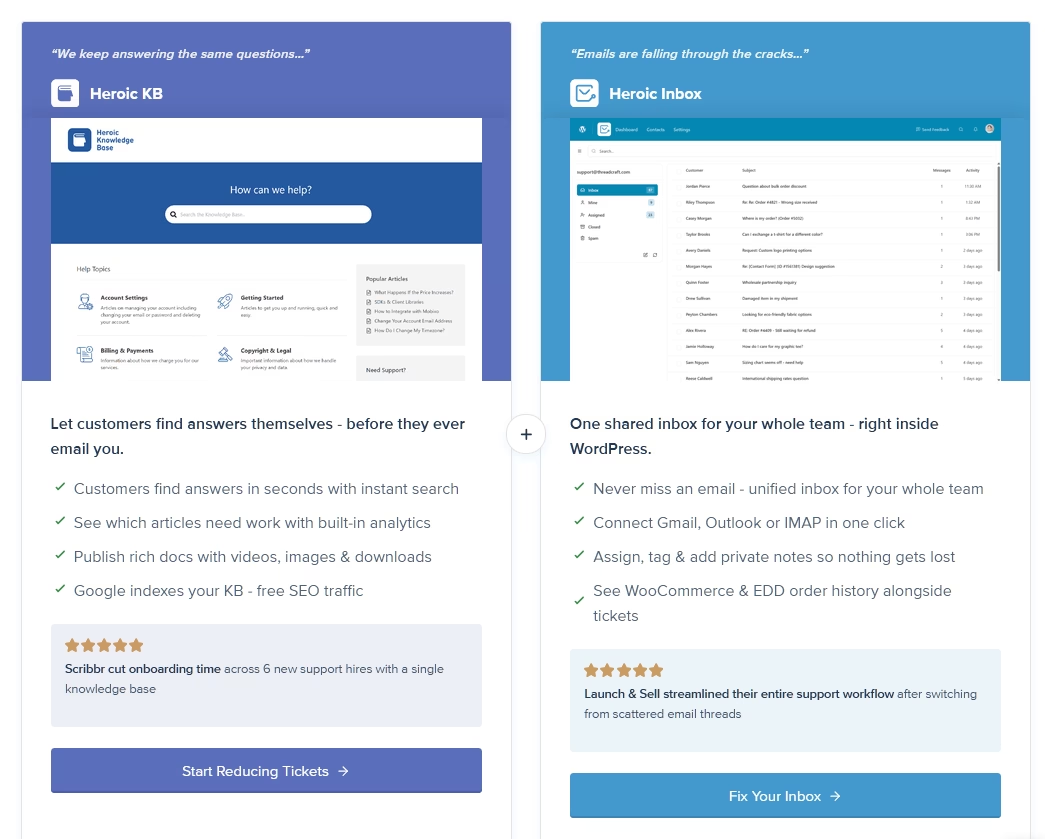
Customer service automation starts with a right set of software, and knowledge base and helpdesk software are at the core of it.
Heroic Inbox and Heroic Knowledge Base (Heroic KB) turns your WordPress dashboard into a proper customer service and support center.
With Heroic KB you create a robust knowledge base, and with Heroic Inbox manage all your customer tickets.
While managing tickets with Heroic Inbox, you can automate a wide range of repetitive support tasks and build rules for common customer service processes, such as:
- Tagging urgent tickets
- Routing tickets to right department
- Sending follow-ups
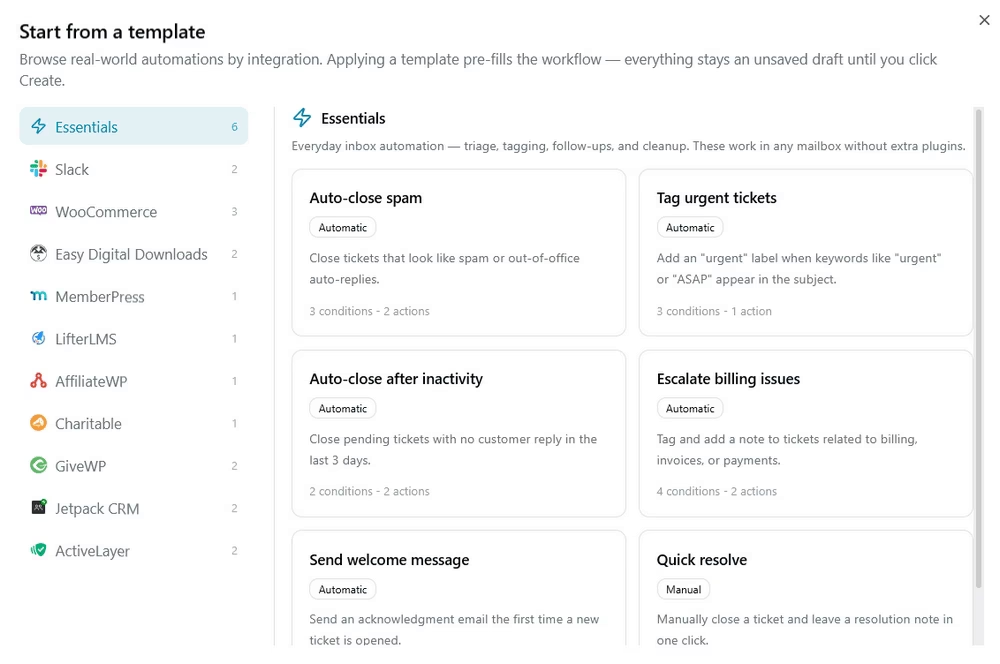
Learn more about possible task automations with Heroic Inbox in this guide.
Key features:
- Unified shared inbox for support@, sales@, billing@, and more
- Gmail, Outlook/Microsoft 365, and IMAP/SMTP with one-click OAuth
- Workflow automation: auto-assign, tagging, and routing
- Auto-responders, saved replies, and templates
- Collision detection
- Internal notes and full customer interaction history
- WooCommerce and Easy Digital Downloads integration (order history in the sidebar)
- Configurable Admin/Manager/Agent permissions
- Flat annual pricing, unlimited users, self-hosted data ownership
Cons:
- No free version of either plugin, just a 14-day refund window
- Requires WordPress
Pricing
Heroic Knowledge Base starts at $67.60/year (Essential, 1 site). Heroic Inbox starts at $79.60 for the first year, both with unlimited users and no per-agent monthly fees.
Bundle pricing starts at $103.60/year.
2. HelpJet
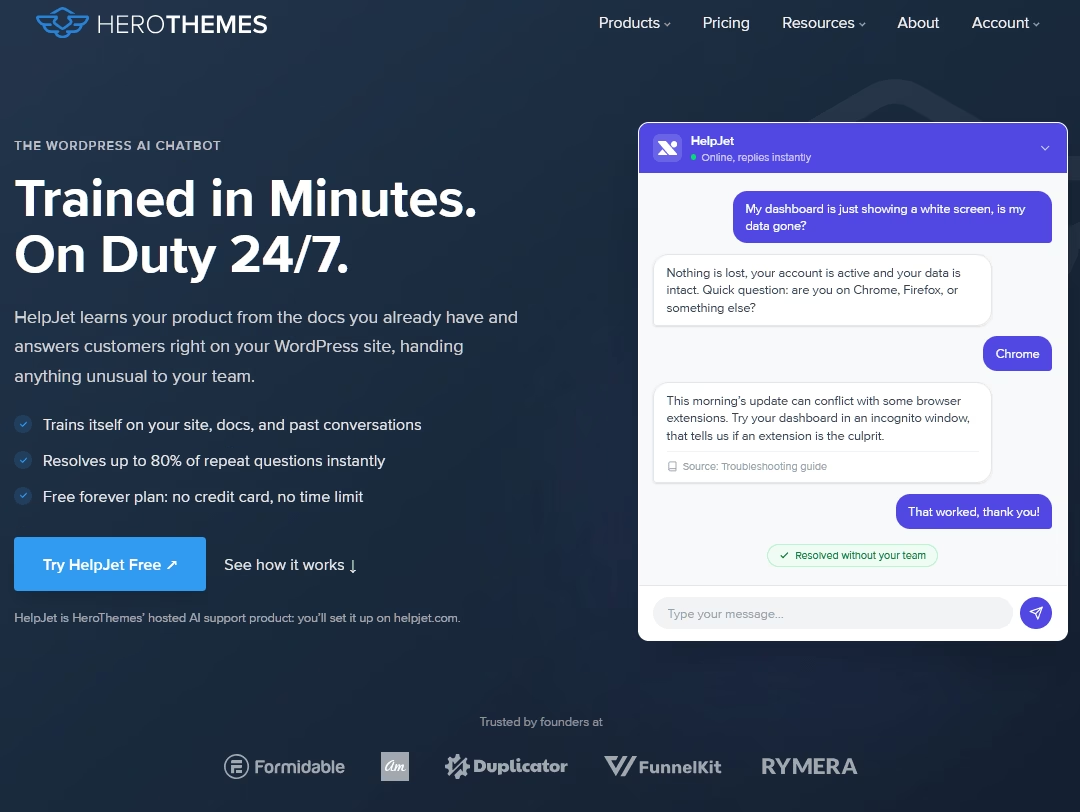
What if you could point an AI at your existing help docs and have a working support agent live five minutes later, with zero decision trees to build?
That is more or less HelpJet's entire pitch, and it's the rare AI chatbot that actually delivers on the “easy” promise. Crawl your website, docs, PDFs, and FAQs. Bot goes live. Done.
Most chatbot builders force you to map out every branch of every conversation before the bot answers a single question. If you've ever built one, you know the misery. HelpJet skips that entirely.
HelpJet is the pick for businesses that want AI deflection without enterprise pricing. It won't replace a help desk, but when paired with a shared inbox and a knowledge base it punches far above its price.
Key features:
- Self-training from URLs, help articles, PDFs, and past chat history
- Weekly automatic knowledge refresh
- Intent detection that reads urgency and frustration
- Clean escalation to a human via contact form or email
- Real-time dashboard with resolution rate and ranked top questions
- Preview and test environment before you go live
- Multi-bot support and an embeddable widget for any site
Cons:
- Not a full help desk, no end-to-end ticket tracking
- Conversation caps on lower tiers get tight for high-volume stores
- Answer quality depends entirely on your existing content
Pricing
HelpJet has a free forever plan with 1 bot and 100 conversations per month, no credit card. Pro plan is $29 per month flat for 3 bots and 1,000 conversations.
The free tier is genuinely usable for a small site and enough to prove value.
3. Ada
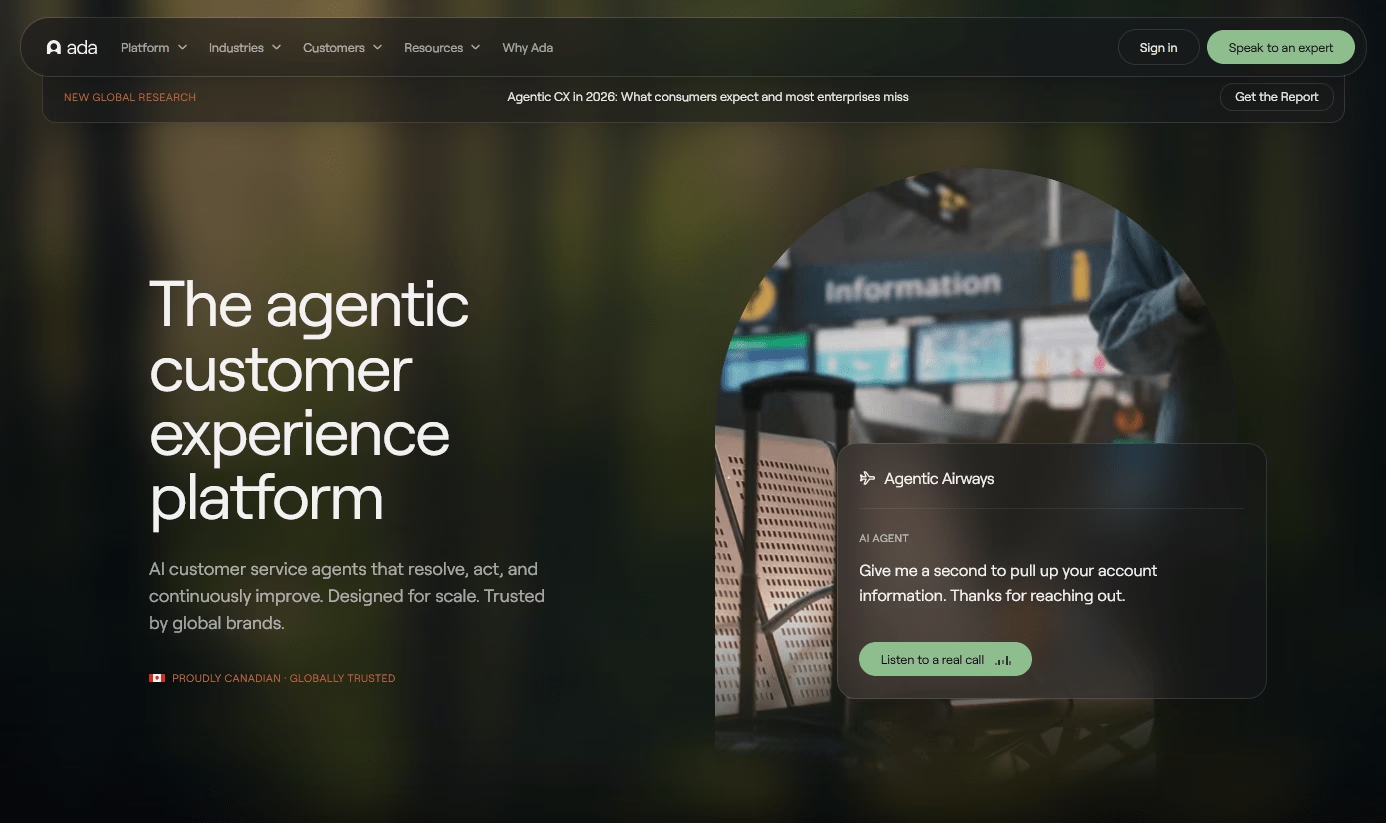
Ada was built from the ground up around resolving conversations autonomously rather than bolting a bot onto an existing help desk.
It sits on top of your help desk software, or whatever ticketing system you already run, and takes over the front line across chat, email, voice, and social.
Key features:
- AI Agent that autonomously resolves inquiries across chat, email, voice, and social from a single reasoning layer
- Unified Reasoning Engine that uses multiple LLMs (OpenAI, Gemini) to interpret intent and take actions
- No-code Coaching and Custom Instructions to shape tone, restrictions, and edge-case handling
- Sandbox testing to simulate and refine AI responses before deployment
- 50-plus language support with cultural localization
- Automated workflows with conditional branching, multi-system integrations, and human escalation triggers
- Performance analytics
Cons:
- No public pricing, no free tier, and no self-serve trial: every evaluation starts with a sales call
- Integration friction is the single most consistent complaint from its customers
- Resolution-based pricing means costs rise as volume (and even AI performance) climbs
Pricing
Ada does not publish a rate card.
There is no free tier and no self-serve trial, which is the first sign Ada is aimed at mid-market and enterprise teams.
4. Gladly
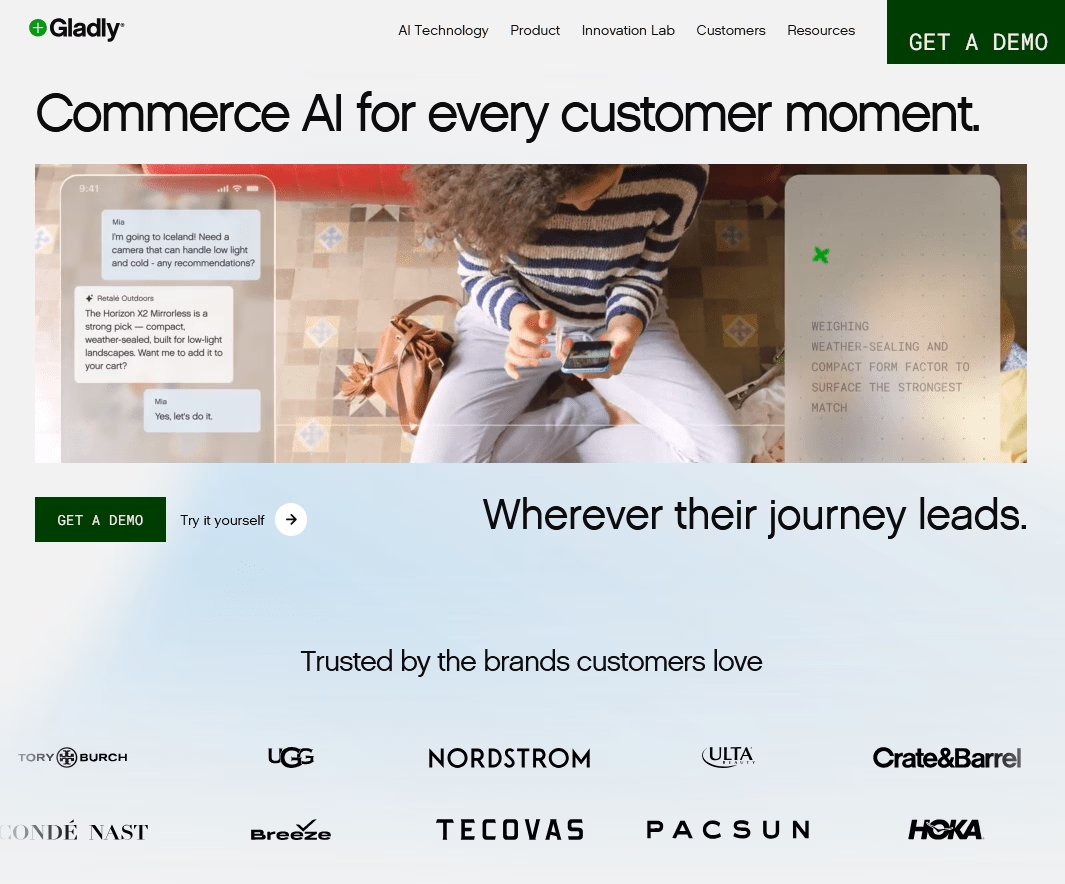
Gladly is built for B2C brands that live and die by lifetime value (its roster includes TUMI, UGG, Crate & Barrel, and Nordstrom), Gladly organizes everything around a single lifelong conversation per customer rather than tickets.
Founded in 2014 and now branded around “Commerce AI,” it is unapologetically premium.
Because voice, chat, email, SMS, and social interactions share one timeline, the platform can automate customer service across multiple channels while preserving context when a conversation needs to move to a human agent.
Key features:
- People-centered data model: one lifelong conversation per customer across all channels
- Sidekick AI agent that resolves conversations and takes real actions (returns, cancellations, order changes)
- Sidekick on Voice for automated, natural-language phone support
- Unified timeline across voice, chat, email, SMS, and social with shared context on handoff
- Plain-English “Guides” to teach the AI brand voice and escalation criteria without engineering
- Sentiment analysis, transcription, summarization, and real-time agent assist
- 40-plus integrations including Shopify, Magento, and Salesforce
Cons:
- No published platform pricing, no free trial, and a premium per-seat cost
- AI on voice carries an extra per-minute usage fee on top of telephony
Pricing
Gladly is aimed at enterprises, and pricing is quote-based with no public self-serve tier.
5. Balto
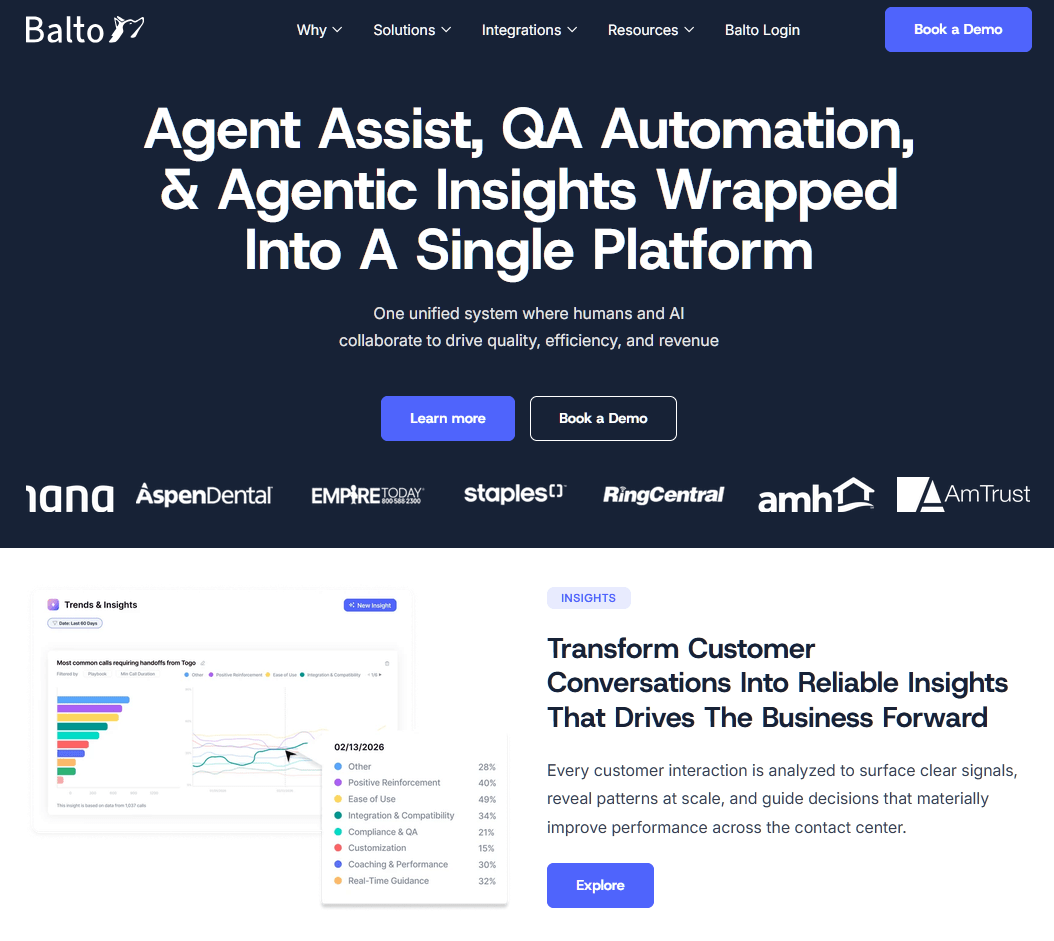
Balto does one thing extremely well: real-time guidance for live phone calls.
It listens to both sides of a conversation as it happens and surfaces recommended responses, objection-handling prompts, and compliance checklists directly on the agent's screen.
This is not a chatbot or a ticketing system, and it is deliberately voice-only, which makes it a sharp complement to the digital-first tools elsewhere in this guide.
Key features:
- Real-time agent guidance that reacts to live conversation
- Real-Time QA that automatically scores 100% of calls
- Real-Time Coaching alerts so supervisors can join calls before they are lost
- Live compliance prompts and alerts for regulated industries
- Automated call summaries (Real-Time Notetaker)
- Dynamic prompts, objection handling, and sentiment analysis
- Integrates with major CCaaS and telephony systems without replacing them
Cons:
- Voice-only: no support for chat, email, social, or messaging channels
- Prompts can feel scripted or repetitive, and too many at once can distract on fast-paced calls
Pricing
Balto is quote-only with no published rate card and no free trial.
6. HubSpot Service Hub
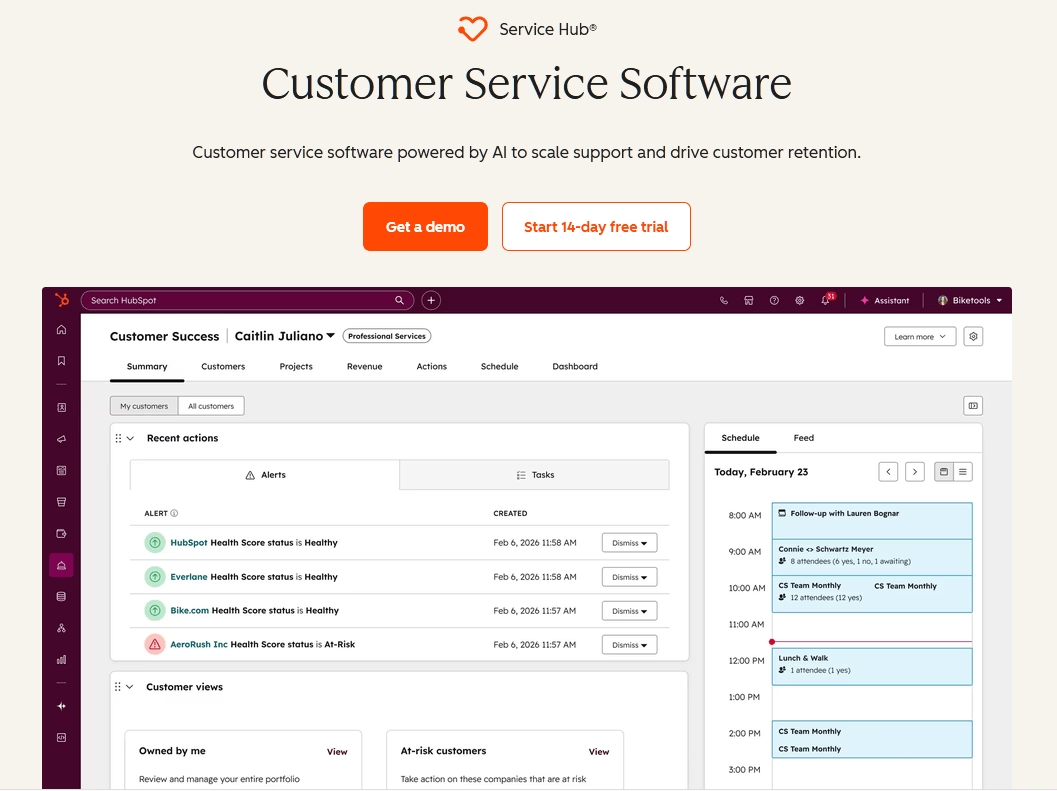
The reason to choose HubSpot Service Hub is not the help desk. It's the CRM underneath it.
HubSpot is very popular software among marketing and sales teams, Service Hub ties support tickets to the same unified customer record.
Its automation features cover core customer support processes. Ticket routing, SLA controls, a knowledge base, a customer portal, and the Breeze customer agent for AI deflection.
Key features:
- Ticketing tied to the full HubSpot CRM record
- Conversation routing, SLA controls, and automation workflows
- Knowledge base and customer portal (Professional and up)
- Breeze customer agent for AI deflection at $0.50 per resolved conversation
- Reporting dashboards and customer journey analytics on higher tiers
- Deep integration across HubSpot Marketing and Sales Hubs
Cons:
- Steep 6x jump from Starter to Professional per seat
- One-time onboarding fees of $1,500 (Pro) and $3,500 (Enterprise)
- Best features and AI gated behind Professional
Pricing
HubSpot offers free tools for up to 2 users.
The Starter plan costs around $15 to $20 per user per month. The Professional plan costs between $90 and $100 per user per month, plus a one-time onboarding fee of $1,500.
The Enterprise plan costs $150 per user per month plus a $3,500 onboarding fee, with a minimum of 10 seats
HubSpot Service Hub is a strong choice only if you're already a HubSpot shop. Small teams on tight budgets and anyone who needs simple automation software should avoid this one.
7. LiveAgent
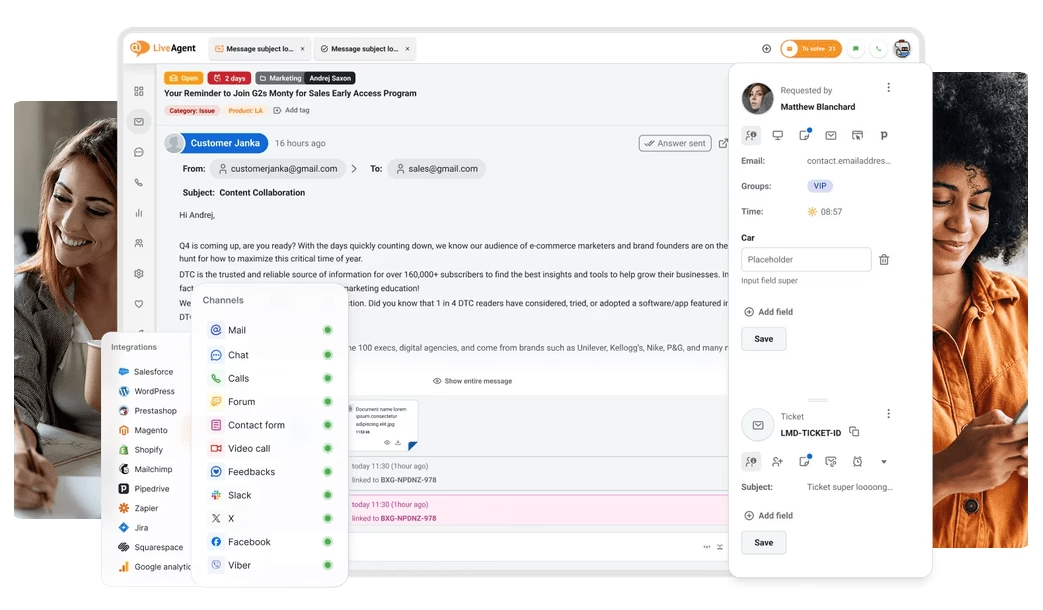
LiveAgent is the value omnichannel pick. Ticketing, live chat, and a real built-in call center in one package starting at $15 per agent per month.
For a small team there is every channel in one place. It's one of the best price-to-value ratios on the market, and the built-in call center is the differentiator most competitors don't match at this price.
LiveAgent covers the core building blocks of support automation: rules, workflow automation on higher tiers, an AI Answer Assistant, canned messages, SLA, and a knowledge base with a customer portal.
Key features:
- Ticketing, live chat, and a built-in call center with IVR
- Automation rules and workflow automation on higher tiers
- AI Answer Assistant and canned messages
- Knowledge base and customer portal
- SLA management and proactive chat invitations
- Multi-language support and 200-plus integrations
Cons:
- Weak mobile app
- Social channels (WhatsApp, Facebook, Instagram) gated behind higher tiers or extra cost
- Setup of automation rules is time-consuming
Pricing
LiveAgent’s Small business plan starts at $15, Medium at $29, Large at $49, and Enterprise at $69 per agent per month on annual billing.
Monthly billing runs higher, and social add-ons cost extra.
Final Thoughts: Matching the Tool to the Job
The best customer service automation platform is one that fits how your team already works and grows with you without punishing that growth.
For most businesses, the Heroic Inbox and Heroic Knowledge Base combo, paired with HelpJet for deflection, is the value-and-ownership pick I keep coming back to.
Before concluding this guide, here’s one final piece of advice: Automate transactions and keep humans involved with emotions. Do that, and the right software will be a genuine advantage rather than just another unwanted subscription.
Further Reading
Customer Service Automation: What It Is, Examples & How To
9 Service Desk Automation Ideas to Streamline IT Support
18+ Automated / Trigger Based Email Subject Lines
12 Practical Chatbot Use Cases and Examples
12 Best AI Virtual Assistants for Small Businesses





Leave A Comment?
You must be logged in to post a comment.