10 Best Healthcare Chatbots of 2026 (Free & Paid)

Can a bot really comfort a worried patient or streamline a busy clinic’s workflow? Yes.
Healthcare chatbots are changing how patients find medical information and how clinics handle routine questions.
Adoption is now mainstream on the patient side too: the KFF Tracking Poll on Health Information and Trust, released March 25, 2026, found that about a third (32%) of U.S. adults say they have turned to AI chatbots in the past year for health information.
That same poll found two-thirds (67%) of adults trust AI tools or chatbots not too much or not at all to provide reliable health information.
Whether you run a clinic, develop health apps, or are simply a curious patient, here are the 10 healthcare chatbots (free and paid) that stood out from our testing.
But first, some quick background.
In This Guide
What Is a Healthcare Chatbot?
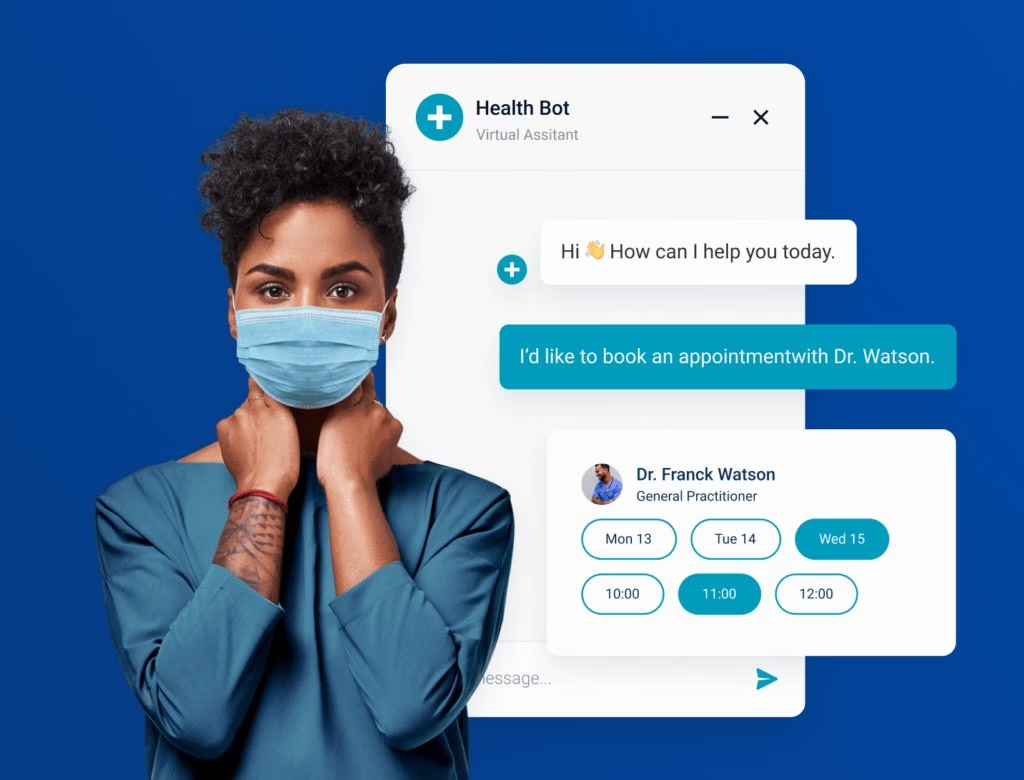
A healthcare chatbot is basically a chatbot. These chatbots can do things like help you check symptoms, schedule appointments, give basic medical advice, remind you to take your meds, or provide mental health support.
Of course, chatbots aren’t doctors—they can’t do physical exams or make definitive diagnoses. But they serve as a first line of support and information.
Why are these bots taking off now?
Advances in AI (machine learning and large language models) made healthcare chatbots much smarter and more conversational. The pandemic pushed a lot of care online, and providers needed ways to handle routine questions at scale. Just as important, the rules caught up: several states now regulate how AI can talk to patients, which we cover in the compliance section below.
The result is a new wave of chatbots that can talk about everything from insurance benefits to anxiety symptoms. And yes, you can customize them based on your needs and knowledge base.
Are Healthcare Chatbots HIPAA Compliant?
A chatbot is not HIPAA compliant by default. The moment a bot creates, receives, stores, or transmits protected health information, it falls under the HIPAA (Health Insurance Portability and Accountability Act of 1996) Security Rule, and the vendor must sign a business associate agreement with you.
No vendor can be HIPAA certified, since HHS does not certify software, so treat any HIPAA certified badge with suspicion.
How I Researched the Best Healthcare Chatbots?
There are hundreds of healthcare chatbots out there, each claiming to be the best. But are they actually the best?
Here’s how I found out:
- Hands-on testing: I spent a great deal of time testing these chatbots. How easy they are to use, their functionality, and whether they fulfill their claims.
- Use cases covered: Healthcare is a broad field, so I looked at all types of chatbots. Those meant for patients, for healthcare providers, for insurance or admin tasks, and so on.
- Key features and technology: The features and technology used in these chatbots are varied. From advanced AI integrations to rule-based chatbots.
- Privacy and compliance
- User feedback and ratings: I might miss out on a few things in a short test period, but hundreds of user opinions are hard to ignore. This information helped me understand critical reviews of these healthcare chatbots, and help you recommend the best.
- Value for money: You don’t want a system that’s too costly to operate (even for doctors), and where you don’t even need half of the functionality, do you?

Best Healthcare Chatbots (Free and Paid)
Here's a quick comparison table to get you started:
| Chatbot | Best for | HIPAA / BAA | Starting price | Standout capability |
|---|---|---|---|---|
| HelpJet | Clinic FAQ deflection (non-PHI) | No, not a PHI platform | Free, Pro $29/mo | Trains on your own clinic content |
| Kore.ai HealthAssist | Large providers and payers | HIPAA-aligned, enterprise BAA | Custom | Voice plus chat on one agent platform |
| ProProfs Chat | Live chat plus chatbot on a practice site | No public HIPAA/BAA claim | Free single operator, Team from $19.99/operator/mo billed annually | Forever-free plan with chatbot and live chat together |
| Sensely (Mediktor) | Member engagement with an avatar | Enterprise B2B | Custom | Molly, the voice and video avatar |
| Healthily | Consumer self-care content | Not applicable, consumer | Free | Medically reviewed health library |
| Microsoft Healthcare Agent Service | Custom enterprise bots | Yes, Azure BAA | Free tier, then consumption-based | FHIR integration and built-in medical content |
| IBM watsonx Assistant | Payer and member navigation | Enterprise, IBM Cloud BAA | Lite free, Plus from $140/mo | Strong natural language understanding |
| Florence | Medication reminders | Consumer bot, no BAA | Free | Pill reminders inside chat apps |
| BotPenguin | Small-clinic DIY bots | Markets HIPAA compliance, confirm BAA | Free, paid from about $15/mo | No-code, multichannel builder |
| Ada | Consumer symptom triage | Enterprise white-label | Free | Doctor-built symptom assessment |

We rigorously test and research every product that we recommend through HeroThemes. Our review process. We may also earn a commission if you make a purchase through our links.
1. HelpJet
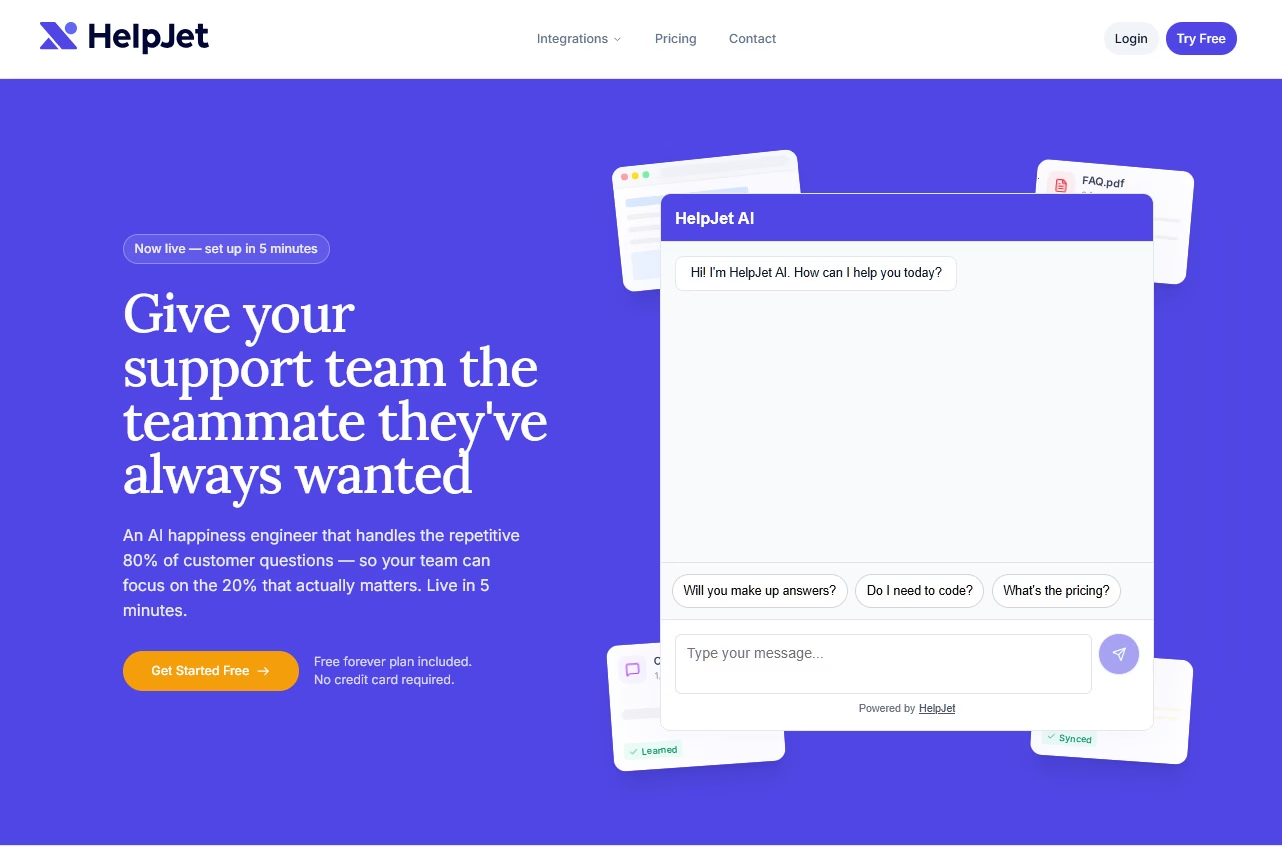
HelpJet is a general-purpose AI chatbot, not a HIPAA-compliant healthcare platform.
Where it fits in healthcare is the non-PHI layer:
- General clinic FAQs
- Information about insurance acceptance
- Office hours
- Appointment preparation instructions
- Wellness content
- Pre-visit paperwork
If you're running a small clinic, dental office, wellness practice, or independent practitioner site, and your front desk is drowning in phone calls about non-clinical questions, HelpJet is a legitimate option.
Key Features:
- Trains on your clinic website, FAQ pages, and patient-facing documents.
- 24/7 availability for questions that come in at odd hours.
- Conversational handling of natural questions
- Clean handoff to a human, which is critical for anything medical-adjacent.
Pricing
HelpJet is a freemium software. The free forever plan includes 1 bot and 100 conversations per month, which is honestly enough for a single small clinic to test the waters.
The Pro plan costs $29 a month for 1,000 conversations, and higher tiers add conversations and bots as your volume grows.
My Verdict
HelpJet is a reasonable front-door FAQ bot for clinics and dental practices that want to reduce phone volume for non-clinical questions. It is not a substitute for a triage tool or anything that handles PHI. Before you deploy it, explicitly instruct the AI to refuse clinical questions and redirect to a clinician, and route medical questions to a secure intake form rather than through the bot itself.
To provide your team with the best customer service suite, pair HelpJet with Heroic Knowledge Base and Heroic Inbox.
2. Kore.ai
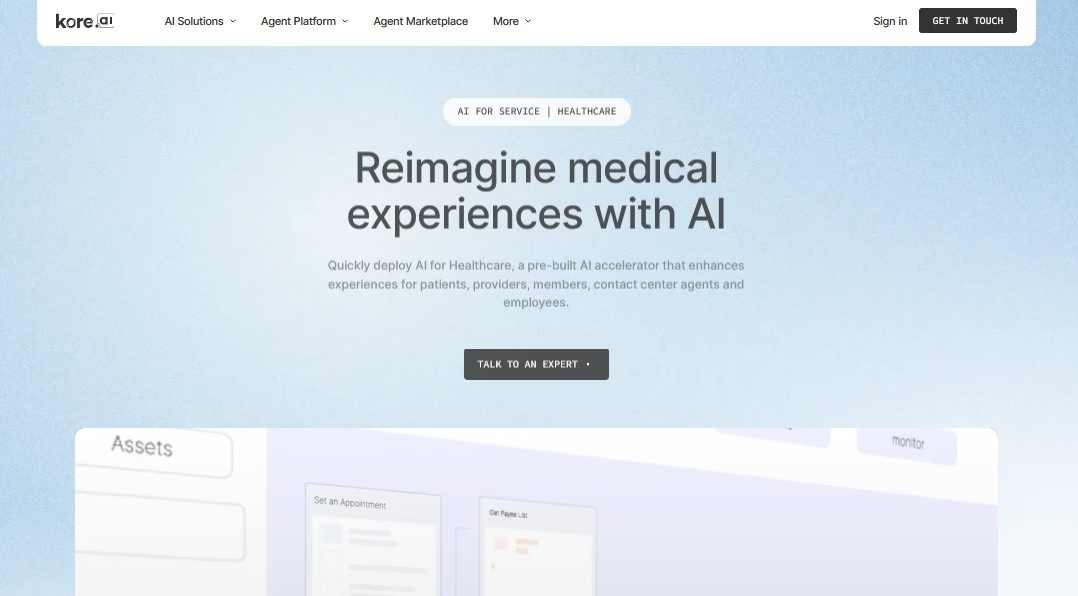
Kore.ai is a leading enterprise conversational AI company, and HealthAssist is their solution optimized for healthcare providers, payers, and life sciences.
If Azure and IBM are familiar tech giants, think of Kore.ai as the specialist up-and-comer.
Kore’s HealthAssist platform lets organizations deploy chatbots that handle everything from patient scheduling to insurance queries, with an emphasis on being an all-in-one conversational platform.
Key Features:
- Kore.ai supports both chat and voice. The voice capability is useful for hospitals integrating it with phone systems.
- Pre-built healthcare workflows: Templates and components for common tasks: finding a doctor, scheduling appointments, checking insurance eligibility, refilling prescriptions, etc.
- No-code drag-and-drop bot designer. This allows you to create and modify dialogues without hardcore programming.
- Omnichannel and consistent experience
- Kore.ai lists HIPAA alongside SOC 2 Type II, ISO 27001, and FedRAMP Moderate in its enterprise compliance set, and it will scope a business associate agreement as part of a contract.
Pricing
Kore.ai is enterprise software. Pricing is custom or based on an annual license plus usage.
My Verdict
Kore.ai chatbot delivers serious flexibility for healthcare teams. It handles both patient engagement and internal support with strong system integrations and quick no-code tweaks. A smart choice for large providers ready for full-scale automation.
3. ProProfs Chat
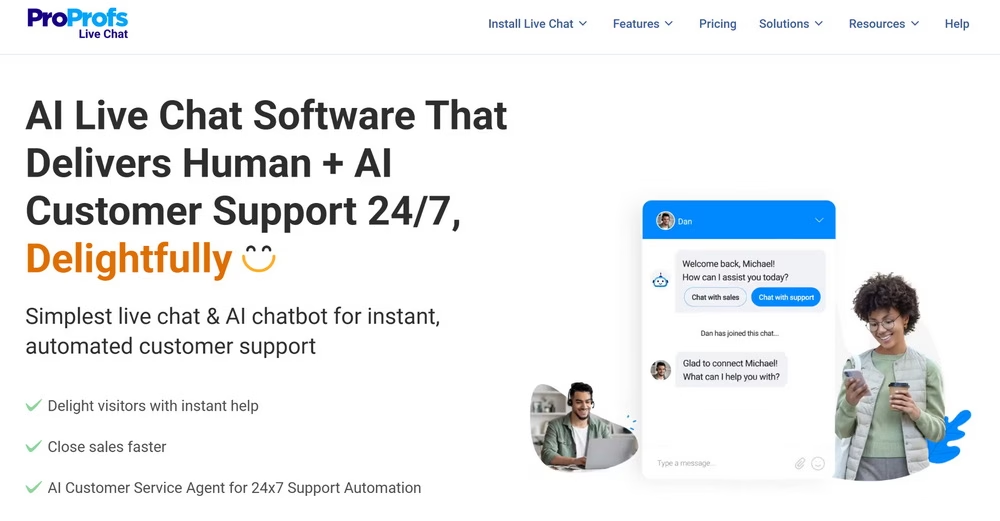
ProProfs Chat is a live chat and AI chatbot platform that healthcare practices use to keep patients covered around the clock, without putting staff on call.
It is not a HIPAA platform, so treat it the way you would treat HelpJet: good for scheduling nudges, insurance-acceptance questions, and office logistics, not for anything that touches protected health information.
Key Features:
- AI Agents handle appointment scheduling, send confirmations, and trigger staff alerts without manual involvement.
- Live chat plus AI chatbot in one tool
- Pre-built chatbot templates for appointment booking, lead capture, and ticketing
- Proactive chat invites, canned responses, and file sharing to cut repetitive typing.
- 100+ integrations, including Salesforce, HubSpot, and Zoho
- Sentiment Analysis and Risk Prediction flag at-risk patient conversations
- Reporting on bot resolution rate, handoff rate, and visitor satisfaction so you can see what the bot actually deflects.
Pricing
ProProfs Chat free plan is available for small teams with all premium features included. Paid plans start at $19.99/operator/month.
My Verdict
ProProfs Chat delivers a genuinely useful blend of live chat and AI automation for healthcare teams that need patient coverage without a heavy IT lift. It's not built for clinical triage the way Sensely or Healthily are, but for scheduling, FAQs, and after-hours patient engagement, it's a strong, budget-friendly choice. The cloud-only setup and lack of a dark theme are minor tradeoffs for how fast it gets teams up and running.
4. Sensely (Molly the Virtual Nurse)
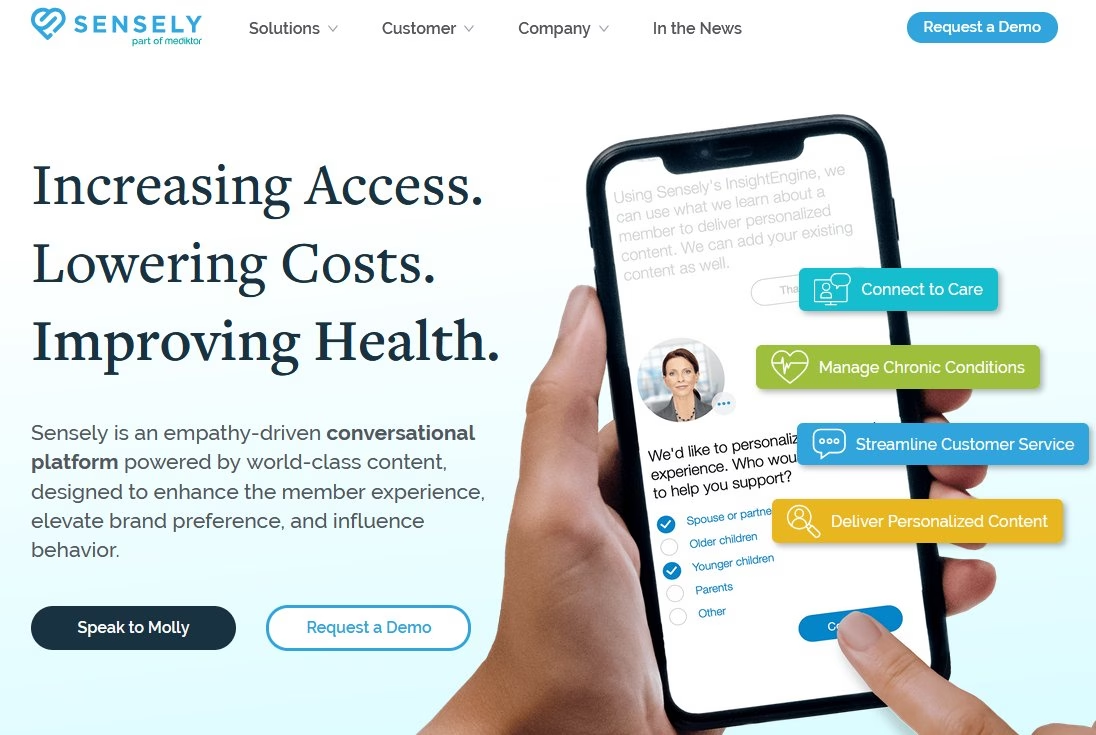
Sensely healthcare chatbot (and avatar) platform is known for its virtual nurse character “Molly.” It uses a friendly 3D avatar that can interact via voice and text.
Sensely’s technology is used in the healthcare industry for symptom triage, chronic disease monitoring, and insurance customer service.
Molly, the virtual nurse, is depicted as a compassionate cartoon nurse who can communicate with patients, listen to their responses, and offer guidance.
Key Features:
- Molly can speak in a soothing voice and you can either talk back (speech recognition) or type.
- Symptom triage with urgency detection.
- Sensely provides health information and self-care advice.
- Integration with services: Sensely can hook into electronic health records and other systems.
- Supports multiple languages and can be customized for different healthcare organizations.
Pricing
Sensely is offered to healthcare organizations (B2B). If a health system or insurer licenses it, end-users (patients or members) get it free through that provider’s app or portal.
My Verdict
Sensely’s Molly is one of the visually memorable healthcare chatbots. Voice, text, and visuals create an accessible, reassuring chat that works well for chronic care or elder support.
5. Healthily: AI Health Assistant
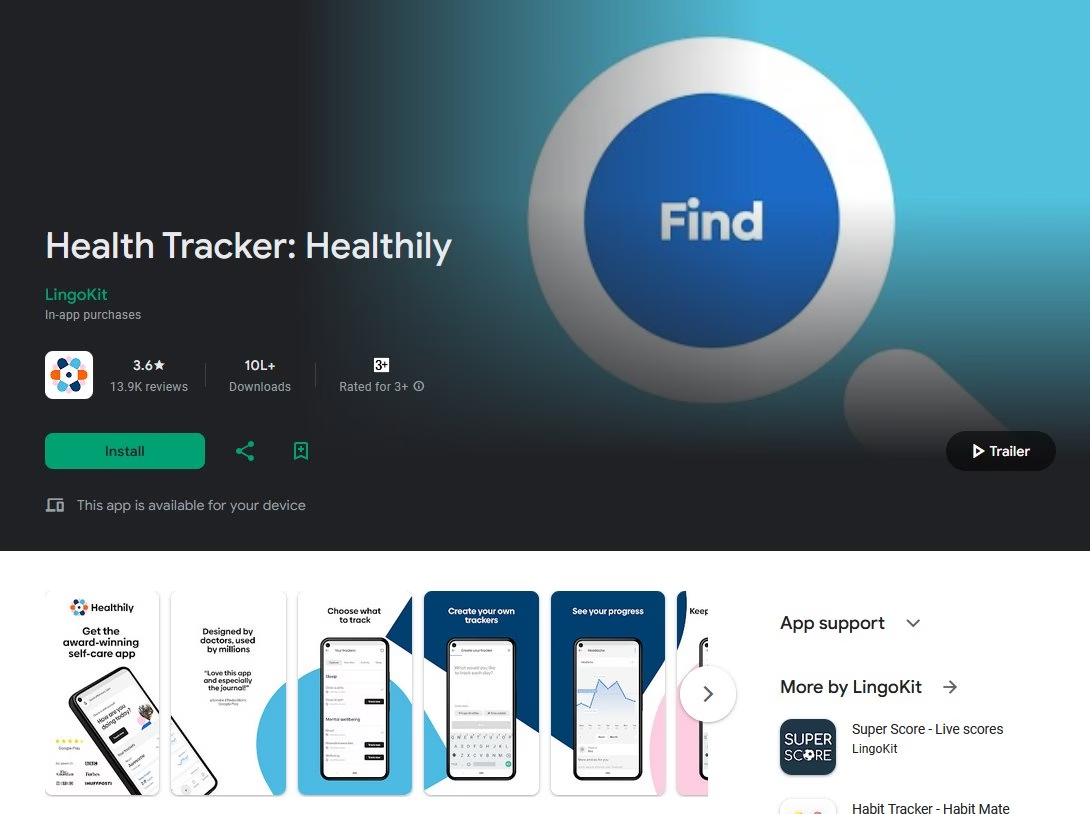
Healthily is a popular AI health chatbot and symptom checker. Similar to Ada, it helps users find out what might be wrong based on symptoms and provides relevant health information.
What distinguishes Healthily is its positioning as a self-care platform. It not only checks symptoms, but also helps you find trusted health information and services.
Healthily has shifted its focus toward business customers such as health insurers, and its consumer Smart Symptom Checker is currently offline, with the company noting that the tool has been temporarily removed. The health library and mobile apps remain, so treat Healthily today as a self-care content resource more than a live symptom checker.
Key Features:
- The core feature is an AI symptom checker similar to Ada’s.
- “Health library” and self-care guides
- The app can help you find nearby pharmacies, clinics, testing centers.
- Personal health tracking: Like weight, mood, period (for women), etc.
- Free with optional subscription
Pricing
Healthily is free to download and use, though the flagship symptom checker is not available at the time of writing. Verify current availability before you recommend it to patients.
My Verdict
Healthily stands out as a friendly, action-oriented health chatbot. It combines clear guidance with next steps like finding a doctor or suggesting safe remedies, making it ideal for everyday concerns. However, be aware of the occasional overload of possible diagnoses.
6. Microsoft Healthcare Agent Service (formerly Azure Health Bot)
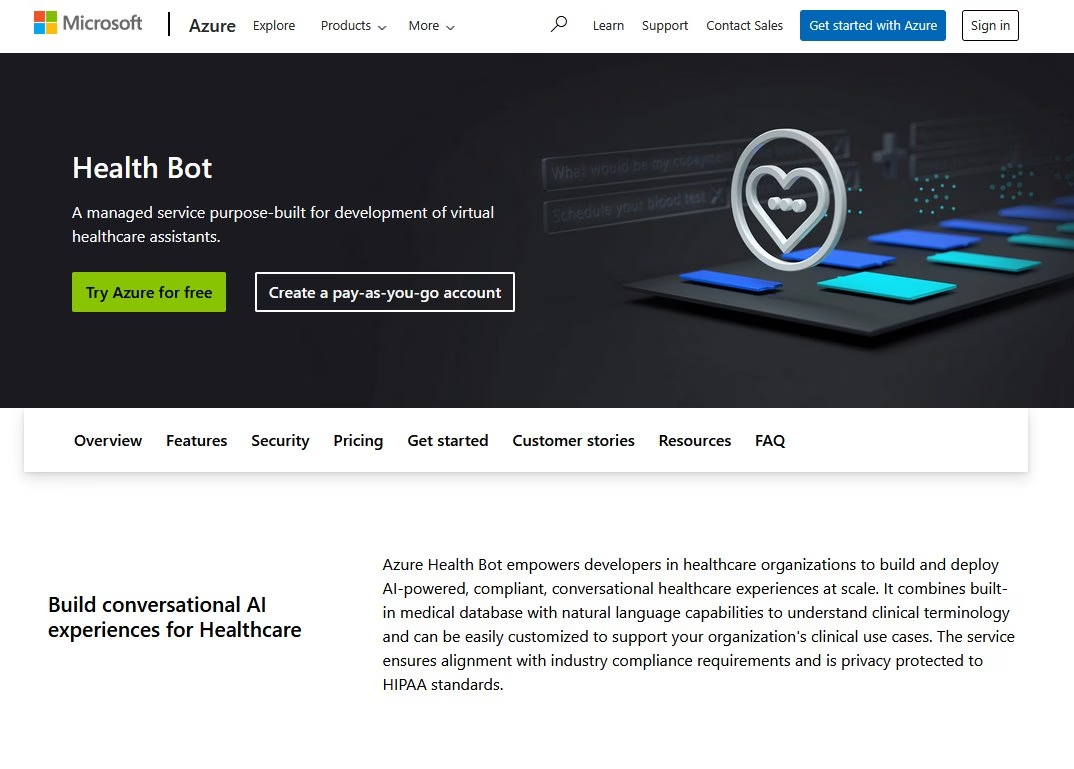
The Microsoft Healthcare Agent Service, formerly Azure Health Bot, is a cloud service that allows developers and organizations to build compliant healthcare chatbots on a large scale.
For example, a hospital might build a triage chatbot with it, or an insurance company might create a benefits helper.
Microsoft provides a bunch of healthcare-specific components out of the box (medical databases, language understanding of clinical terms, templates for common scenarios).
Key Features:
- Built-in medical knowledge: Azure’s Health Bot knows clinical terminology and can ask symptom-based questions like a preliminary exam.
- Compliance and security: It meets HIPAA and industry standards for privacy. Data is under your control, and it can integrate securely with systems via FHIR (the healthcare data API standard).
- Customizable and integrative: You could configure the bot to schedule a doctor appointment if needed, pulling available time slots from your scheduling system.
- It also supports multiple channels (web chat, Microsoft Teams, SMS, etc.).
Pricing
The service offers a free plan capped at 3,000 messages and 100 medical content units a month, which is enough to build a proof of concept.
Beyond that you pay by usage, and older flat-fee tiers have been retired in favor of consumption-based billing, so confirm current rates in the Azure portal before you budget.
My Verdict
If you’re at a hospital, clinic network, or insurance company looking to deploy a chatbot across your patient base, Microsoft's Healthcare Agent Service is a strong contender. It’s kind of an “enterprise toolkit” with everything needed to comply with healthcare rules.
For a small practice with no IT support, Azure Health Bot is overkill.
7. IBM watsonx Assistant
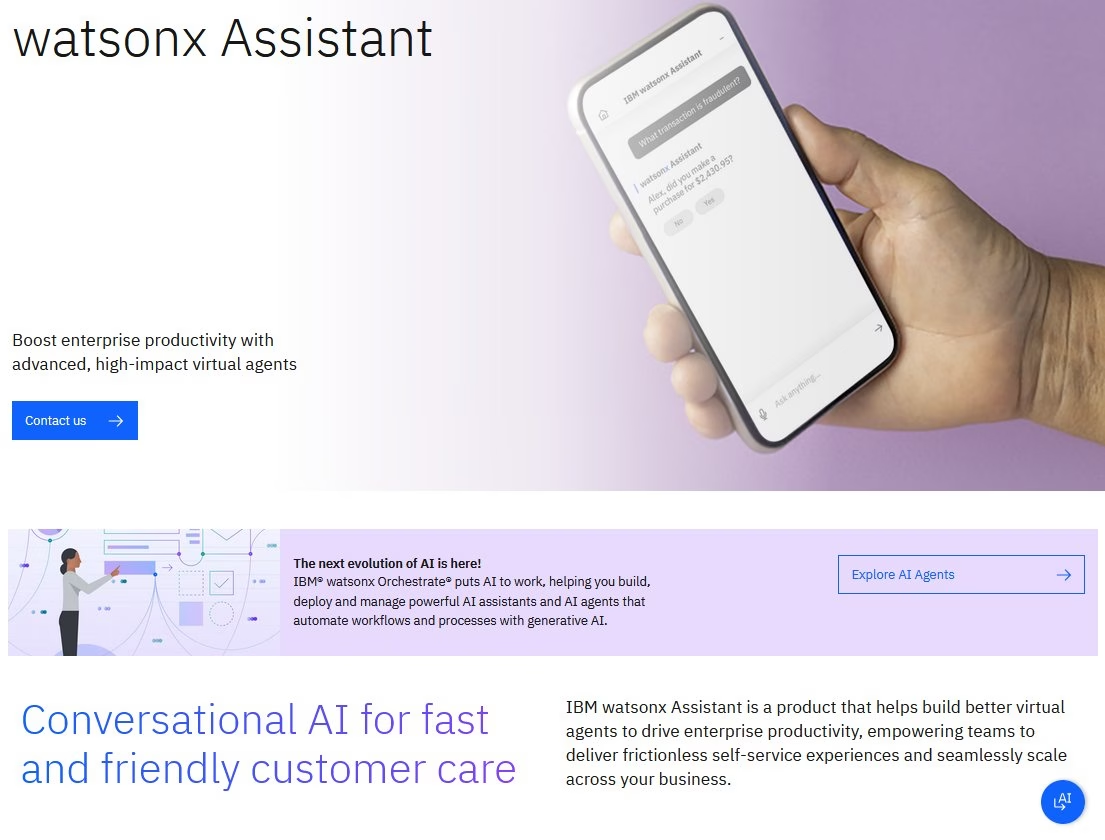
IBM watsonx Assistant is a conversational AI that businesses can customize for many industries.
In healthcare, teams use it to answer member questions about coverage, deductibles, and claim status, and to route complex requests to a human agent.
Key Features:
- Helping patients or members navigate health plans and provide instant answers about coverage, deductibles, claim statuses, and healthcare costs.
- Handling complex multi-turn dialogs
- Integrations with backend systems to pull data
- Natural language understanding
Pricing
IBM watsonx Assistant is an enterprise solution, typically custom-priced for the client.
My Verdict
IBM watsonx Assistant is a highly capable chatbot for the healthcare industry, especially with the right setup. It is highly recommended for large healthcare organizations and insurers that need to modernize their customer service.
8. Florence
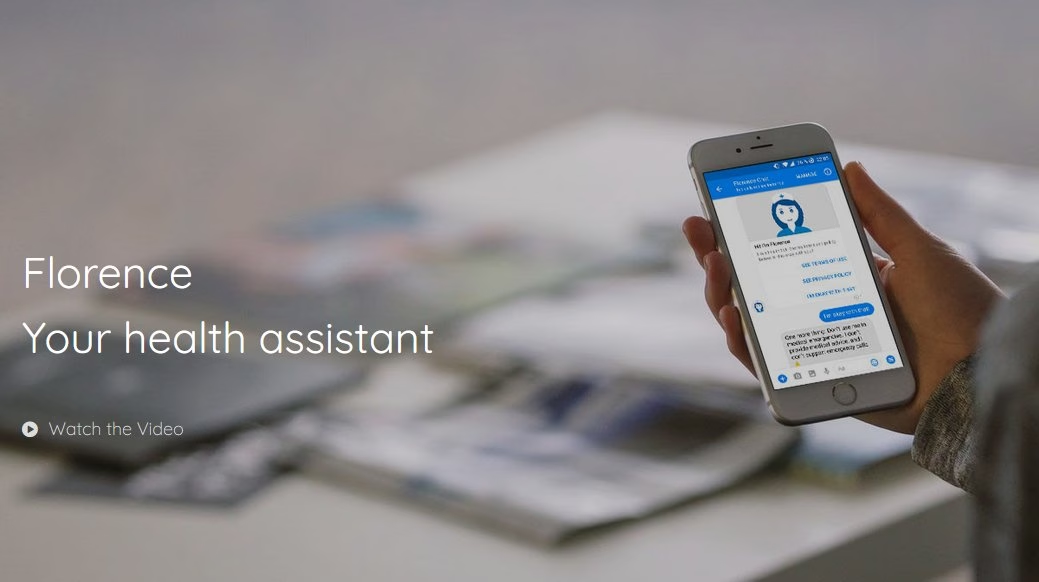
Florence is a simple free healthcare chatbot known as a personal nurse, originally built as a hobby project and available inside Facebook Messenger and Kik.
It helps with medication reminders and basic health tracking. And incredibly useful for day-to-day health management.
Key Features:
- Medication reminders
- Health tracking: Track simple health data like your weight, mood, or period if you input those regularly.
- Find a nearby pharmacy or hospital
- Conversational and personified
- Light symptom advice
Pricing
Free of charge. Florence is available on Facebook Messenger and Kik at no cost, and Skype is no longer supported.
My Verdict
Florence is a must-try for anyone who needs a health habit reminder. It’s free, easy, and could literally prevent a health mishap by keeping you on track with meds. Plus, it demonstrates that not all healthcare chatbots have to diagnose or be complex.
9. BotPenguin
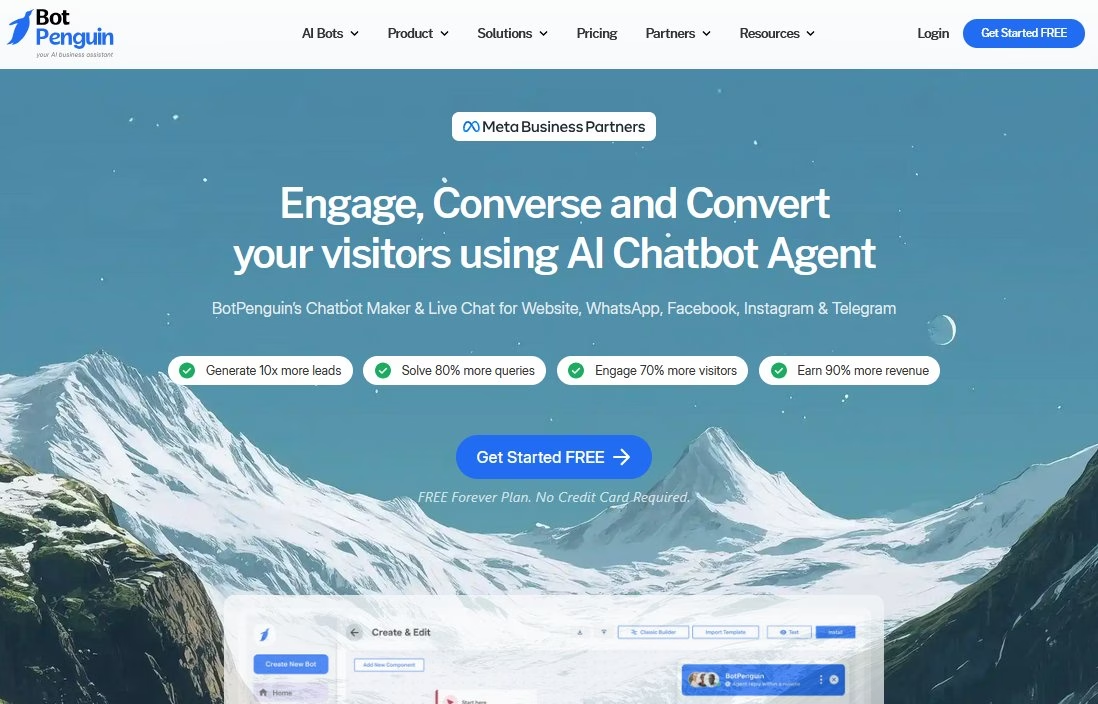
BotPenguin is a no-code AI chatbot platform to create chatbots for various industries, including healthcare.
If you need a chatbot on your clinic’s website to handle basic inquiries or appointment booking, BotPenguin offers templates and an easy interface to do that.
Plus, it supports deployment on websites, Facebook Messenger, and WhatsApp, all without coding.
Key Features:
- Drag-and-drop conversation flow design and pre-built templates for healthcare scenarios.
- Multi-channel support.
- Free plan and low cost.
- Basic AI with customization
- BotPenguin markets itself as HIPAA compliant alongside GDPR, SOC 2, and ISO certifications
Pricing
BotPenguin is a decent free healthcare chatbot. Paid plans start at $15 a month and offer more capacity and features.
My Verdict
If you’re looking for a quick DIY chatbot for your healthcare practice or project, BotPenguin is a great option. I included it because not everyone has the resources for a large-scale enterprise AI system. This makes it ideal for small clinics on a budget as long as you keep tasks simple and avoid sensitive data.
10. Ada Health (AI Symptom Checker and Health Guide)
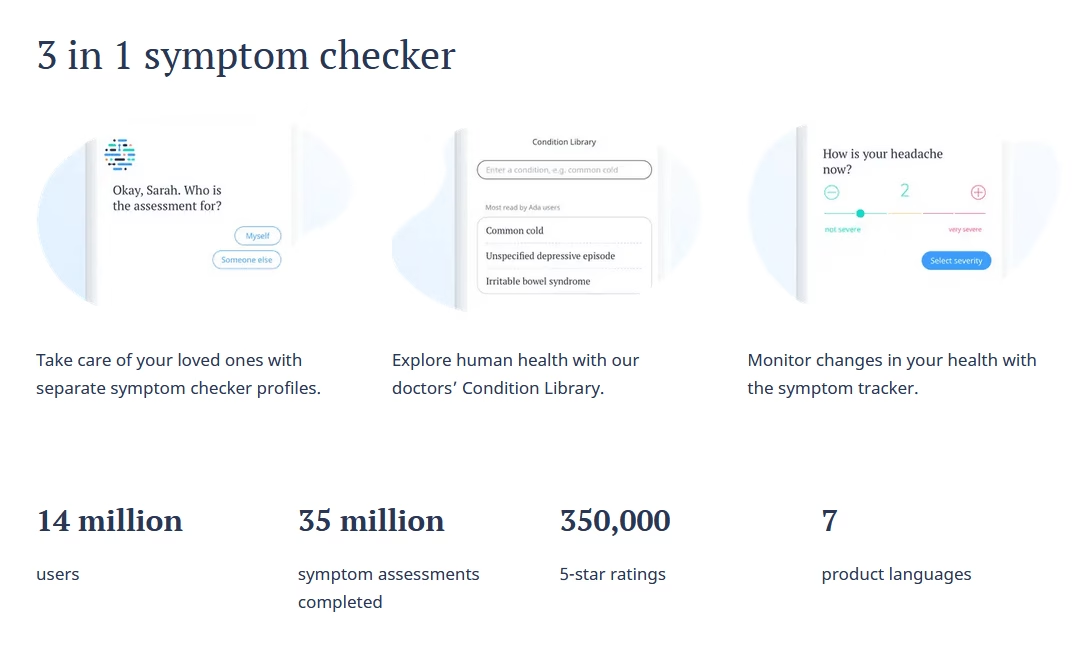
Ada is an AI-powered symptom checker app.
Created by doctors and backed by an extensive medical knowledge base, Ada acts as a “personal health companion” with whom you can chat about your symptoms to receive potential causes and advice.
Ada is available as a mobile app and a web interface. It can also be integrated into health systems or insurer platforms as a white-label symptom assessment tool.
Key features:
- Interactive symptom assessment: Ada asks you a series of personalized questions about your symptoms, medical history, and risk factors, almost like a doctor’s interview.
- Huge medical knowledge base
- Outcome and guidance: After the Q&A, Ada provides a health assessment report.
- Continuous health monitoring
- Multilingual and global
Pricing
For individual users, Ada is free to use.
The company makes money by partnerships with health systems, insurers, and employers, and possibly premium features.
My Verdict
Ada Health works like a calm, well-informed triage nurse in your pocket, asking smart follow-up questions and offering sensible guidance before you decide whether to see a clinician. Ada has leaned harder into AI in recent app updates, and some longtime users say the newer version narrows to one or two possible causes where it once showed a fuller list with reasoning. It remains a solid first step for common symptoms, but set expectations that it is a starting point, not a diagnosis
Final Thoughts on Healthcare Chatbots
Healthcare chatbots have become diverse and capable, but the market is also churning, with acquisitions, rebrands, and shutdowns reshaping the list every year.
The 10 tools above showcase how AI is being used to improve patient education, access to care, chronic disease management, mental well-being, and more.
You might just need a simple chatbot like the HelpJet, which can answer patient questions based on your own data.
Alternatively, you can use tools from IBM, Google, or Microsoft to create a custom chatbot for healthcare.
The choice depends on your needs.
Further Reading
10 Best AI Chatbot Plugins for WordPress (Free and Paid Options)
9 Best Restaurant Chatbots for Ordering, Reservations and Support
Rule-Based Chatbots: A Beginner’s Guide with Examples
Best AI Virtual Assistants for Small Businesses
12 Best Chatbot Use Cases and Examples
Best Internal Chatbots for Employee Support and Productivity
Chatbase Review: Build AI Agent for Customer Support




Leave A Comment?
You must be logged in to post a comment.