13 Best AI Chatbots for Customer Service (With Free Software)

AI chatbots for customer service have moved from buzzword to buying decision, and most support leaders are now under real pressure to pick one.
Better content integration, constant learning, and newer models (like GPT-5) make today's AI chatbots far more useful than traditional rule-based chatbots.
They can find the right help doc, answer a question in seconds, and hand off to a person when things get tricky.
In this guide, I’ll share the best AI chatbots designed for customer service. These chatbots will make your customer service smarter and more accessible.
Driving better customer experience and retention as a result.
Let’s start!
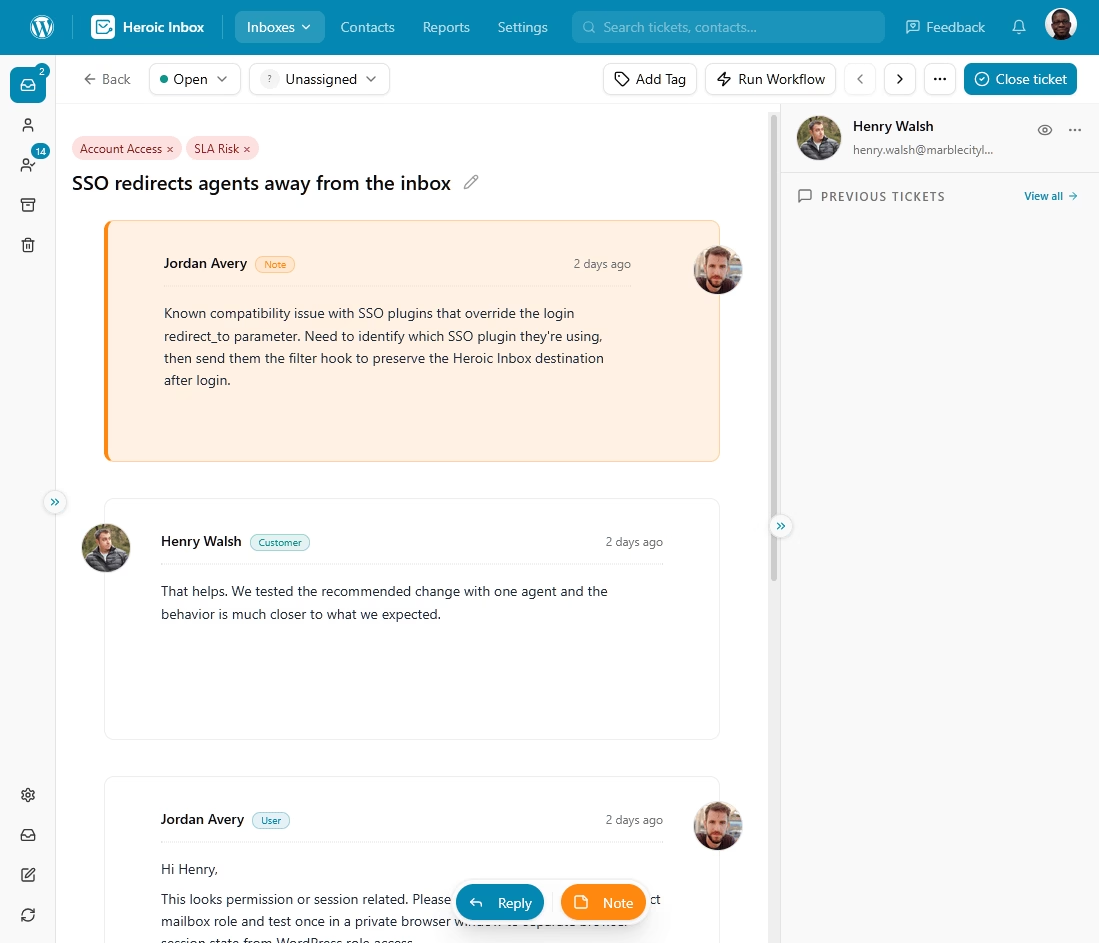
Heroic Inbox
A simple and affordable helpdesk for small businesses.
Unlimited users and powerful features.
In This Guide
How I Tested AI Chatbots for Customer Service
Not all AI chatbots for customer service and live up to the hype. You probably already have tried a few AI chatbots that promise fancy features, but end up looking for more.
Here’s why chatbots listed in this guide are different, along with my evaluation criteria:
- Setup and Ease of Use: How easy (or painful) it was to get each chatbot up and running. Did it offer a no-code builder or require a coder’s help?
The best ones let you train or customize the bot in minutes, not days. - AI Intelligence and Accuracy: A customer service bot must actually understand customer questions. I tested each bot with common FAQs and oddball queries alike.
- Integration and Knowledge Base Training: A huge factor was whether we could feed the AI bot with our own documentation or connect it to systems like CRM, eCommerce platforms (WooCommerce, Easy Digital Downloads), or a knowledge base. The best chatbots let you train them on your content for brand-specific answers.
Explore: Integrating ChatGPT with Your Knowledge Base, Best Knowledge Base Chatbots in 2026 (With Free Options) - Channels and Multilingual Support: Customers might reach out on your website chat, Facebook Messenger, WhatsApp, or other channels. I checked if the chatbot can work across multiple channels and devices (web, mobile app, etc.) without losing context.
- Human Handoff and Agent Assist: Even the smartest AI will hit a question it can’t handle. In such cases AI should suggest what to do next or fill in case details for the human agent.
- Pricing and Value: I weighed cost against features, and paid close attention to how each tool bills. Many vendors moved to outcome-based pricing in 2025 and 2026, charging per resolved conversation (often $1 to $2) instead of a flat per-agent fee, which can change your bill a lot at high volume.
- Disclosure and Compliance: I checked whether each tool makes it easy to tell customers they're talking to AI, since that's now a legal requirement in the EU and a long-standing one in California for sales chats.
All the chatbots below earned their spot by excelling in many of these areas. So, onto the good stuff!
What the New AI Disclosure Rules Mean
In 2026, telling customers they're talking to a bot is often the law, not a nice-to-have.
Here's what changed, and what it means for you:
- EU AI Act (Article 50): Any chatbot serving people in the EU has to clearly tell them they're interacting with AI. The duty falls on both the vendor and the business using the tool. Per the European Commission, fines can reach €15 million or 3% of total worldwide annual turnover, whichever is higher, and systems already running before that date get until Dec. 2, 2026 to add machine-readable marking of AI-generated content.
- California's B.O.T. Act (SB 1001): In force since July 1, 2019, this law requires a clear, conspicuous disclosure when a bot talks to someone in California to encourage a sale. It applies if your customer is in California, even if your business isn't.
- FTC scrutiny: In 2025, the Federal Trade Commission's “Operation AI Comply” brought cases against companies for overstating AI. DoNotPay settled in January 2025 over its “robot lawyer” claims, and Workado was ordered to back up its AI-detector accuracy claim after the FTC said the tool did “no better than a coin toss.” If you advertise a resolution rate, make sure you can prove it.
Pick a tool that lets you show a plain “You're chatting with our AI assistant” message, and don't repeat a vendor's resolution claim as your own without evidence.
Best AI Chatbots for Customer Service (Free and Paid Software)

We rigorously test and research every product that we recommend through HeroThemes. Our review process. We may also earn a commission if you make a purchase through our links.
1. HelpJet
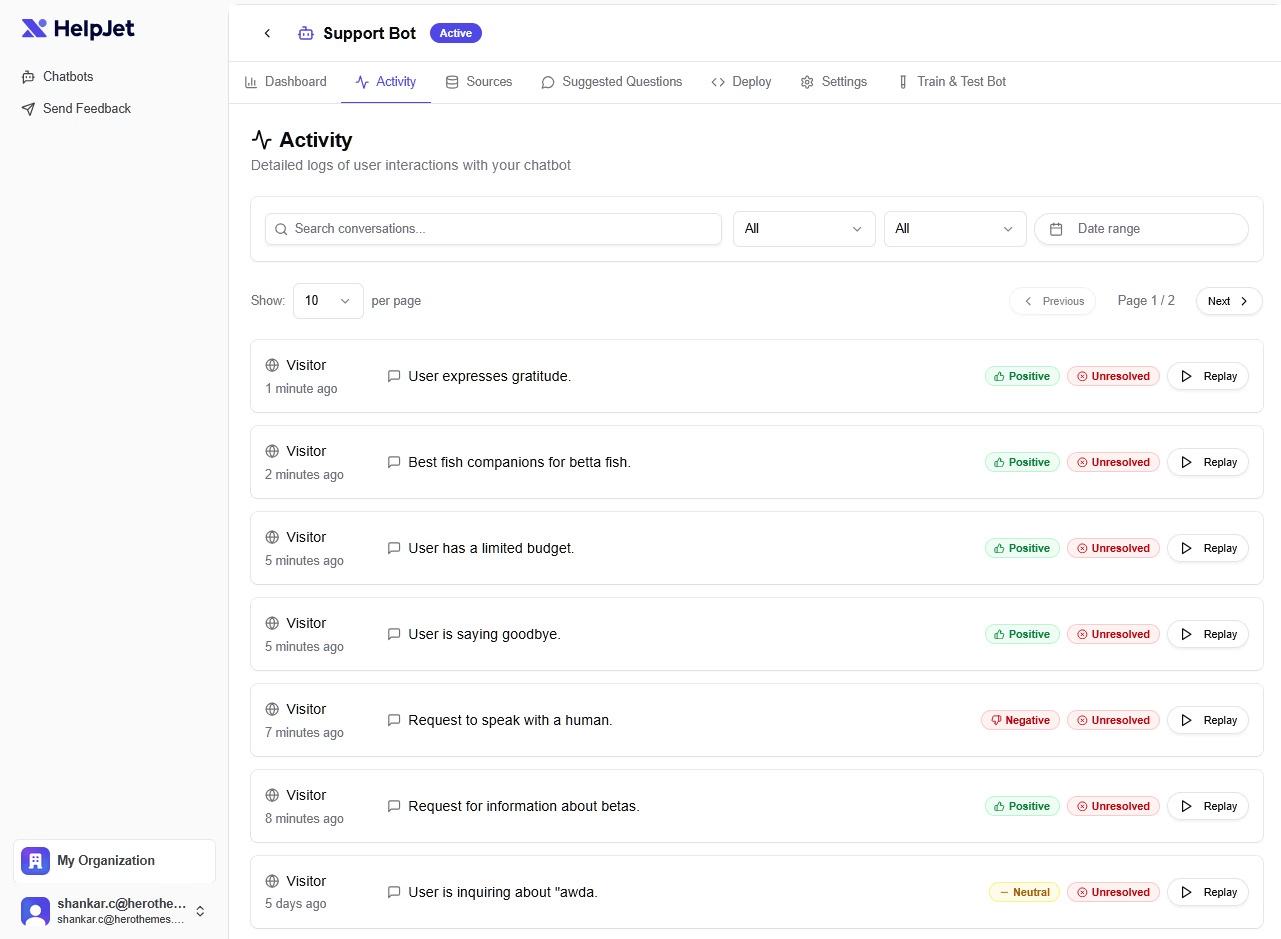
HelpJet handles the repetitive 80% of customer support so agents can focus on the 20% that actually needs judgment.
It's built around the idea that support teams shouldn't have to map decision trees before answering a single question.
It crawls your docs, website, and FAQs, then spins up a conversational agent trained on that material.
The resulting answers are accurate and human-like.
Key Features:
- Self-training from URLs, help articles, PDFs, and past chat history with zero flow-building required.
- Weekly automatic knowledge refresh to keep the bot in sync with your site as content changes.
- Intent and nuance detection that reads urgency and frustration.
- Multi-bot support
- Free side tools (Ticket Reply Generator, Ticket Summarizer, Email Reply Generator) that are useful even without the chatbot.
Pricing
HelpJet is free to start with. The free forever plan covers 1 bot and 100 conversations per month.
Pro costs $29/month and unlocks 3 bots with 1,000 conversations. Add-ons include:
- Extra message credits ($30 per 1,000),
- Extra bots ($20/month each),
- White-labeling at $79/month.
My Take
HelpJet is one of the best AI chatbot for small and mid-size teams that want AI deflection without enterprise pricing or a second platform to babysit.
To provide your team with the best customer service suite, pair HelpJet with Heroic Knowledge Base and Heroic Inbox.
2. CoSupport AI
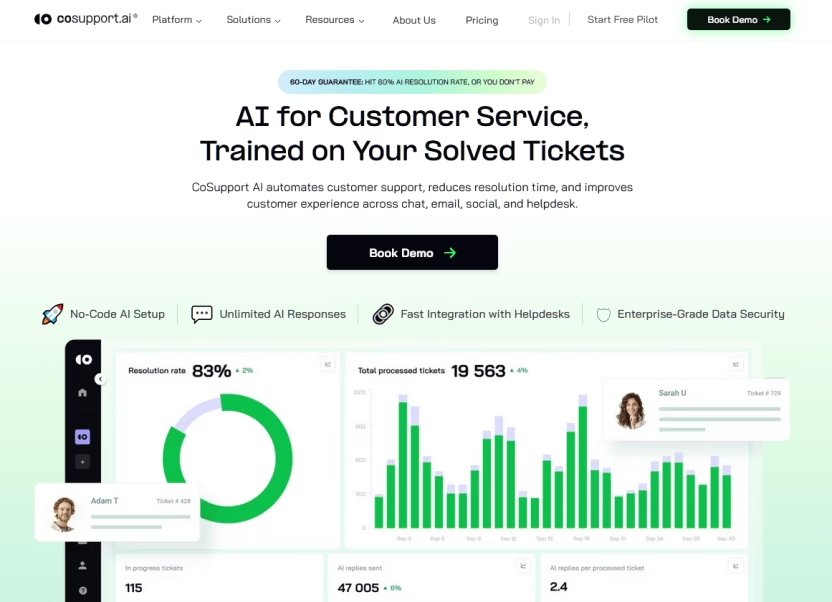
CoSupport AI is a customer support automation platform designed for teams that want to reduce repetitive workload and improve response efficiency without replacing human agents entirely.
The platform combines an autonomous AI Agent with an AI Assistant for support teams. Helping businesses automate ticket handling, suggest replies, summarize conversations, and manage high ticket volumes more effectively.
Key Features:
- An autonomous AI Agent that resolves repetitive customer requests automatically.
- An AI Assistant that helps agents generate replies and summarize tickets.
- Native integrations with Zendesk and Freshdesk.
- AI training based on historical tickets, knowledge bases, and internal documentation.
- Analytics and reporting tools for tracking resolution rates, workload, and support performance.
- Flexible deployment options. Including server-based infrastructure for companies with stricter security requirements.
Pricing
CoSupport AI pricing starts from $0.04 per AI-generated response, $0.19 per resolved ticket. Or fixed monthly server plans starting at $99/month for unlimited AI responses.
My Take
If your team already runs on Zendesk or Freshdesk, CoSupport AI is one of the easier ways to add real automation without tearing down what works.
What stands out is the combination of autonomous ticket handling and agent-assist functionality in one platform. Instead of focusing only on chatbot interactions, the platform is designed around real support operations, including ticket resolution, workload reduction, and team productivity.
3. Rasa (Open-Source Framework)
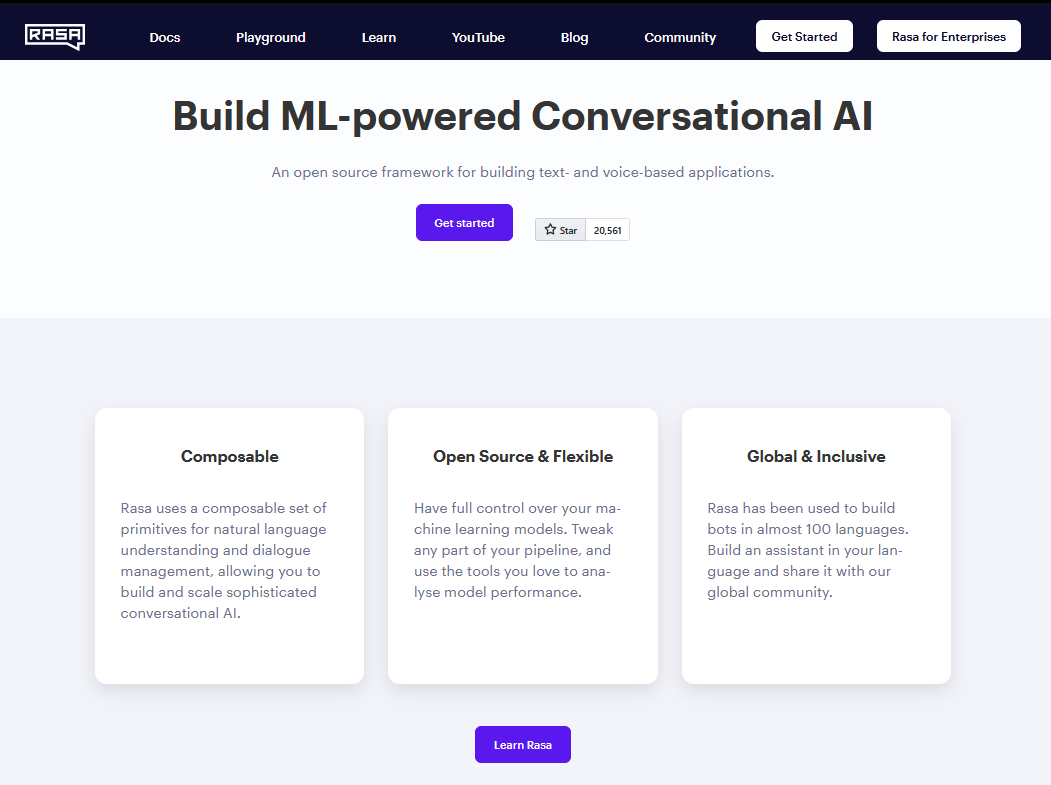
Rasa is a bit different from other chatbots on this list. It's not a ready-made SaaS chatbot but an open-source framework for conversational AI.
That means you can download Rasa, customize everything, and deploy on your own servers. It’s favored by developers and enterprises who want max flexibility (and no vendor lock-in).
I included Rasa in this list because for some, especially developer teams or those with strict data policies, it’s the best route to an AI chatbot.
Key Features:
- Open Source and Extensible: Rasa’s core and X (paid enterprise features) are open-source. You have access to all the code and can extend or modify it.
- NLU (Natural Language Understanding): Rasa NLU handles intent classification and entity extraction. You provide training examples (“I lost my card” -> intent: replace_card, entity: card_type maybe) and it uses machine learning to generalize.
- Dialogue Management with Stories/Rules: Rasa uses a concept of stories (example conversations) and rules to manage dialogue context.
- Action Server for Custom Actions: You can write Python code for custom actions. Things like querying a database, sending an email, or performing any back-end logic, and the bot can call these actions during the conversation.
- Deployment and On-Prem: Run Rasa on your own server, in a private cloud, or even serverless. This means no data leaves your environment unless you send it. Companies concerned about data privacy love this.
Pricing
Rasa centers on CALM (Conversational AI with Language Models), its approach that lets a language model handle understanding while your business logic stays in code. The free tier is the Rasa Developer Edition, which runs locally and in production up to a set monthly conversation limit.
Above that sit Rasa Pro (the pro-code framework) and Rasa Studio (a no-code builder on top of it). Real production volume and support are priced on request, so budget past the free tier.
My Take
Rasa is a fantastic option for those who have the in-house capability to utilize it. A fitting solution for tech-savvy teams and custom product environments. Example, a startup that wants their chatbot deeply wired into their platform, or a large enterprise with specific AI compliance needs.

4. Parloa
Every support leader knows the sound of a customer giving up on a phone menu. Parloa was built for that problem first.
It is an enterprise-level AI agent management platform designed to automate customer service across voice, chat, and messaging.
As a voice-first solution, Parloa is particularly effective for contact centers looking to replace traditional IVR systems with natural, AI-driven conversations.
Key Features:
Here's what stands out once you get past the sales demo:
- Low-latency voice AI: Parloa holds back-and-forth phone dialogue in real time. The awkward pause after a caller stops speaking is what makes older systems feel mechanical, and closing that gap changes the experience more than anything else on this list.
- Omnichannel journeys: Phone, WhatsApp, web chat, and Microsoft Teams all run from a single platform.
- Enterprise integrations: Native connections to Salesforce, Genesys, Microsoft Dynamics, Twilio, Five9, SAP, ServiceNow, and Zendesk.
- Multilingual Capabilities: Supports automated conversations in over 35 languages, allowing global teams to scale efficiently.
- Security and compliance: ISO 27001:2022, SOC 2 Type 1 and Type 2, PCI DSS, HIPAA, GDPR, and DORA attestations, plus a published EU AI Act statement.
Pricing
Parloa charges on consumption and outcomes tied to conversation volume, with no public tiers and no self-serve signup, so every deal runs through sales.
My Take
Voice is where Parloa earns its money. For large organizations where difficult conversations, claims, cancellations, and billing disputes are still handled over the phone, Parloa is one of the more capable solutions for automating routine calls without making callers feel like just another number. However, a voice agent is only as good as the information behind it, so connect it to a knowledge source that your human agents already trust, rather than a folder of outdated PDFs.
5. Hiver
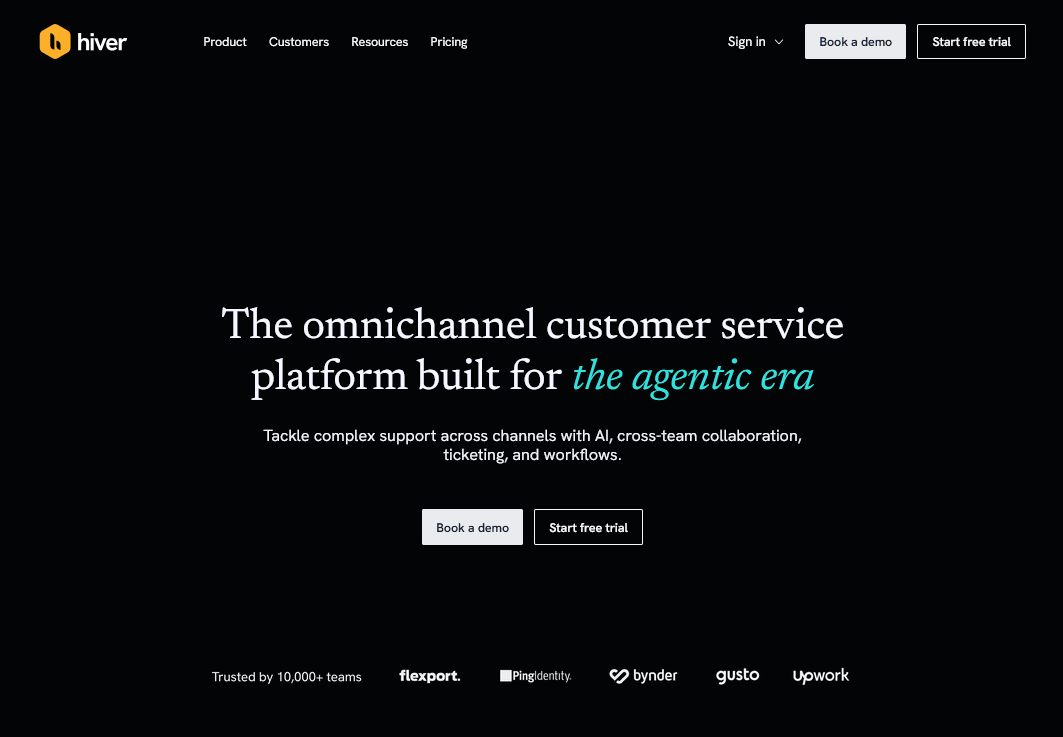
Hiver is an agentic customer service platform. Unlike tools that only deflect FAQs, Hiver’s Agentic chatbot is designed to resolve difficult requests end-to-end by pulling context from your CRM, ERP, and order management systems.
Originally a shared inbox add-on in 2011, Hiver has grown into a comprehensive support platform offering ticketing, analytics, and AI. For teams using Google Workspace for support, the main attraction is the near-zero learning curve.
Hiver's AI agents are self-improving, learning from your best replies and policies to ensure that the hundredth request is handled even better than the first.
Key Features:
- AI Agents and AI Copilot: Draft replies from your ticket history and knowledge base, summarize long threads, and close out routine questions like order status or password resets.
- Self-Updating Help Center: Automatically identifies gaps in documentation and turns resolved conversations into structured articles.
- Shared inbox and ticketing: Assign emails, leave internal notes, and rely on collision alerts so two agents don't answer the same customer.
- Multichannel workspace: Email, live chat, and a help center, with voice sold as a paid add-on.
- Analytics, SLAs, and CSAT: Hiver tracks workload and satisfaction, but SLA management and CSAT surveys start at Pro. If you answer response-time targets, Pro is your real starting tier, not Growth.
Pricing
Hiver offers a limited free plan, then Growth at $25, Pro at $55, and Elite at $85 per user a month on annual billing, with monthly rates running $10 higher per tier.
AI Agents and AI Copilot are included with the Growth plan and above, rather than being metered as an add-on per resolution, which makes forecasting the bill far easier than with most competing tools.
My Take
I'd recommend Hiver to most Google Workspace teams for one unglamorous reason: adoption costs almost nothing. Agents keep the inbox they know, so the rollout conversation is short and the usual resistance from a support team never really shows up.
6. Tidio
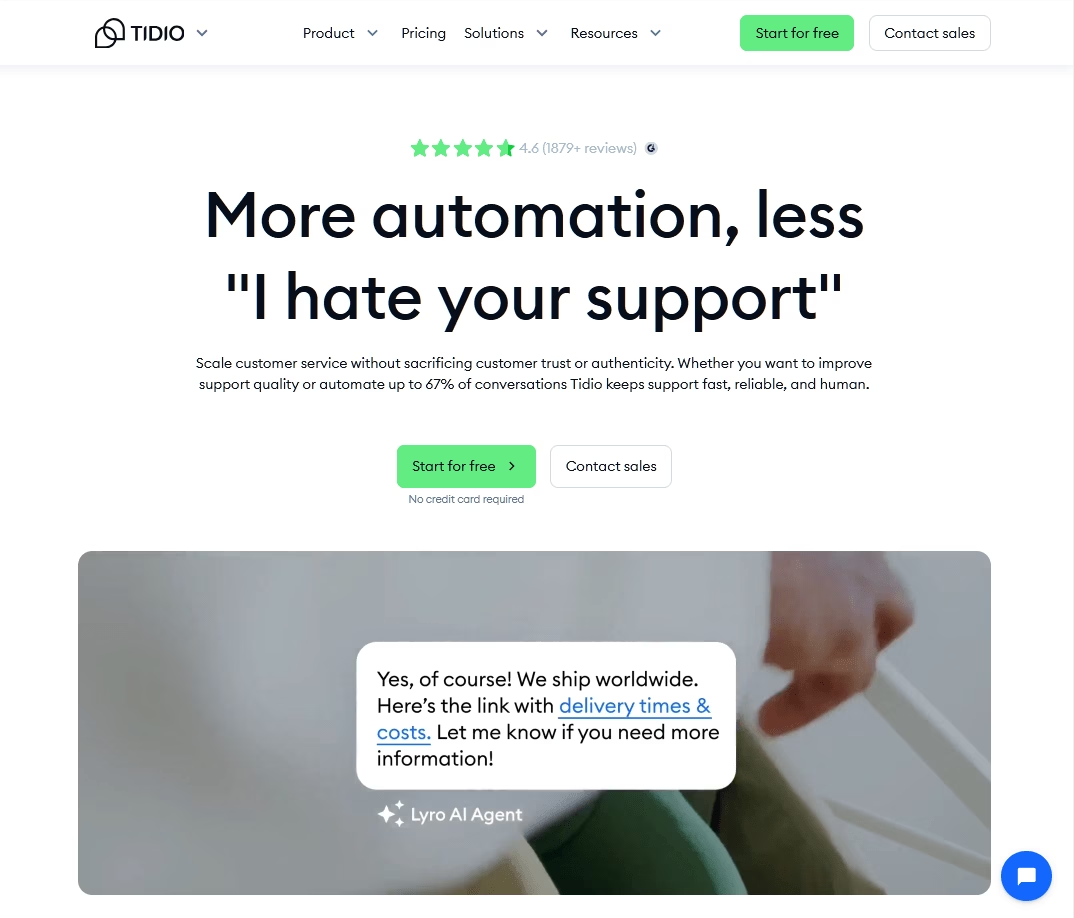
Tidio is a versatile customer service platform that combines live chat, help desk ticketing, and advanced AI automation.
Its flagship AI agent, Lyro, is designed to instantly resolve customer queries by training on your website’s knowledge base and support documents.
Unlike basic rule-based bots, Tidio’s AI understands context and nuances, providing helpful answers that feel natural. It’s built for businesses that want to provide 24/7 support without increasing their headcount.
Key Features:
- Lyro AI Agent: Offers conversational, human-like answers based on your verified content and FAQs.
- Multi-channel dashboard: Consolidates chats from live chat, email, Messenger, and Instagram into one inbox.
- No-code Flows: A visual builder for support and sales automations.
- Real-time visitor list: See who's browsing and jump into the high-value chats yourself.
Pricing
Tidio offers a free plan that includes 50 Lyro AI conversations and basic live chat features. Paid plans start at $29 per month for the Starter tier, while the Growth plan ($59/month) adds advanced automation and higher conversation limits.
My Take
Tidio is arguably the best balance of power and simplicity for small businesses. Lyro AI is incredibly easy to set up, making it ideal for teams that need to scale support without a massive technical overhead.
7. Ada
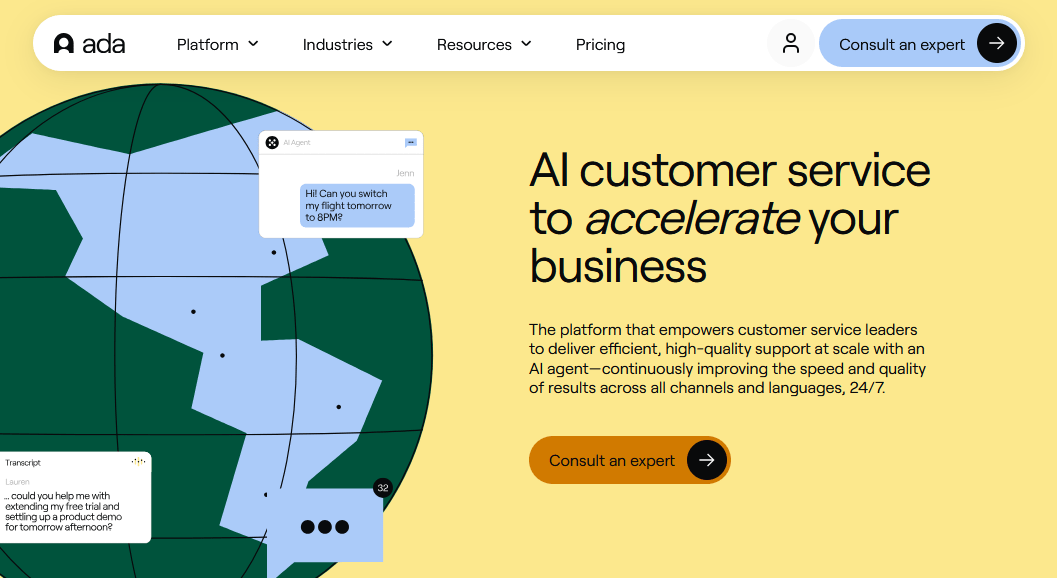
Ada is a powerhouse AI chatbot platform that many large brands (Canva, Pinterest, Square) use to automate customer service at scale.
Ada focuses on letting non-technical support teams build and manage a sophisticated chatbot that can handle high volumes and personalized tasks.
Key Features:
- High Automation Rate: Ada publishes customer case studies in the 70% to 84% automated-resolution range, but treat those as vendor-reported best cases, not a guarantee. In testing, Ada can check an account status, process a refund, or reset a password through its integrations, not just tell the user how.
- No-Code Bot Builder with AI: Ada’s builder tool is designed for support folks rather than developers.
- Personalization and Context: It can greet a user by name, reference their last order, or offer troubleshooting steps specific to the model of product they bought.
- Security and Compliance: It offers encryption, role-based access, audit logs, and compliance with standards like SOC2, GDPR, HIPAA.
- Unified Reasoning Engine: In February 2026, Ada launched a dual-reasoning architecture that lets one AI “brain” handle both instant answers and longer background tasks across channels.
Pricing
Ada doesn't list public prices, and it sells through a sales team on custom, enterprise-scale contracts. Like most enterprise CX platforms, it now prices around resolved conversations rather than per agent, so model your real ticket volume before you commit.
My Take
Ada is not a plug-and-play toy; it’s a strategic platform. In short, if your support operation is drowning in tickets or you have a large user base, Ada is worth a look.
8. Netomi
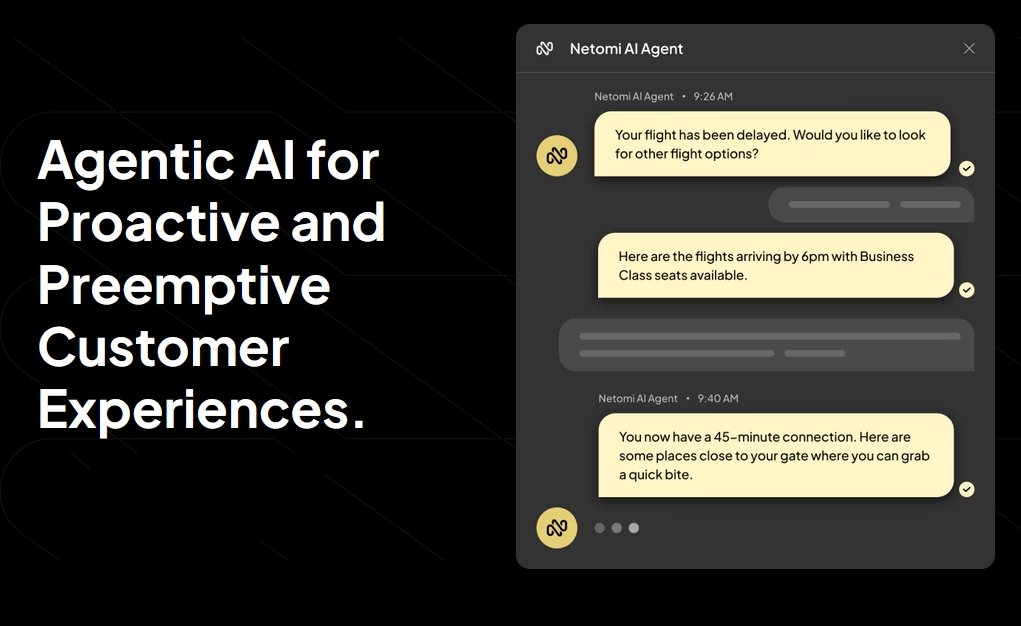
Netomi is an AI customer service platform that excels in back-end ticket resolution as much as live chat.
Think of it as an AI brain that can live in email, chat, social media wherever your customers reach out and solve their issues instantly.
Netomi focuses heavily on automated case resolution and boasts compliance and reliability features that enterprises require.
Key Features:
- Omnichannel Case Resolution: Netomi can handle customer queries on email, web chat, Facebook, WhatsApp, voice assistants, and more from one AI model.
- Use of deep learning to grasp customer intent and provide accurate, context-aware responses.
- Integrations
- Security and Compliance: It has robust security, is SOC2, GDPR, CCPA, and even HIPAA compliant for healthcare.
- Detailed Analytics: Comprehensive dashboards that show metrics such as resolution rates, deflection rates, average handle time reductions, and customer satisfaction scores.
Pricing
Netomi keeps its pricing behind a sales call. Annual contracts are sized according to your deployment, and there is no self-serve trial. It's designed for Fortune 500 customer experience (CX) teams, so it's not ideal for a small team that just wants to test something this quarter.
In April 2026, Netomi raised $110 million in a funding round led by Accenture Ventures and including Adobe Ventures and WndrCo. This tells you where its focus lies: large, complex, and regulated brands.
My Take
If you’re in a high-volume, regulated industry that requires high accuracy—Netomi should be on your radar. It’s one of the most mature AI customer service platforms out there. Capable of meeting the needs of Fortune 500 support teams, but equally beneficial to startups ready to leverage AI for efficiency.
9. Yellow.ai
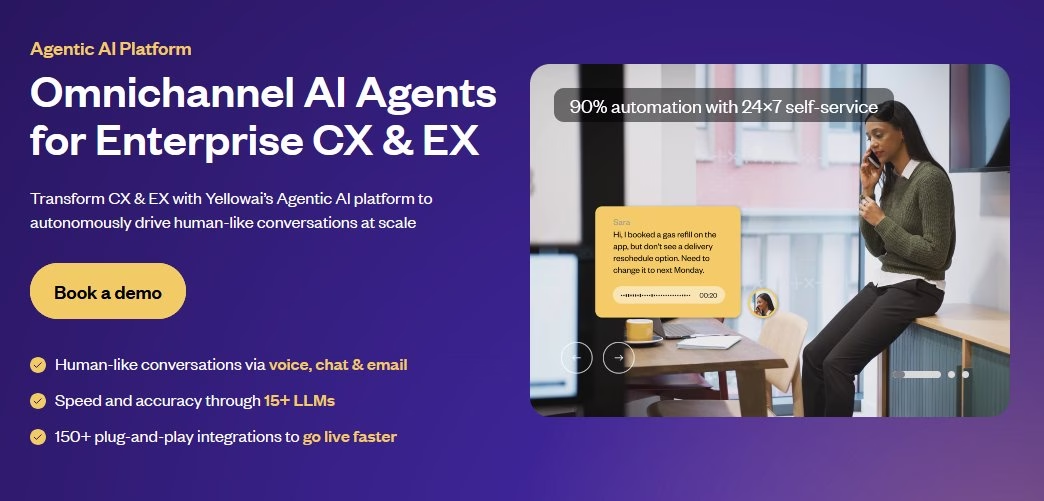
Yellow.ai is a leading enterprise conversational AI platform. It’s known for handling both text and voice bots.
The platform emphasizes a mix of human-like AI and easy automation tools, suitable for everything from customer support to HR bots.
It’s a strong all-rounder, especially beneficial if you want one solution for many departments or use cases.
Key Features:
- Multilingual and Multimodal: Converse in 100+ languages and even handle voice interactions.
- No-Code Builder with Rich UI: Visual Flow Builder for designing conversations, plus lots of pre-built templates for industries (banking, e-commerce).
- CRM and System Integrations: Integrates with numerous business systems to fetch or update data during conversations.
- AI with sentiment and intent accuracy
- Human agent handoff and live chat module
Pricing
Yellow.ai offers a free plan with 1 AI agent, 2 seats, and 500 chat sessions a month, after which it bills about $0.99 per resolution. Its enterprise tier is quote-only, though its AWS Marketplace listing points to five-figure annual contracts as the practical floor.
My Take
The consistency with Yellow.ai across channels is a big win: customers don’t get siloed experiences. One thing to highlight is their voice AI, not all chatbot platforms have strong voice integration, and Yellow does.
Ultimately, Yellow.ai is a top choice for enterprise-grade deployments where multilingual and omnichannel is a must. For a smaller business, it might be overkill.
10. ChatBot by LiveChat
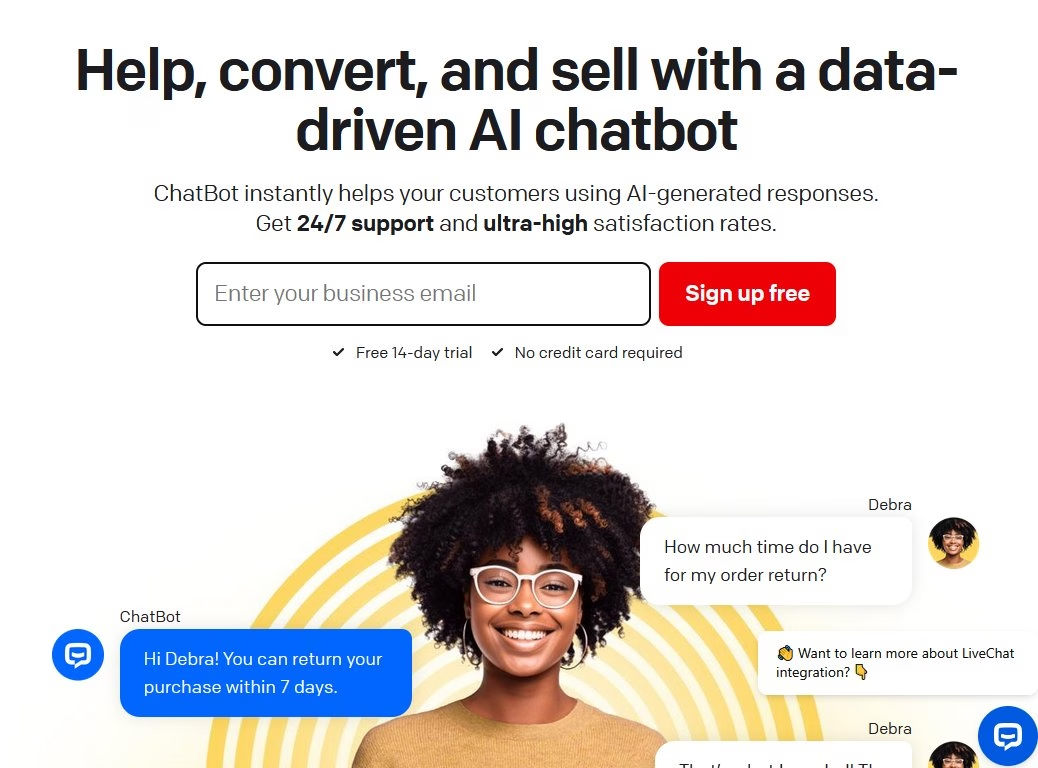
ChatBot by LiveChat Inc. is a popular platform focused on making chatbot creation simple and effective for businesses.
If you use LiveChat on your site or even if you don’t, ChatBot provides a visual builder and tons of integrations to create conversational experiences quickly.
It’s especially strong for SMBs and mid-market companies that want a reliable chatbot without fuss.
Key Features:
- Visual Drag-and-Drop Builder: ChatBot has one of the most intuitive workflow builders I’ve tried.
- Integration with LiveChat and Other Tools: If you already use LiveChat, ChatBot integrates seamlessly.
- Templates and Use Cases: ChatBot comes with prebuilt templates for different scenarios. Customer support, sales, booking, recruitment, you name it.
- Multi-channel Deployment
- Analytics shows basic metrics like number of chats, completion rates of scenarios, and drop-off points.
- Training section where it lists unrecognized user messages, so you can assign them to an existing answer or create a new response.
Pricing
ChatBot (now under the Text brand, same team as LiveChat) moved to per-user, resolution-based pricing.
The Essential plan runs $19 per user a month on annual billing (about $25 monthly) but includes only 10 AI resolutions, and Growth is $79 per user a month with 200 resolutions.
Extra resolutions sell in packs that work out to roughly $0.99 each, so watch those small included allowances.
My Take
ChatBot (LiveChat) is one of my go-to recommendations for a practical, no-nonsense chatbot solution. It doesn’t have the ultra-fancy self-learning AI of some others, but it absolutely nails the common use cases with ease.
11. IBM watsonx Orchestrate
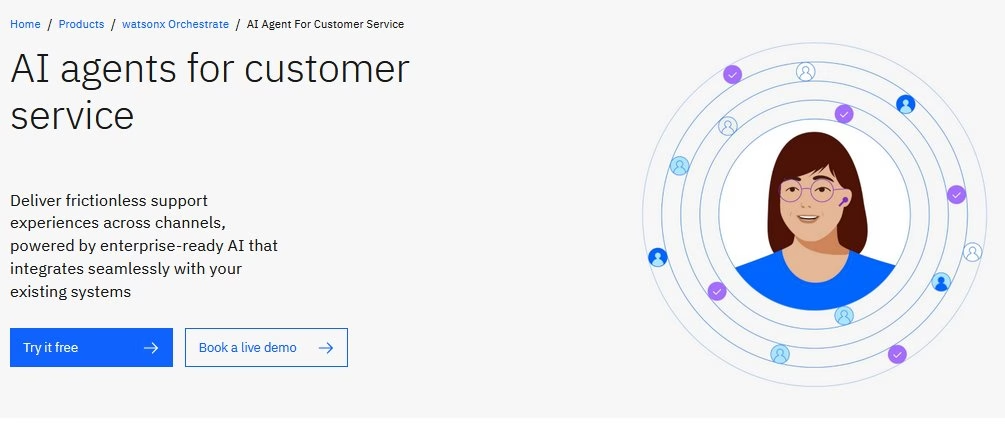
IBM watsonx Orchestrate is one of the veterans in the AI chatbot space. It’s a platform that allows you to build chat or voice assistants with strong NLP capabilities.
Companies often choose watsonx Orchestrate when they want a trusted name and the ability to deploy in various environments (IBM Cloud, other clouds, on-premises).
Key Features:
- Natural language understanding and search skill
- Dialog and Digression Handling: The dialog editor in Watson Assistant is node-based (like a flowchart of conversation). It supports context variables, branching, slots (to fill entities), and even digressions.
- Voice Integration: Integrates with voice channels by using text-to-speech and speech-to-text.
- Integration and Customization: it has a robust API, so you can integrate it anywhere (website widget, mobile app, messaging apps) by calling the API.
- Enterprise Features and Watson Discovery: For those needing advanced stuff, IBM offers integration with Watson Discovery, which is like an AI-powered search across large document sets. Helpful for, say, a company that wants the bot to answer from tons of unstructured docs.
Pricing
You can try watsonx Orchestrate for free.
There is a Essentials plan starting at $500/month/
My Take
IBM watsonx Orchestrate is the old reliable of this list. It may not generate the buzz of newer players, but it's very capable, and IBM now positions it as an agentic platform that can both chat with customers and run multi-step tasks across your systems.
12. REVE Chat
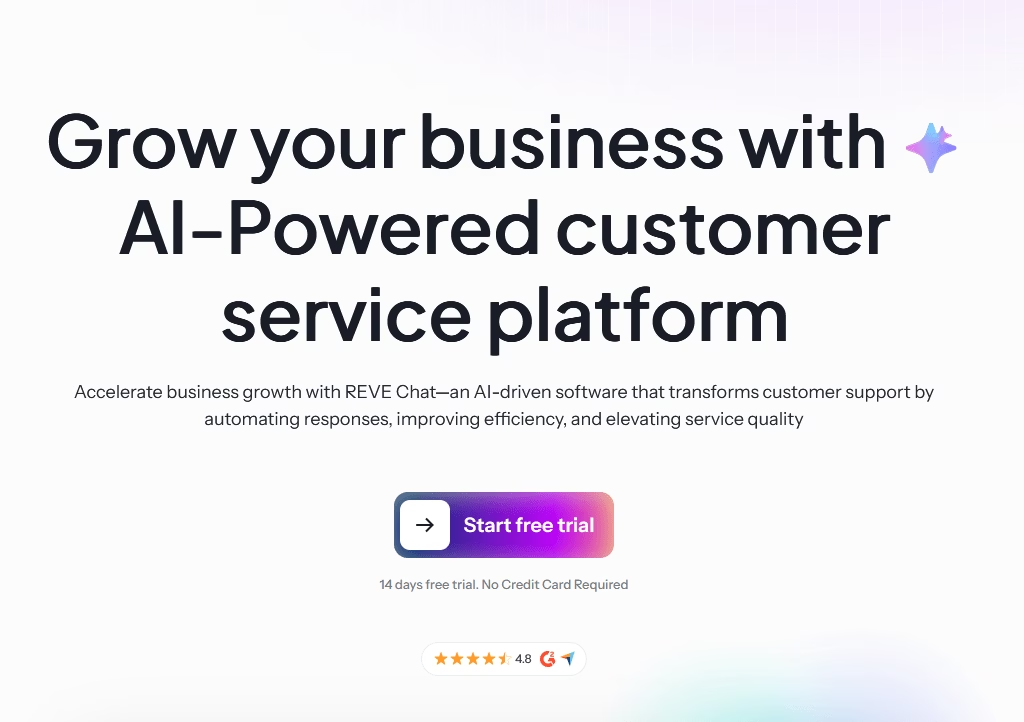
REVE Chat is a live chat software that also offers AI chatbots, co-browsing, and other engagement tools.
It’s particularly popular with eCommerce and financial services websites.
The notable thing about REVE Chat is that it provides multiple support channels (live chat, bots, voice/video chat, etc.) under one roof at a competitive price.
Key Features:
- AI-powered chatbot with visual flow builder
- Live Chat and Bot Integration: The chatbot can be set to handle initial inquiries and then transfer to a live chat agent if it can’t assist or upon request.
- Co-Browsing and Video Chat: Agents can see the user’s screen (with permission) and guide them by highlighting elements.
- Multi-Channel: Web, Mobile, Social: It can be deployed on your website, in your mobile app, or integrated with Facebook Messenger. There’s also WhatsApp integration.
- Analytics and monitoring
Pricing
REVE Chat is known for being affordable. They have plans starting at around $40-50/month that include 1 agent and chatbot functionality, which is quite budget-friendly.
My Take
REVE Chat packs a lot of practical functionality in an accessible package. For a company that wants to level up their online support quickly: adding AI FAQs, live chat, and even advanced help like co-browsing – REVE Chat covers all bases without much complexity.
13. YourGPT
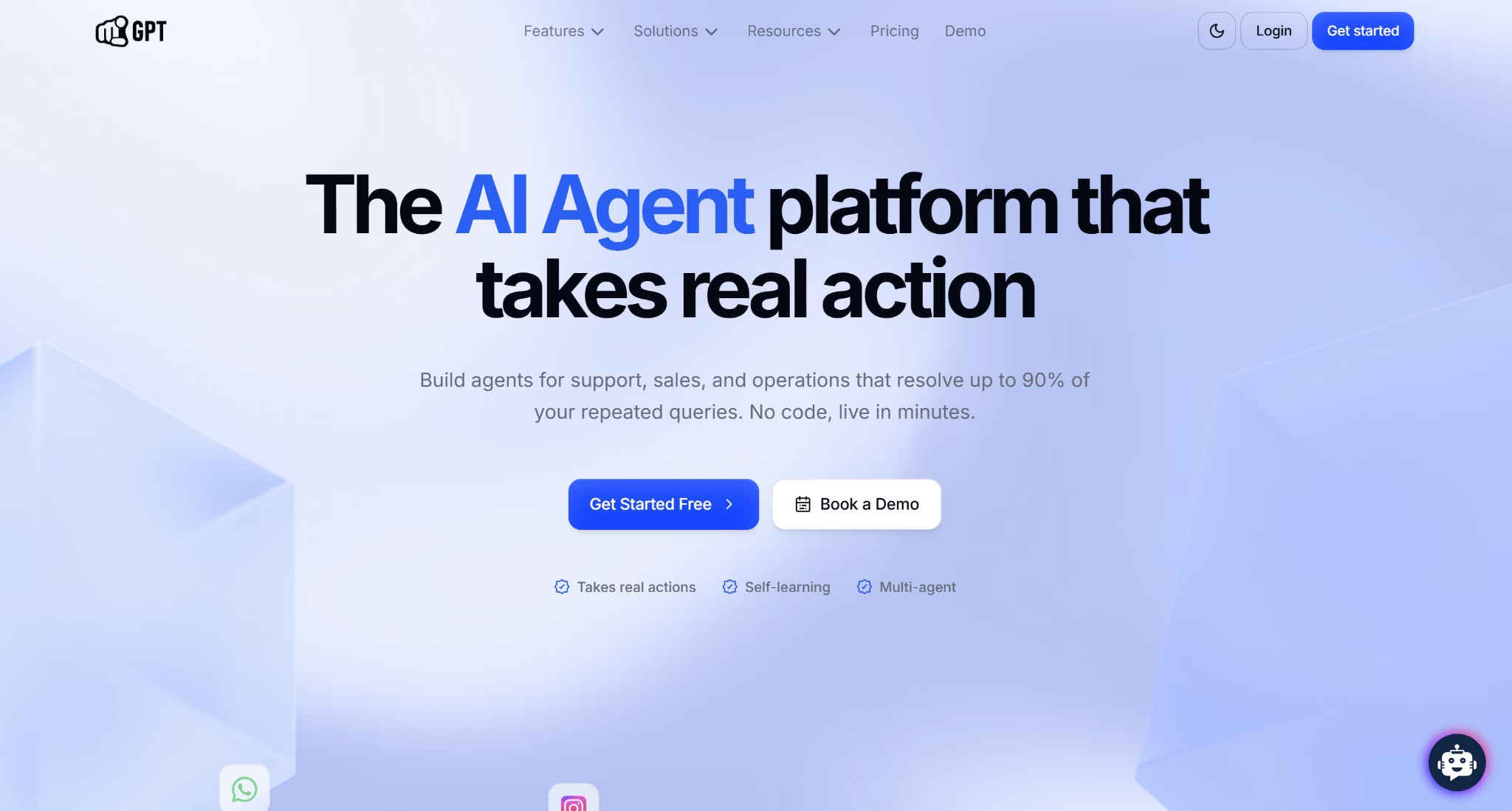
YourGPT is a no-code AI Agent platform designed for teams that need omnichannel customer support, sales, and operations automation.
Unlike traditional chatbots that only respond to queries,it also can process refunds, create tickets, update CRMs, and book meetings.
Key Features:
- Omnichannel Deployment: Work with WhatsApp, Instagram, Slack, Discord, Telegram, email, web, and phone with real-time synchronization across all channels.
- AI self-learns automatically from conversations without manual retraining or flow-building required.
- Process refunds, create tickets, update customer records, and execute custom workflows.
- Multi-Agent Systems: Build specialist agents for billing, refunds, technical support, and sales that hand off intelligently with full context preserved.
- Visual drag-and-drop builder for simple workflows, plus AI Studio for complex multi-step automations with conditional logic.
- 100+ language support.
- Choose from multiple AI models. Google Flash, GPT 5.4, Deepseek.
Pricing
YourGPT sells tiered monthly plans built around AI credits and agent seats, with a free trial and no credit card required to start.
YourGPT pricing starts at $39/month for the Essential plan (2 agents, 10M AI credits). Professional is $129/month (5 agents, AI Studio access), and Advanced is $499/month (10 agents, custom branding).
My Take
YourGPT is worth considering to answer repetitive customer questions. The pricing is fair and you get a powerful set of features that help you automate huge part of your customer support strategy.
Final Thoughts
Today’s AI chatbots for customer service range from plug-and-play simple to deeply customizable and powerful.
The “best” one for you depends on:
- Your business size
- The channels you operate on
- Your budget
- How much control or complexity you need.
A small business might love the ease of HelpJet or REVE Chat.
A large enterprise might lean toward Ada or Netomi for heavy-duty automation wired into all their systems, or toward Parloa if phone support is a major channel.
And if you’re inclined to tinker and build, Rasa stands out as the developer’s choice for full control.
Before wrapping up, here’s a bit of advice for implementing AI chatbot:
- Start with a clear goal
- Involve your support agents in the setup
- Train and tune continuously
- Disclose that customers are talking to AI, which is now required in the EU and for sales chats in California
- Mind the tone and personality
- Plan the human handoff
- Measure impact and adjust
For customer-centric businesses, investing in an AI chatbot is a no-brainer. As we move forward, chatbots will only become smarter. With the development of GPT-style models, it's possible that your bot could one day sound indistinguishable from a human!
I hope this rundown of the best AI customer service chatbots has given you a clearer picture of the field.
Best of luck!
Further Reading
10 Best AI Chatbot Plugins for WordPress (Free and Paid Options)
10+ Best Customer Self-Service Solutions
AI in Customer Service: The Ultimate Guide for Support Teams
Customer Service Automation: What It Is, Examples & How To
Best AI Virtual Assistants for Small Businesses
How Top Companies Using AI for Customer Service
12 Best Chatbot Use Cases and Examples
9 Best eCommerce Chatbots (Free and Paid Options)



Leave A Comment?
You must be logged in to post a comment.