8 Best E-Commerce Chatbot Examples to Learn From (Expert Guide)

The E-commerce chatbot landscape in 2026 looks nothing like it did even two years ago.
What started as clunky decision-tree bots that frustrated more customers than they helped has now been powered by generative AI, agentic workflows, and conversational commerce that drives real revenue.
As someone who has spent over a decade managing customer support operations, I’ve watched this shift up close.
What strikes me most about 2026 isn’t the technology itself. It’s the widening gap between companies doing chatbots right and those doing them badly.
The difference comes down to strategy, not eCommerce chatbots.
If you’re running an E-commerce business without a solid chatbot strategy, you’re leaving money on the table and frustrating your customers at the same time.
In this guide we will examine 15 real-world E-commerce chatbot examples. You’ll find honest evaluations, community sentiment, pricing data, and practical takeaways for each.
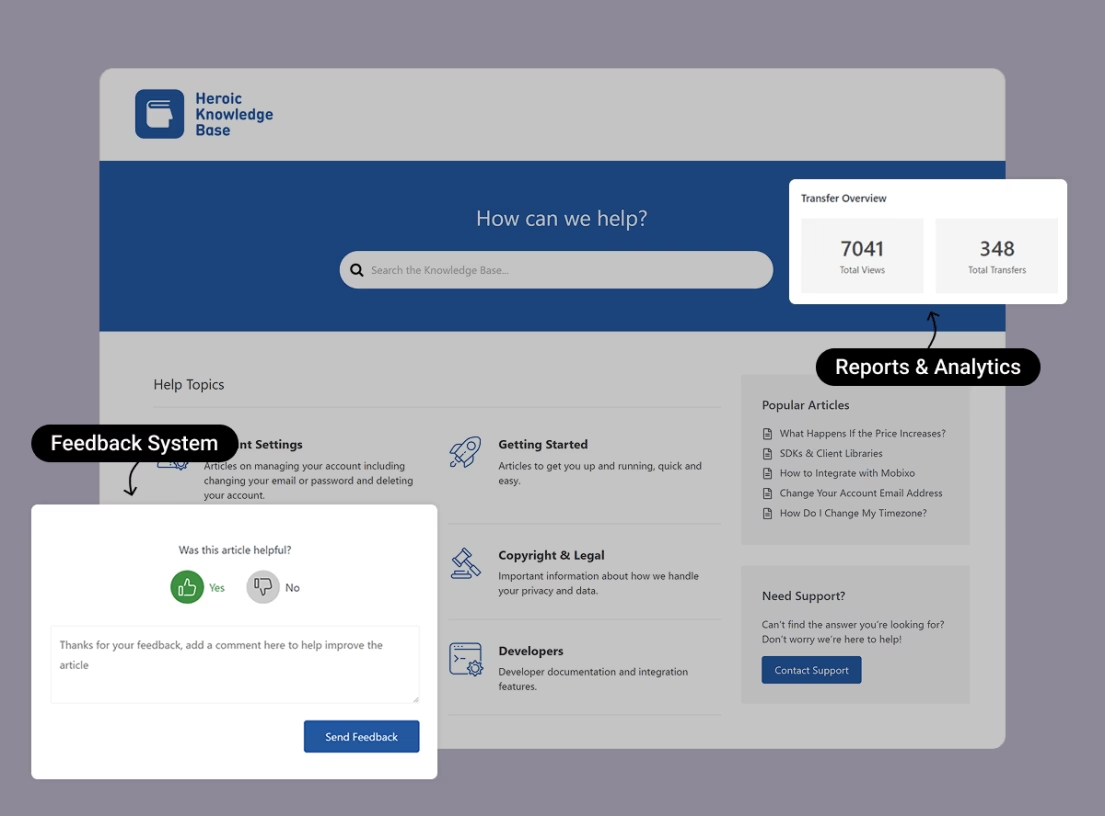
Heroic Knowledge Base
Create a beautifully designed, searchable knowledge base in minutes.
In This Guide
- Benefits of E-Commerce Chatbots
- Five Types of E-Commerce Chatbots (And When to Deploy Each)
- The 8 Best E-Commerce Chatbot Examples
- 1. Amazon Rufus: The Scale King Rewriting Shopping Behavior
- 2. eBay: AI ShopBot Assistant
- 3. Klarna AI Assistant: The Most Instructive Pivot in Customer Service History
- 4. Domino's DOM: Conversational Ordering
- 5. Alibaba AliMe: Customer Service at Unprecedented Scale
- 6. Shopify Magic and Sidekick: The Platform Play That Made AI Free for Millions
- 7. H&M: Fashion Finder Chatbot
- 8. Starbucks My Starbucks Barista: Voice Ordering That Works
- 1. Amazon Rufus: The Scale King Rewriting Shopping Behavior
- Frequently Asked Questions About E-Commerce Chatbots
Benefits of E-Commerce Chatbots
Before choosing which example to model your approach after, it’s worth understanding the benefits that make these investments pay off, backed by hard number:
- Cost reduction: Chatbot interactions cost $0.50–$0.70 each compared to $6–$15 for human agent interactions. IBM’s research also shows chatbots handle up to 80% of routine inquiries, cutting customer support costs by 30%.
- Revenue growth: chatbot these days can improve revenue by 20–30%. With proactive chat triggers, faster response times, and satisfied customers help contribute to these numbers.
- Personalization: HubSpot’s study found that 86% of CRM leaders say AI makes customer interactions feel more personalized. Every interaction makes the chatbot smarter. Making AI chatbots interactions more personalized than real humans now.
- Scalability: Alibaba’s E-Commerce chatbots handle two million daily sessions during normal operations and scale to 300 million queries during Singles’ Day. No human team can match that.
And the always-on nature (24/7 availability) of E-Commerce chatbots fills a gap that many businesses still underestimate.
Five Types of E-Commerce Chatbots (And When to Deploy Each)
Not all E-Commerce Chatbots are built the same.
Understanding the five main types helps you evaluate each example in this guide and choose the right architecture for your business.
1. Rule-Based Chatbots
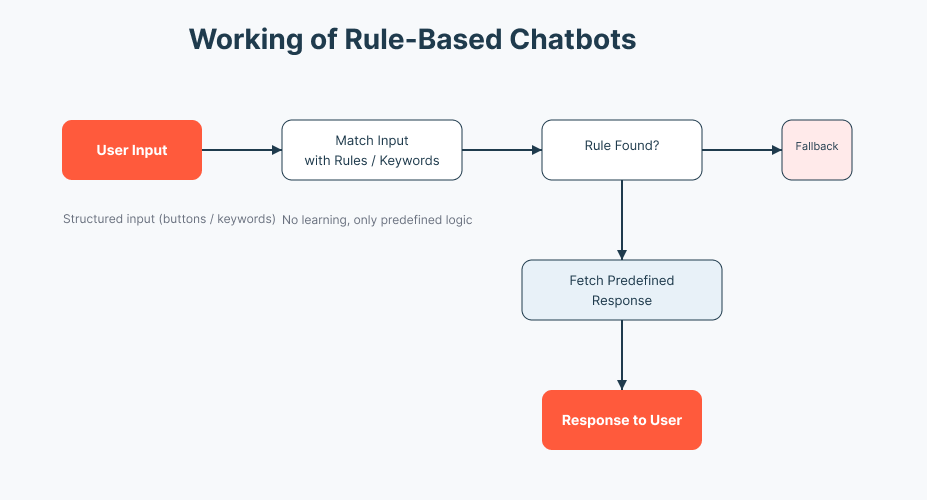
Rule-based chatbots in E-commerce run on predefined decision trees using “if/then” logic. Users click buttons or select menu options rather than typing naturally.
They’re affordable to build, predictable, and ideal for simple FAQ handling or structured flows like order status lookups.
2. AI-Powered NLP Chatbots
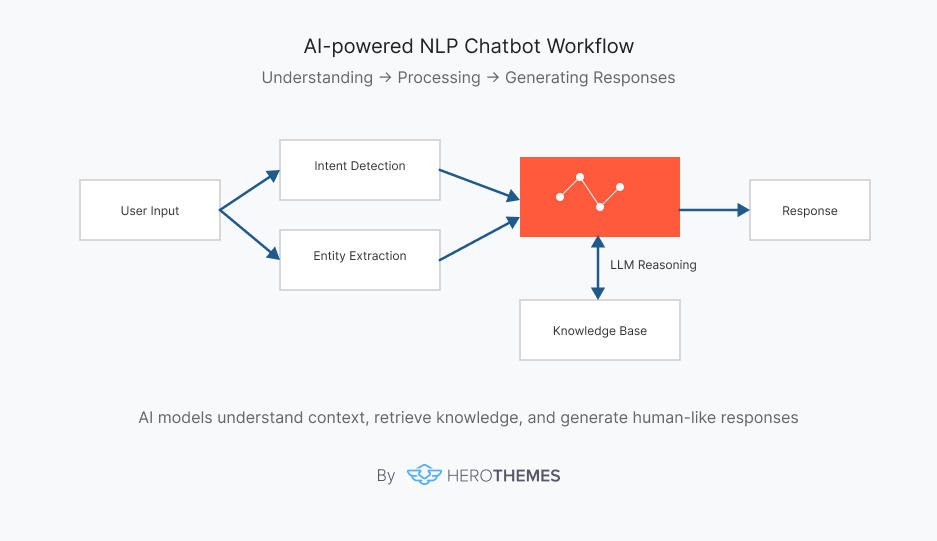
AI E-Commerce chatbots use natural language processing and machine learning to understand free-text input, context, and intent.
Modern versions integrate large language models and retrieval-augmented generation (RAG) to ground responses in business-specific data.
For example, Amazon’s Rufus (AI-powered chatbot) processes complex shopping queries across 250 million users.
The trade-off is cost, complexity, and the ever-present risk of hallucinations.
Rufus has been publicly criticized for recommending wrong products.
Explore:
10 Best AI Chatbots for Customer Service (2026 Picks)
The 11 Best WordPress AI Chatbot Plugins (Mostly Free)
3. Hybrid Chatbots
Hybrid E-commerce chatbots combine rule-based foundations with AI capabilities.
They use scripts for predictable queries, switch to NLP for complex ones, and escalate to humans when needed.
This is the approach I recommend for most E-commerce businesses.
4. Voice-Enabled Chatbots
There are also voice chatbots that use speech recognition and text-to-speech for hands-free interaction.
Voice chatbots in E-commerce work well for repeat purchases and accessibility but struggle with complex product discovery where visual browsing matters more.
5. Social Commerce Chatbots
These bots live inside messaging platforms like WhatsApp, Instagram, and Facebook Messenger.
To support customers with their preferred social channels.
The 8 Best E-Commerce Chatbot Examples

We rigorously test and research every product that we recommend through HeroThemes. Our review process. We may also earn a commission if you make a purchase through our links.
1. Amazon Rufus: The Scale King Rewriting Shopping Behavior
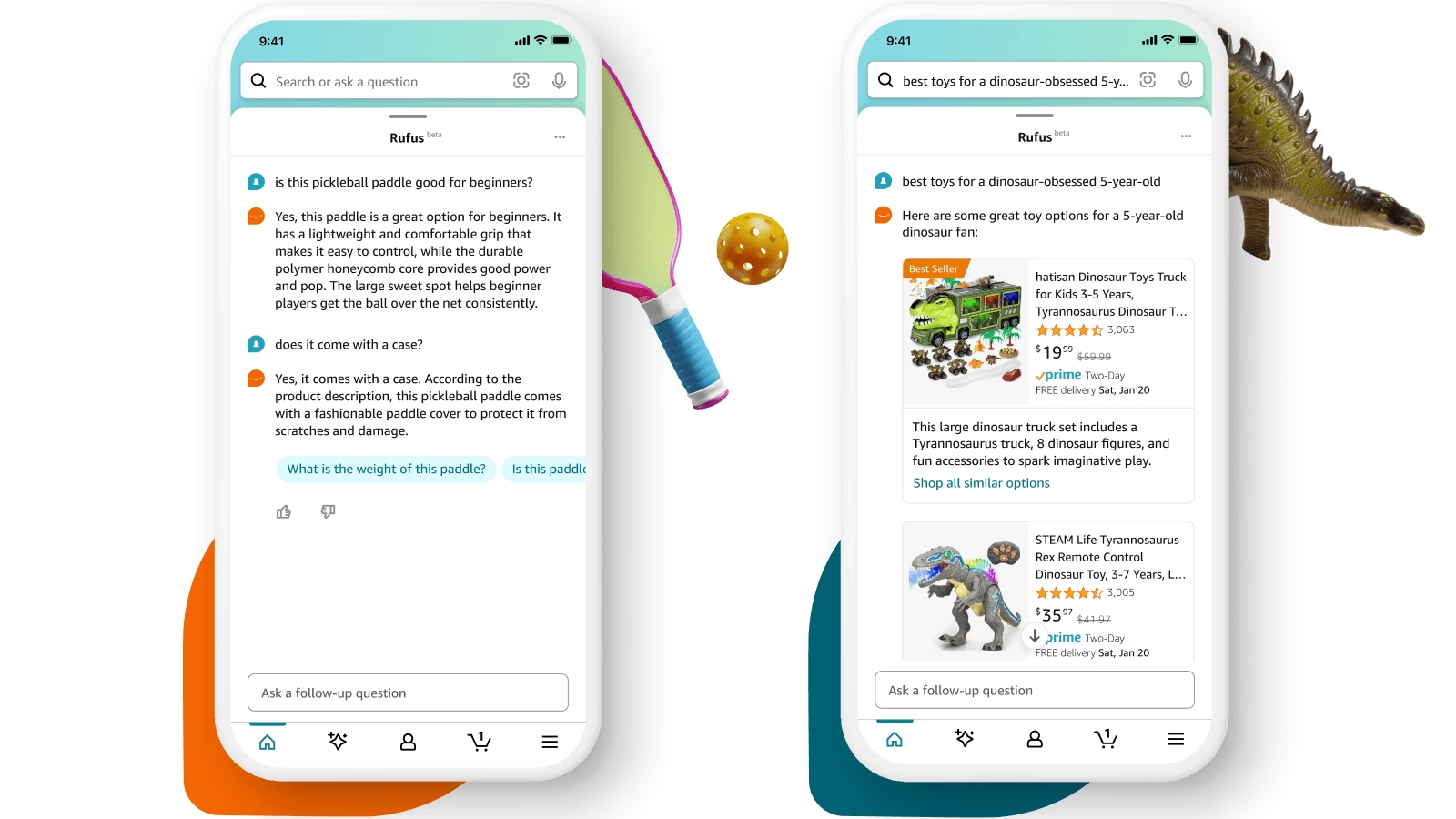
Named after Amazon’s first office corgi, Rufus runs on Amazon Bedrock using multiple LLMs including Anthropic’s Claude and Amazon Nova.
The numbers are hard to ignore:
- Over 250 million customers used Rufus in 2025.
- Monthly active users grew 149% year-over-year, with total interactions up 210%.
- Customers who engage with Rufus are 60% more likely to complete a purchase.
- During Black Friday 2025, purchase sessions involving Rufus spiked 75% day-over-day, compared to 35% without it.
- Amazon projects Rufus drives $10 billion in annualized incremental sales and $700 million in operating profits.
Key features and what to learn from Rufus:
- Conversational product search: Users ask natural-language questions like “what’s a good gift for a runner?” and get curated recommendations.
- Rufus pulls specs, reviews, and pricing for multiple products in one view, showing side by side comparisons.
- Customers get review summarization instead of reading hundreds of reviews, speeding up decision making.
- 30/90-day price history: Builds trust and reduces buyer hesitation.
- “Help Me Decide” feature guides overwhelmed shoppers through structured decision-making.
- Agentic auto-buy: Prime members set target prices; Rufus purchases automatically when prices drop.
- Visual search: Upload a photo to find similar products.
What NOT to do (and where Rufus still struggles):
- Accuracy still feels inconsistent. Answers can miss the mark or give wrong product picks.
- Product suggestions sometimes drift into the wrong category.
- Price expectations do not always match results.
- Sales push feels too strong.
Based on Amazon’s chatbot example, embed your E-commerce chatbot into the core shopping experience. Not as a separate support channel, but as part of search and discovery.
Rufus works because it’s where customers already are, not a separate destination.
2. eBay: AI ShopBot Assistant
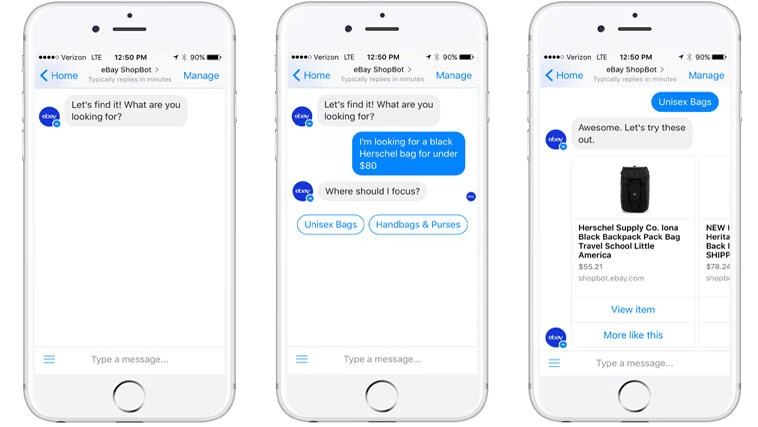
eBay ShopBot launched in October 2016 as a Facebook Messenger beta with genuinely creative features:
- Natural language search across one billion listings
- Image recognition (upload any photo to find similar products)
- Voice recognition
- Personalized profiles
- Sophisticated multi-turn dialog
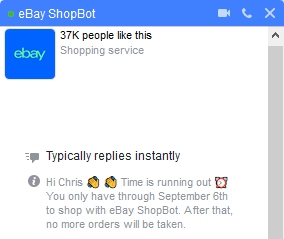
ShopBot never left beta. On September 6, 2018, the bot announced it would “cease taking eBay orders.”
Why It Failed:
- Platform dependency: ShopBot launched exclusively on Facebook Messenger.
- Permanent beta: It remained in beta for its entire two-year lifespan, signaling organizational ambivalence.
- Over-engineering: eBay’s team built extensive custom AI infrastructure that was soon made redundant by Google’s improved offerings.
- Siloed experience: ShopBot lived on Messenger rather than being integrated into eBay’s core app and website, where shoppers actually browse.
Takeaways From Ebay’s Chatbot Example:
Most people have never heard of eBay ShopBot. And eBay’s current automated assistant is very barebone.
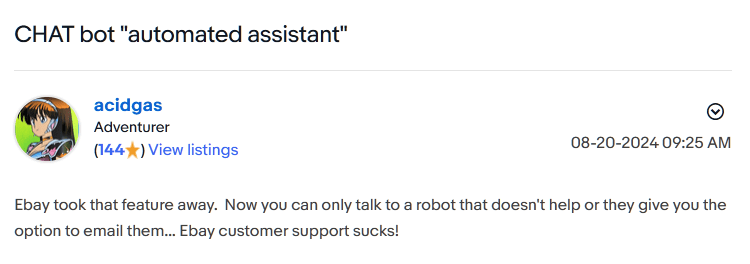
While Amazon’s Rufus now serves 250 million customers, eBay has no comparable AI shopping assistant in 2026, a strategic gap that grows wider every quarter.
Never build your chatbot exclusively on a third-party platform you don’t control.
Never stay in “beta” for two years.
And never separate your AI from your core product experience.
3. Klarna AI Assistant: The Most Instructive Pivot in Customer Service History
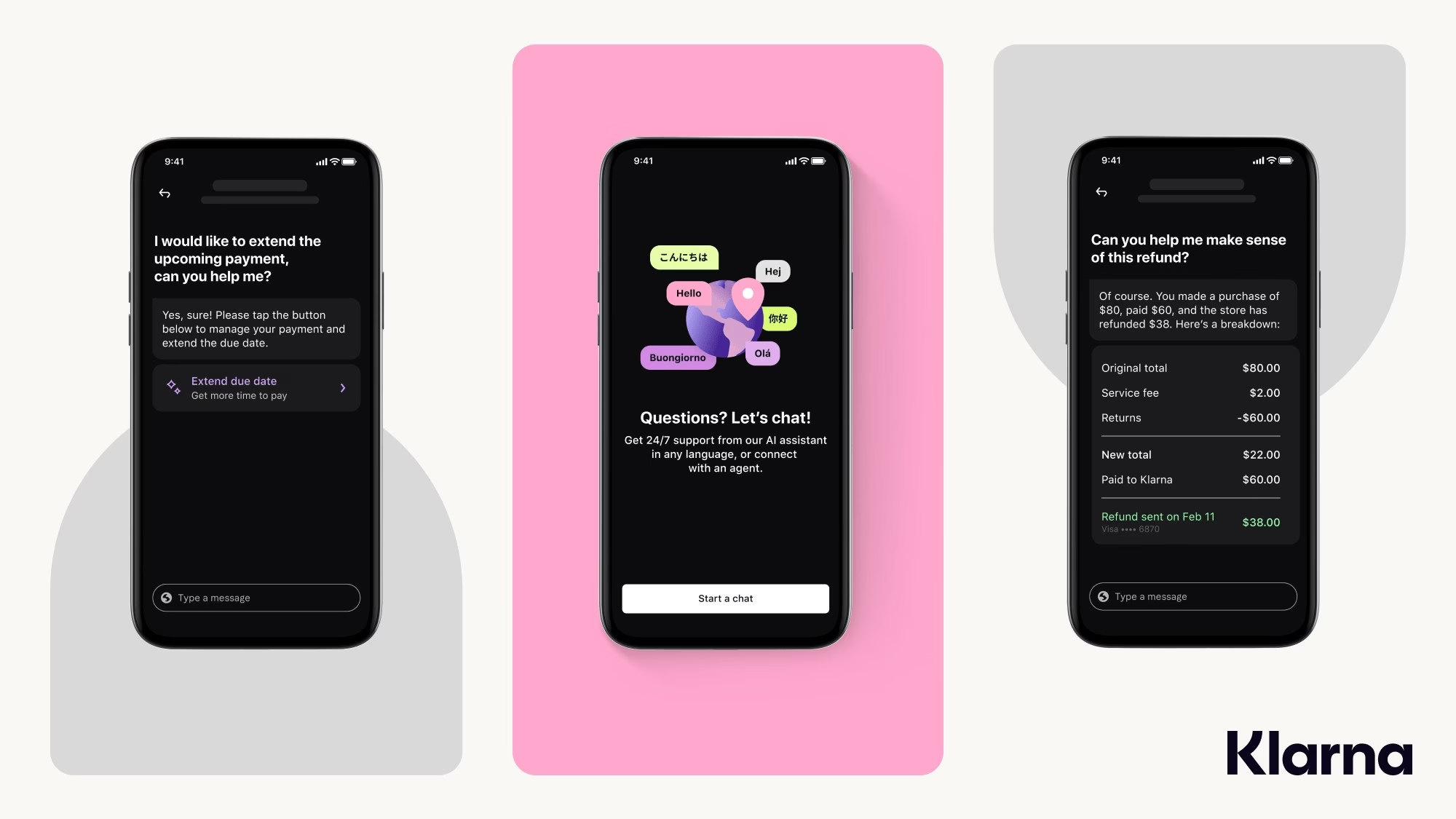
Klarna’s OpenAI-powered AI assistant launched globally in February 2024 and immediately became the most discussed AI customer service deployment in the world.
Klarna E-commerce chatbot example shows us first hand how AI can help achieve extraordinary cost savings at scale.
Second, the hybrid model wins.
AI augmentation, not AI replacement, is the sustainable strategy. Every Customer Support Manager should study Klarna’s pivot.
Within first month of Klarna’s chatbot launch:
- It handled 2.3 million conversations, doing the equivalent work of 700 full-time agents.
- Customer service cost per transaction dropped 40% from $0.32 to $0.19.
- Resolution time fell from 11 minutes to under two minutes
But here’s where Klarna’s story gets genuinely instructive. In May 2025, CEO Sebastian Siemiatkowski publicly admitted the company “overpivoted” on AI, a stunning admission from the executive who had championed eliminating human agents.
He acknowledged that “cost was a too predominant evaluation factor” that led to “lower quality.” Klarna began rehiring human agents, shifting to a hybrid AI-human model.
What to Learn From Klarna’s E-Commerce Chatbot Example:
- Chatbot handled massive volume: Two-thirds of all support conversations automated from day one.
- Resolution speed improved a lot.
- Multi-language support: 35+ languages across 23 markets without hiring multilingual staff.
- Financial impact: $60M in savings, directly contributing to IPO-readiness.
What Not to Do:
- Prioritizing cost savings over customer experience.
- Remove human access during an AI-only phase. Making it intentionally difficult for customers to reach human support.
- Bots lack the empathy for sensitive financial issues, a critical failing for a payments company.
- Overcommit to AI without thinking through the long-term customer experience.
4. Domino’s DOM: Conversational Ordering
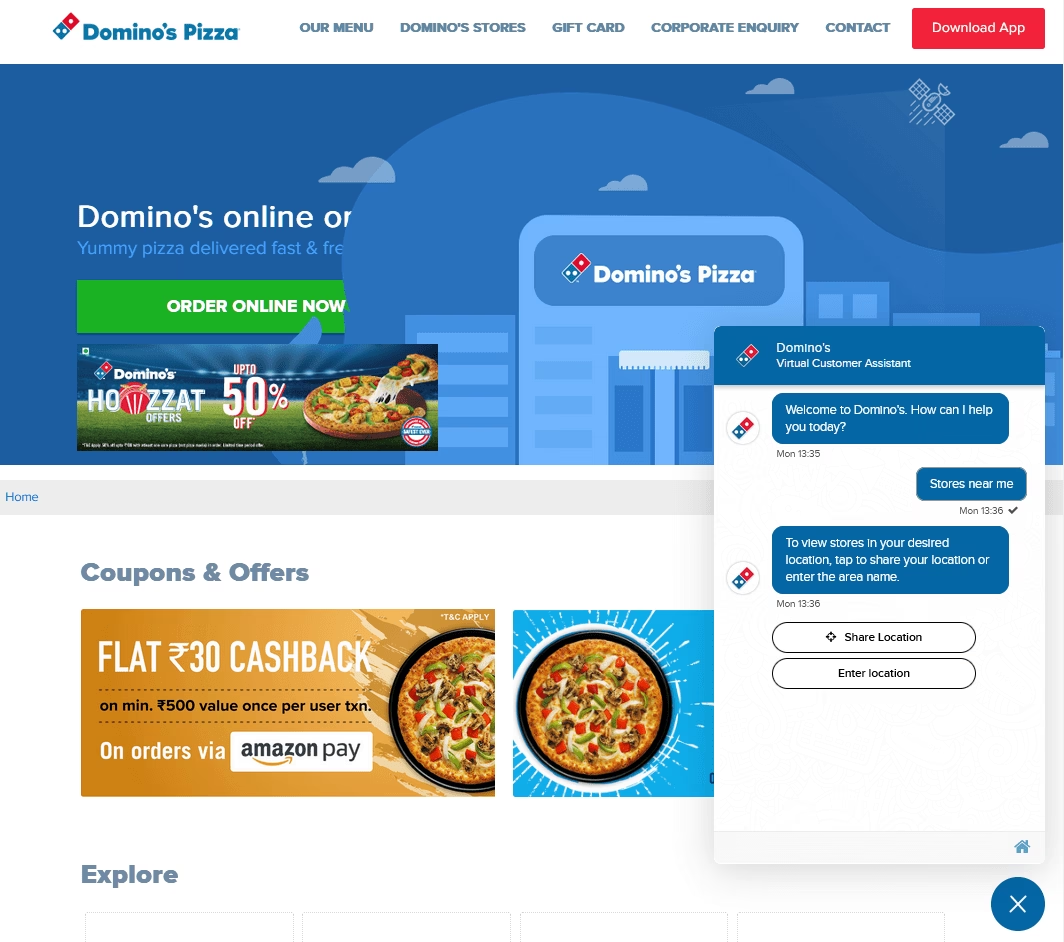
Domino’s Pizza has made chatbots a core part of its ordering system. Its well-known “Dom” chatbot and is available on multiple platforms (Facebook Messenger, Google Assistant, Alexa, and even Slack)
Customers can place an order by chatting to Dom as they would to a friend, specifying their pizza, customizations and delivery address.
What to Learn From Domino’s E-Commerce Chatbot Strategy:
- 15+ ordering channels: Accept orders and support customers from wherever they are, from social channels, smart TVs to cars.
- Emoji ordering: A single pizza emoji on Twitter triggers an order. Brilliant for repeat customers.
- Pizza tracker within chatbot
- Incremental expansion strategy: Started with simple reorders, expanded to full menu, then multi-platform. Textbook approach.
What Not to Do:
DOM’s chatbot launch initially only supported reorders, not new orders, and required cash for delivery. Which was a huge hassle for many costumes.
Providing support across 15+ platforms is resource-intensive, and not recommended for small E-Commerce businesses.
5. Alibaba AliMe: Customer Service at Unprecedented Scale

Alibaba’s chatbot ecosystem handles customer service across Taobao, Tmall, Lazada, and Alipay at a scale no other retailer has matched.
During Singles’ Day 2019, AliMe responded to 300 million queries, covering 97% of all customer service requests. That’s the equivalent workload of 85,000 human agents.
What Makes It Work:
- Five specialized bots:
- AliMe handles consumer support
- Alibee Shop manages merchant-to-consumer interactions
- Wanxiang-bot supports merchants
- AI-bot handles proactive engagement and disputes
- Dahuang-bot trains human agents.
Each bot is optimized for its specific role.
- The system predicts what customers need before they ask. If a package is delayed, the bot reaches out first rather than waiting for a complaint
- Coverage spans the full transaction lifecycle: pre-sale recommendations, mid-sale tasks like invoice generation and address changes, and post-sale support including returns and disputes.
- Emotion detection identifies frustrated customers and routes them to human agents automatically, before the relationship sours.
- Deep integration with order management, logistics, and payment systems lets the bot collect payments via QR code and personalize responses based on purchase history.
What to Watch For:
- Alibaba launched AliMe in 2015 and still dedicates full teams to it daily. Which isn’t something smaller retailers can replicate overnight.
- At 300 million queries, even a 5% error rate means millions of frustrated customers.
- Alibaba shares less public data on satisfaction metrics than competitors like Klarna. Whether merchant interests influence product recommendations deserves scrutiny.
AliMe’s proactive model, predicting customer needs before they reach out, is where support AI is headed.
If your E-commerce chatbot only responds to incoming queries, you’re already a step behind. Start building prediction into your system using purchase history and behavioral signals.
6. Shopify Magic and Sidekick: The Platform Play That Made AI Free for Millions
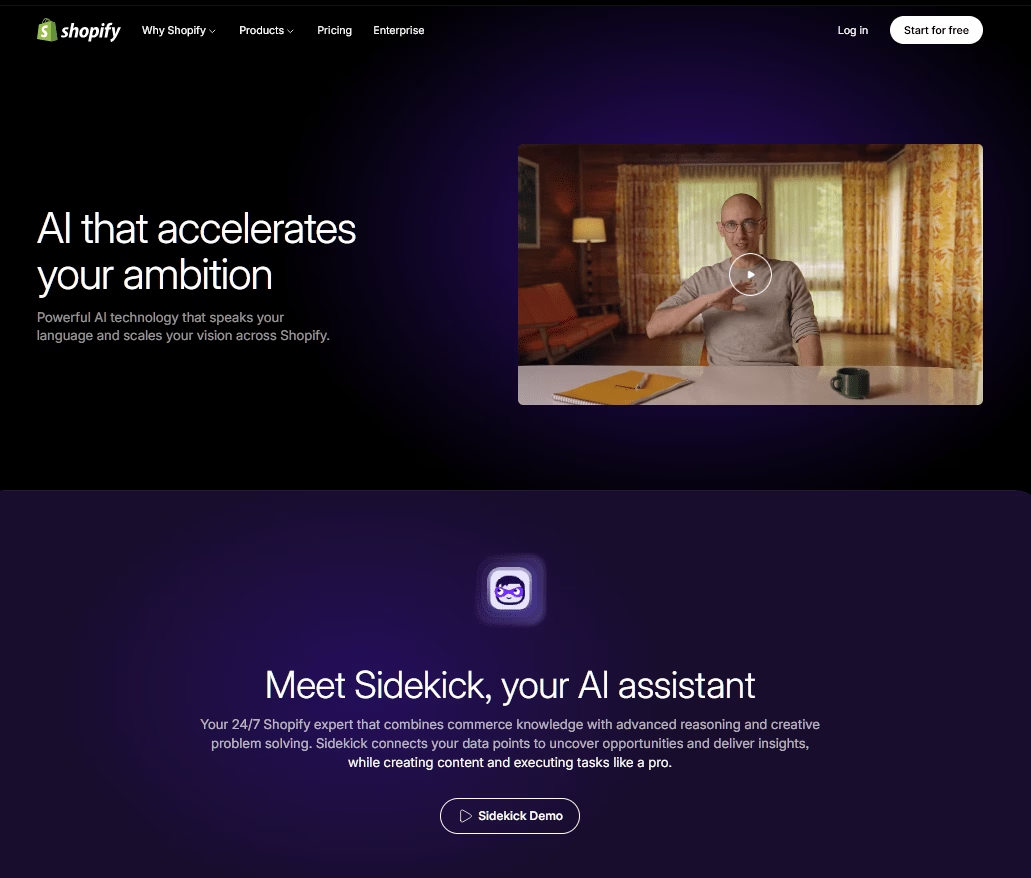
Rather than building a single chatbot, Shopify embedded AI across its entire platform, free for all merchants on any plan.
Key Features of Shopify Magic and Sidekick:
- Free for all merchants on any plan.
- Shopify Magic: AI-suggested replies and auto-answers to FAQs through Inbox.
- Sidekick: Conversational business advisor for store administration, analytics, and content generation. Ask “Why are my sales down this week?” and it analyzes sales across marketing, inventory, and customer segments.
- Promotion builder: Tell Sidekick to “Create a 20% discount for returning customers” and it builds the promotion.
- Multi-step reasoning and advanced analytics.
- Integrated image generation.
- Flow automation via natural language.
- Voice chat and screen sharing.
- Agentic Storefronts: Products automatically discoverable in ChatGPT, Perplexity, and Microsoft Copilot.
Limitations:
While there are lots of good things about Shopify Magic and Sidekick, there are negative points as well.
- Sidekick is exclusively a merchant tool. It cannot talk to your customers or handle customer support conversations.
- Shopify Inbox’s AI is basic compared to dedicated platforms like Intercom: it can suggest replies and auto-answer FAQs but doesn’t learn from historical support tickets.
If you’re already on Shopify, you’re already sitting on free AI tools that most merchants underuse.
Start with Sidekick for operations and Magic for content before investing in third-party Shopify chatbot platforms.
7. H&M: Fashion Finder Chatbot
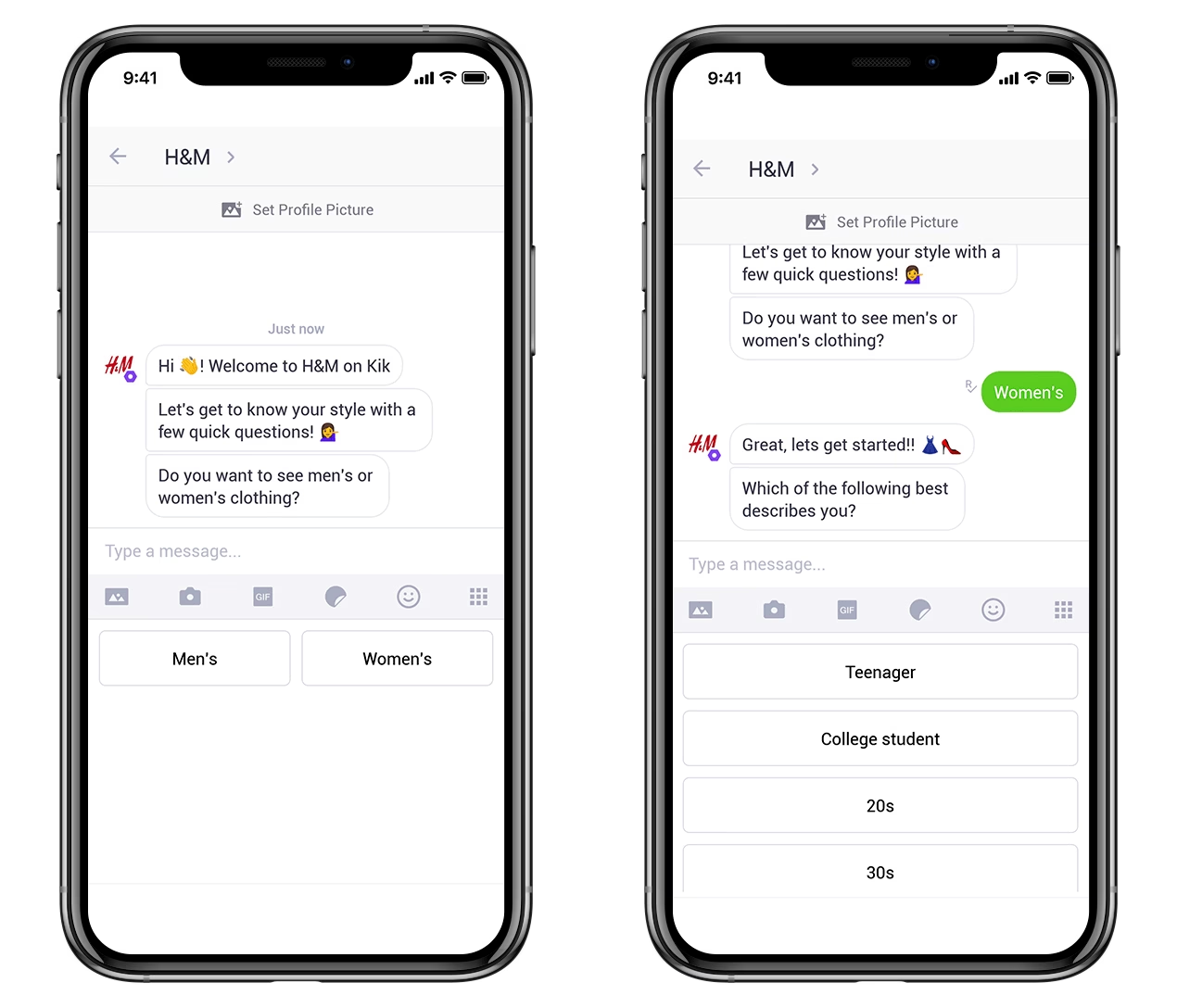
Fast-fashion retailer H&M experimented early with chat commerce. In 2017 they launched a chatbot (on platforms like Kik) to help users find clothing recommendations.
The bot would ask a few style questions and then suggest outfits from H&M’s catalog.
What Makes H&M E-Commerce Chatbot Work:
- Guided discovery. The bot acts like a mobile stylist, narrowing thousands of SKUs to a curated shortlist. That removes the paralysis of choice many shoppers feel on a large catalog.
- Visual-first approach. Since fashion is inherently visual, the chatbot relied on product images at each step.
- Quick Yes/No reply buttons, style choices, and outfit selection. Which made using H&M chatbot easier.
- The bot can remember user preferences (gender, style history) and tailor future recommendations accordingly.
- Exception handling. If a user asks for an item out of season, the bot suggests alternatives rather than hitting a dead end.
What to Watch For:
- Don’t push too many items at once. Recommend a few, most relevant items first, then upsell.
- Fashion moves fast. Product suggestions needed weekly refreshes to stay relevant. A chatbot tied to a catalog with rapid turnover requires constant maintenance, or it risks recommending items that are sold out or out of season.
8. Starbucks My Starbucks Barista: Voice Ordering That Works
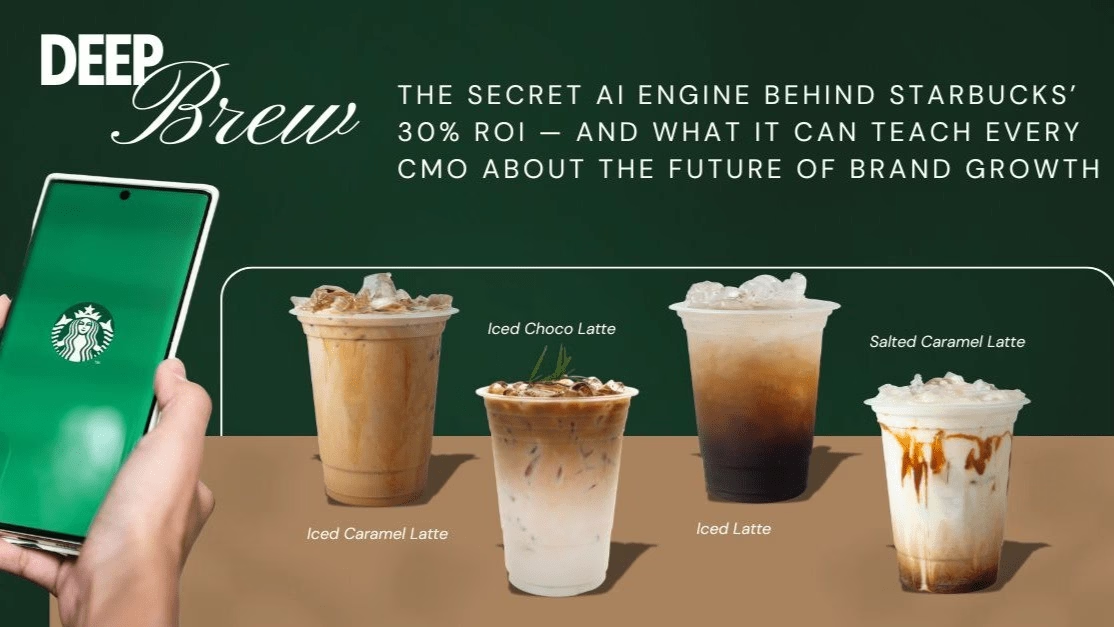
Starbucks launched My Starbucks Barista in early 2017 as an AI ordering feature in its mobile app, with voice integration through Alexa and Siri.
Customers can speak or type a drink order and the bot adds it to their cart in seconds.
The real story is what happened next.
Starbucks built an entire AI ecosystem (Deep Brew) that now powers operations company-wide: personalized marketing, demand forecasting, inventory management, and even IoT-connected espresso machine maintenance.
What Makes It Work:
- The NLP engine handles genuinely complex orders like “double upside down macchiato half decaf with room and splash of cream in a grande cup.” This level of natural language understanding is hard to build and costly to maintain.
- The bot can remember customers’ favorite customization. They can order past items or build something new rather than starting from scratch every time.
- Deep Brew extends beyond customer-facing chat into supply chain, employee support, and store operations
- The personalization system generates 400,000+ email variations, driving a 12–15% lift in average order value.
- Multi-channel availability through Alexa and Siri.
What to Watch For:
- Since some of the items can be location-specific, any retailer deploying a similar system needs real-time menu and inventory checks.
- Like Domino’s, Starbucks ensures customers can modify orders easily. A bot that locks in orders without a clear edit path frustrates users.
The most valuable AI investment in E-commerce isn’t the customer-facing chatbot alone.
Starbucks shows that the real returns come from an operational intelligence stack that connects ordering, inventory, personalization, and employee support into one system.
Frequently Asked Questions About E-Commerce Chatbots
What is the best chatbot for small E-commerce businesses in 2026?
For Shopify stores, start with Shopify Magic (free) for basic customer-facing AI and Sidekick for operations. Furthermore, check out our guide on the best E-commerce chatbots to find the most suitable option for your needs.
How much does an E-commerce chatbot cost?
E-commerce chatbots cost range from free to significant enterprise investments:
- Free options: Shopify Magic, Freshdesk’s free plan
- Premium options can cost from $0.10 per resolution
- Enterprise pricing: Most of the enterprise E-commerce chatbot services offer quote-based pricing. And prices can easily exceed hundreds of thousands of dollars.
Consumer-facing retail chatbots examples like those from Amazon, Sephora, or Domino’s represent internal investments and aren’t sold as products.
What are the biggest mistakes companies make with E-commerce chatbots?
Based on the examples of e-commerce chatbots in this guide, the five most common mistakes are:
- Building exclusively on a third-party platform you don’t control
- Replacing human agents entirely instead of augmenting them
- Neglecting chatbot UX while investing heavily in product pages
- Not fully committing with chatbot.
- Siloing the chatbot away from the core shopping experience
Final Thoughts: Where E-Commerce Chatbots Go from Here
E-commerce chatbots are evolving.
What started as reactive support tools are becoming proactive, agentic systems: ones that discover products, execute purchases, and manage entire customer relationships without human intervention.
The companies winning this race share three traits;
- They treat AI as infrastructure, not a feature
- They maintain a human safety net
- They own their transaction experience
Hopefully these E-commerce chatbot examples helped you figure out what makes sense for your store.
The opportunity is real. Your customers are already in chat. The question is whether you’ll meet them there with something useful.
Further Reading
12 Practical Chatbot Use Cases
9 Top Restaurant Chatbots for Ordering, Reservations and Support
15 Chatbot Features Buyers Should Know About (Complete List)
Best HR Chatbots for 2026: For HR Support and Recruiting
Customer Service Automation: What It Is, Examples & How To




Leave A Comment?
You must be logged in to post a comment.