The Ultimate New Employee Onboarding Checklist

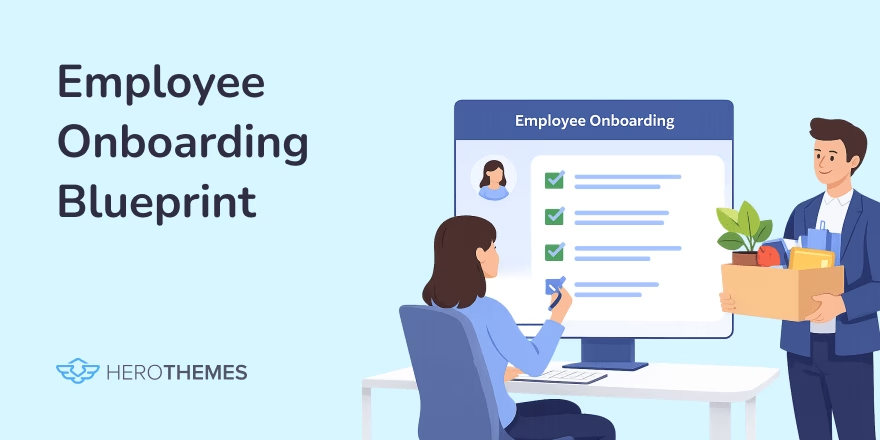
A structured new employee onboarding checklist is the most effective tool HR teams can use to safeguard their hiring investment.
According to Brandon Hall Group research, “Strong onboarding improves retention by 82% and improves productivity by 70%.”
With that in mind, in this guide we will share a comprehensive employee onboarding checklist. That will help you create a consistent, positive onboarding experience and set every new team member up for success.
In This Guide

We rigorously test and research every product that we recommend through HeroThemes. Our review process. We may also earn a commission if you make a purchase through our links.
Why You Need an Employee Onboarding Checklist
Employee onboarding is the strategic process of integrating a new hire into an organization—equipping them with the knowledge, skills, relationships, and cultural understanding they need to become a fully productive team member.
With employee onboarding checklists you essentially create a step-by-step game plan, ensuring every requirement is met and every welcome touchpoint happens on schedule.
Here’s why a checklist is indispensable during onboarding process:
- Standardized process across all new hires. Everyone gets the same quality start, and nothing slips through the cracks.
- Strong first impression. A prepared, organized welcome shows new employees the company takes their success seriously.
- Cuts down the time it takes for new hires to get up to speed with tools, training, and access are all sorted from day one.
- A standout onboarding experience boosts long-term retention. Employees feel more engaged and satisfied at work.
- Managers, HR, and IT members are all aligned. Everyone knows their tasks and deadlines well in advance.
- Reduces last-minute scrambling.
Using an onboarding checklist brings order and clarity to what could otherwise be an overwhelming process.
Best tools to reduce employee onboarding friction
Tools such as HRIS (Human Resources Information Systems) platforms, communication tools, project management systems, learning management systems, and knowledge base solutions can dramatically reduce the friction, errors, and manual effort that plague onboarding programs.
1. Heroic Knowledge Base
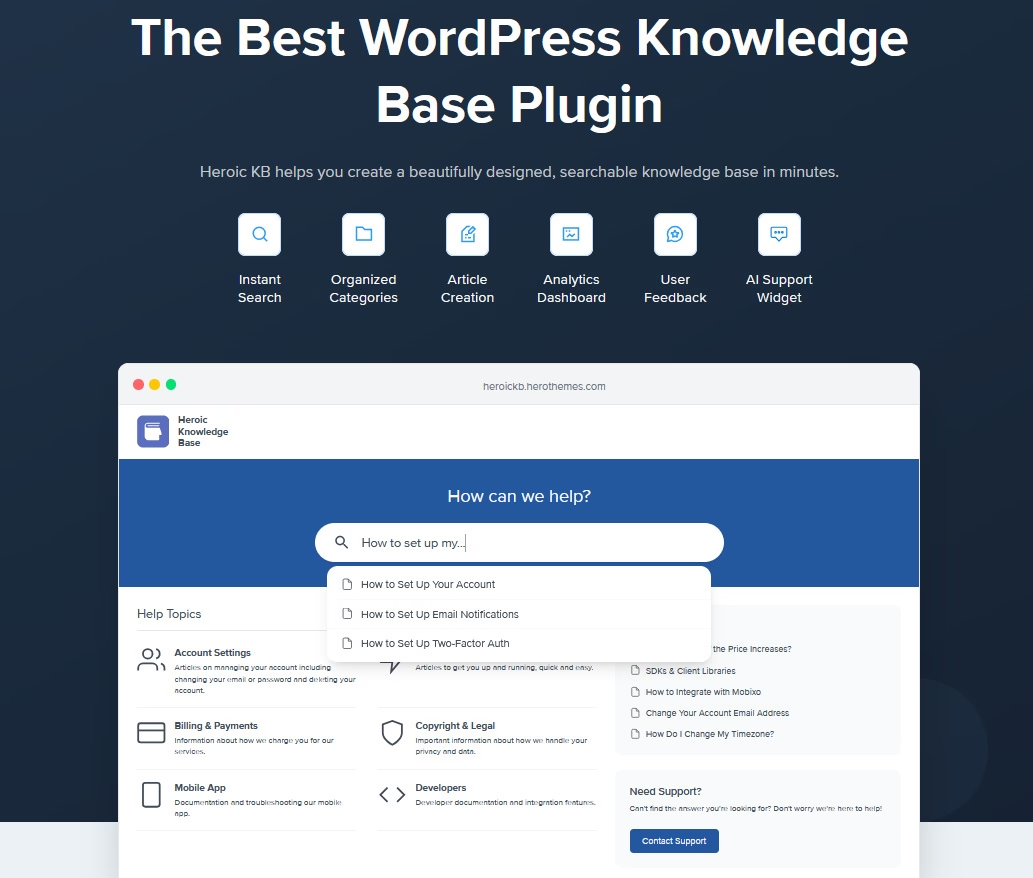
For a smooth onboarding you can set up an internal knowledge base or employee portal. This is essentially a centralized hub where new (and existing) employees can find all the documentation, guides, FAQs, and resources related to your company and their role.
Rather than navigating a maze of Google Drive folders, you give employees a one-stop website to self-serve much of the info they need.
Heroic Knowledge Base is a WordPress plugin to create a fully searchable and organized knowledge base website.
Key Features for Heroic KB for Employees Onboarding:
- Powerful AJAX-powered live search to easily find required documents.
- Floating Help Assistant (AI Assistant) for quick human-like support from any page.
- Group and share onboarding content by team, phase, or topic with multi-level subcategories.
- Clear navigation with table of contents, breadcrumbs, related articles, and file attachments.
- FAQ and glossary pages to answer repeated questions and explain terms.
- Search analytics, empty search reports, article feedback, and weekly email summaries.
- User Restriction controls access at the knowledge base, category, or article level.
- WordPress roles and the Members plugin for tighter permission control.
Heroic Knowledge Base starts at just $67 per year for the Essential plan.
2. Heroic Inbox
Another source of onboarding friction is managing all the communication between the new hire, hiring managers, HR, IT, and other stakeholders.
Without coordination, emails can get lost or delayed, leading to frustration.
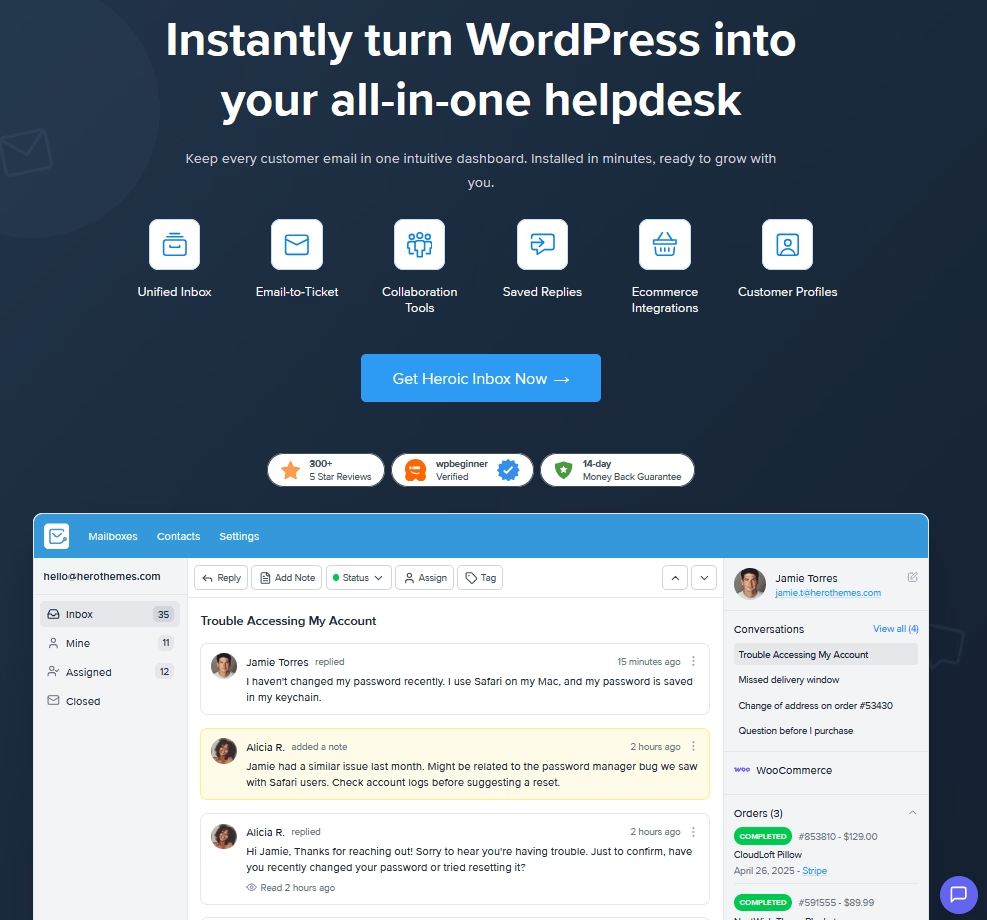
This is where a shared inbox or helpdesk tool like Heroic Inbox becomes invaluable.
Heroic Inbox transforms a regular email account into a collaborative, ticket-style helpdesk right inside WordPress.
Key Features of Heroic Inbox for Employees Onboarding:
- Dedicated onboarding mailbox to convert emails into tracked, threaded tickets.
- One-click connection to Gmail, Google Workspace, Outlook, Office 365, or any IMAP/SMTP provider.
- Ticket assignment to ensure clear ownership of each new hire’s thread.
- Internal notes for team members coordinate without leaving the thread or using other solutions.
- Collaborative reply drafting
- Collision detection to prevent duplicate responses
- Saved reply templates to standardize welcome emails, paperwork reminders, and setup guides.
- Auto-responders and workflow automation
- Tags to categorize thread based on onboarding stage.
- Advanced search and filtering
- Complete conversation history
Heroic Inbox pricing starts at just $79.60 per year (introductory) for the Essential plan with two mailboxes. Every plan supports unlimited users and tickets.
You also get a 14 days money back guarantee! So give it a try today.
New Employee Onboarding Checklist with Templates (Broken into Phases)
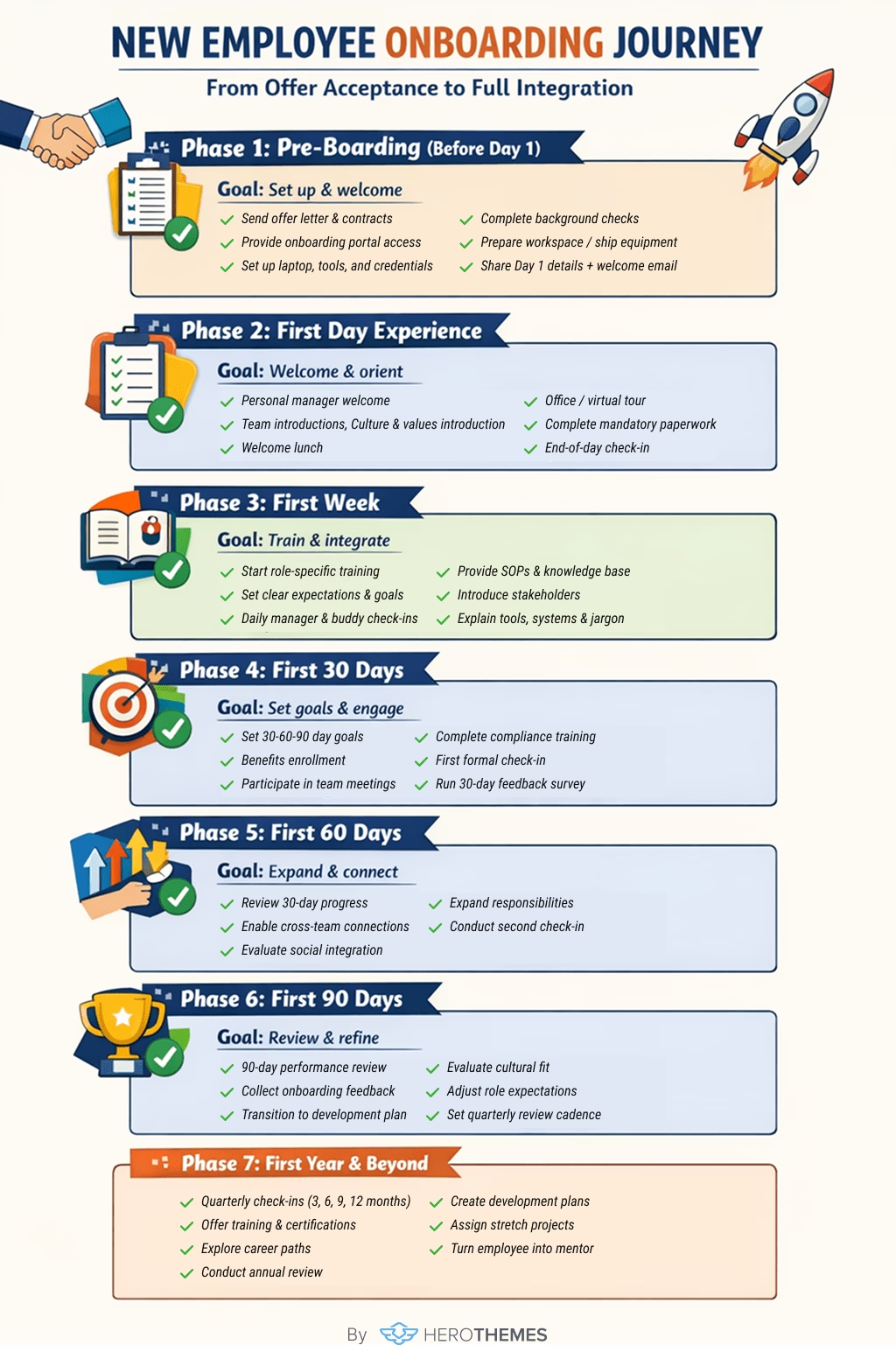
Onboarding involves a lot of phases. From critical first day interactions to making full use of employees strengths. We are gonna cover everything.
This is a time-consuming process, so bookmark this page for future reference. Feel free to adapt the order or add additional items for your unique needs.
Phase 1: Pre-boarding (before Day 1)
Pre-boarding is the period between offer acceptance and the first day of work, and it is one of the most neglected phases.
It’s all about getting paperwork and logistics out of the way and making the person feel welcome even before they officially start.
Often I see companies taking a week or two to provide employees with proper tools, and access. Sometimes, even after a month, employees haven’t gone through company policies or rules.
This creates unnecessary drama and wasted effort.
Don’t do this. Sort all documentation, and employee requirements right before they join.
The best situation would be to give yourself a week of a buffer time to arrange all this.
Employee Pre-boarding Checklist:
| Task | Owner | Timeline | Status | Notes |
|---|---|---|---|---|
| Send signed offer letter and employment contract | HR | Day of acceptance | ☐ | Include compensation, start date, at-will status |
| Initiate background check and references | HR | Within 1 business day | ☐ | Use approved vendor |
| Send digital onboarding portal access | HR | Within 2 business days | ☐ | Include W-4, I-9, direct deposit, benefits forms |
| Order and configure laptop and equipment | IT | 2 weeks before start | ☐ | Include all required software and access |
| Set up email account and system credentials | IT | 1 week before start | ☐ | Test all access before Day 1 |
| Prepare physical workspace or ship remote equipment | IT/Facilities | 3+ days before start | ☐ | Include setup instructions for remote hires |
| Send welcome email with Day 1 logistics | Manager | 1 week before start | ☐ | Time, location, dress code, parking, contact |
| Notify team about new hire | Manager | 1 week before start | ☐ | Share name, role, start date, background |
| Assign onboarding buddy/mentor | Manager | 1 week before start | ☐ | Brief buddy on responsibilities |
| Send welcome package | HR/Manager | 3 days before start | ☐ | Company swag, supplies, welcome card |
| Complete all pre-boarding paperwork | New Hire | Before Day 1 | ☐ | Track completion in onboarding portal |
| Prepare first-week schedule | Manager | Before Day 1 | ☐ | Balance training, meetings, and breaks |
Remember to tweak this checklist / template as per your requirements. Because not every company provides or follows these things.
Phase 2: The First Day On The Job
The big day has arrived!
The focus for Day One is to welcome your new employee, orient them to the workplace, and take care of any remaining must-do-first-day tasks.
You want them to end the day feeling excited and comfortable about their decision to join your team.
Employee Onboarding First day checklist:
| Task | Owner | Timeline | Status | Notes |
|---|---|---|---|---|
| Personal welcome from manager | Manager | Morning | ☐ | Warm, not rushed |
| Office tour or virtual workspace walkthrough | Buddy/Manager | Morning | ☐ | Cover essentials: restrooms, exits, tools |
| Team introductions with role context | Manager | Morning | ☐ | Brief description of each person’s role |
| Verify all technology is functional | IT/New Hire | Morning | ☐ | Email, VPN, tools, WiFi |
| Complete I-9 Section 1 (if not done in pre-boarding) | New Hire | By end of Day 1 | ☐ | Federal deadline — no exceptions |
| Review company mission, values, and culture | HR/Manager | Afternoon | ☐ | Use storytelling, not slides |
| Review first-week schedule | Manager | Afternoon | ☐ | Set expectations for what’s ahead |
| Welcome lunch with manager and team | Manager | Midday | ☐ | Informal, relationship-building |
| Complete remaining Day 1 paperwork | HR/New Hire | Afternoon | ☐ | Building access, ID badge, parking |
| End-of-day check-in | Manager | End of day | ☐ | How did it go? Any questions? |
Phase 3: First week
The rest of Week One is about helping your new employee start learning the ropes and becoming comfortable in their new environment.
During this time, the new hire will begin to understand how their work is actually done and start building relationships that will support them.
This is when the new hire begins understanding how their work actually gets done and starts building the relationships that will sustain them.
Key goals for the first week of the onboarding should include training on fundamental tasks, integrating socially with coworkers, and setting expectations for the weeks ahead.
First Week Onboarding Checklist:
| Task | Owner | Timeline | Status | Notes |
|---|---|---|---|---|
| Complete I-9 Section 2 (employer verification) | HR | Within 3 business days | ☐ | Hard federal deadline |
| Begin role-specific training | Manager | Days 2–5 | ☐ | Foundational knowledge first |
| Provide access to knowledge base and SOPs | Manager/IT | Day 2 | ☐ | Centralized documentation hub |
| Review job expectations and initial goals | Manager | Day 2–3 | ☐ | Written, specific, measurable |
| Introduce key stakeholders | Manager | Days 2–5 | ☐ | Schedule brief meetings or coffee chats |
| Overview of company tools and systems | IT/Manager | Day 2–3 | ☐ | Project management, comms, HR platform |
| Daily check-ins with manager | Manager | Daily | ☐ | 5–10 minutes, informal |
| Buddy check-in meetings | Buddy | Daily | ☐ | Available for questions |
| Provide company acronym/jargon glossary | Manager/HR | Day 2 | ☐ | Reduces frustration and confusion |
| Share “who’s who” stakeholder guide | Manager | Day 3 | ☐ | Names, roles, how to reach them |
Phase 4: First 30 days
After the first week, you start shifting from orientation to performance mode.
You give new hires more responsibilities and ownership—allowing their skills to speak.
This is also a period when you evaluate whether new hires are a good fit for the role.
New Employee Onboarding Checklist for the First 30 Days:
| Task | Owner | Timeline | Status | Notes |
|---|---|---|---|---|
| Set 30/60/90-day goals collaboratively | Manager | Week 2 | ☐ | SMART goals aligned to role |
| Complete required compliance training | HR | Within 30 days | ☐ | Anti-harassment, safety, etc. |
| Complete benefits enrollment | New Hire/HR | Within 30 days | ☐ | ACA enrollment window |
| First formal manager check-in | Manager | Week 4 | ☐ | Document discussion and action items |
| Begin participating in team meetings | New Hire | Weeks 2–4 | ☐ | Active participation, not just observation |
| 30-day pulse survey | HR | Day 30 | ☐ | Gauge satisfaction and identify issues |
| Review benefits questions | HR | Week 3–4 | ☐ | Address any enrollment or coverage questions |
A good onboarding program lasts more than just two or three days – it often runs a full 90 days or more.
Those who craft a clear 30-60-90 day onboarding plans tend to see better long-term retention. So don’t consider onboarding done at one week or even one month.
Phase 5: First 60 days
By the two-month mark, the new hire should be demonstrating meaningful progress toward their goals and beginning to work more independently.
The first two months or a quarter is mostly about gradually increasing responsibilities and reviewing progress.
But just don’t focus on the work. Provide support, show empathy, and encourage wherever necessary.
Employee Onboarding First 60 days checklist:
| Task | Owner | Timeline | Status | Notes |
|---|---|---|---|---|
| Progress review against 30-day goals | Manager | Week 5–6 | ☐ | Assess areas of strength and growth |
| Expand responsibilities and project scope | Manager | Weeks 5–8 | ☐ | Gradually increase ownership |
| Facilitate cross-department connections | Manager | Weeks 5–8 | ☐ | Introductions beyond immediate team |
| Second formal manager check-in | Manager | Week 8 | ☐ | Address concerns, discuss career interests |
| Assess social integration | Manager/Buddy | Week 8 | ☐ | Has the new hire built relationships? |
Phase 6: First 90 days
The period from Day 30 to Day 90 (approximately months 2–3) is about reinforcing and refining. By 90 days, most new hires are expected to be fully up to speed and contributing at a level similar to that of a regular employee.
But, reaching this point requires ongoing support and evaluation. Here’s what you can do to smoothly transit new hires from contributors to full participants.
Employee Onboarding 90 Days Checklist:
| Task | Owner | Timeline | Status | Notes |
|---|---|---|---|---|
| Comprehensive 90-day performance review | Manager | Week 12 | ☐ | Evaluate competencies, culture, self-sufficiency |
| Evaluate cultural fit and engagement | Manager/HR | Week 12 | ☐ | Signals: participation, relationships, initiative |
| Detailed onboarding feedback survey | HR | Day 90 | ☐ | Comprehensive assessment of the process |
| Adjust role expectations if needed | Manager | Week 12 | ☐ | Based on 90-day performance data |
| Transition to ongoing development plan | Manager | Week 12 | ☐ | Formal shift from onboarding to growth |
| Schedule quarterly check-in cadence | Manager | Week 12 | ☐ | Maintain structure through Year 1 |
Phase 7: First year and ongoing development
Most companies end their onboarding programs after 90 days or a quarter. Don’t do that.
Onboarding should last at least a year. It will improve overall employee engagement and retention.
First Year Onboarding and Ongoing Development Checklist:
| Task | Owner | Timeline | Status | Notes |
|---|---|---|---|---|
| Conduct formal quarterly check-ins | Manager | Months 3, 6, 9, 12 | ☐ | Address integration, development needs, satisfaction; review and refresh goals each quarter |
| Create professional development plan | Manager/New Hire | Month 4–5 | ☐ | Align career interests with organizational needs |
| Identify training and course opportunities | Manager/HR | Month 4–6 | ☐ | Conferences, certifications, skill-building programs |
| Assign stretch projects beyond core role | Manager | Month 5–8 | ☐ | Build new skills through hands-on challenges |
| Explore potential career paths internally | Manager/New Hire | Month 6–9 | ☐ | Discuss lateral moves, promotions, specializations |
| Prepare comprehensive annual review | Manager | Month 11 | ☐ | Compile full trajectory from hire to present |
| Conduct annual performance review | Manager | Month 12 | ☐ | Acknowledge growth, celebrate achievements, set Year 2 goals |
| Formally assess onboarding ROI | HR/Manager | Month 12 | ☐ | Evaluate whether onboarding investment paid off |
| Invite employee to mentor newer hires | Manager/HR | Month 10–12 | ☐ | Assign as onboarding buddy for incoming team members |
Final Thoughts on Employee Onboarding
Let’s finalize this guide on employee onboarding checklist with some key takeaways:
- Start before Day 1 with intentional pre-boarding
- Personalize the experience by role and individual (training plan, stakeholder introductions, and goal-setting)
- Assign buddies and mentors during onboarding. This can be awkward for many employees, so don’t force anyone. You can always add a few quick check-ins with the team manager, HR, and stakeholders to the checklist.
- Automate repetitive tasks. This can include document collection with digital forms and e-signatures, I-9 processing with compliance-tracking workflows, benefits enrollment through self-service portals, and task assignments through role-based automatic routing.
- Create a knowledge base. Employee handbook, SOPs, IT setup guides, benefits FAQs, company policies, or team documentation—you or employees won’t need to spend hours finding these documents.
- Set clear expectations early on by collaboratively setting specific, measurable 30/60/90-day goals collaboratively within the first two weeks.
- Make onboarding a company-wide responsibility by distributing ownership across HR, managers, the IT department, peers, and leadership.
- Gather feedback continuously and iterate. This is not a perfect checklist for everyone by any means. You have to constantly optimize it to make a perfect fit for your needs. And for that, you need lots of feedback. Check with managers, employees—ask them questions (how onboarding was?), and make changes for your new hire.
That’s it for this guide. Make sure to optimize this checklist based on your needs and findings.
The best employee onboarding checklist would be the one that works best for you.
See you in the next guide!
Further Reading
Customer Onboarding: Step-by-Step Guide with Examples
Best Onboarding Email Subject Lines for New Users, SaaS, & Employees
Best Welcome Email Subject Lines [Handpicked for 2026]
14 Knowledge Base Benefits for Customers and Employees