8 Best Help Desk Software for Schools and Colleges in 2026

How many support requests did your school miss last month? Probably more than you'd expect.
Most schools handle support through email. This includes admission questions, IT trouble reports, and facilities complaints all land in different personal inboxes. Some get answered quickly. Others sit untouched for weeks until someone follows up by walking down the hall.
A shared school help desk tool solves this problem by pulling everything into one queue, where requests get assigned, tracked, and closed properly.
In this guide we will cover the best help desk software for schools and colleges in 2026.
Each tool was evaluated based on criteria that matter for education. Let's explore the options available to meet your needs.
In This Guide
Why Schools and Colleges Need Help Desk Software
An education help desk catches every request in one place, assigns it to the right person, and tracks it until it is solved.
That is the core job, and schools need it more than most because their workload is spiky, the teams are small, and the requests come from everywhere.
For example, device and programs related issues are common in schools and colleges. With 1:1 programs now standard, thousands of Chromebooks move between classrooms and living rooms every day, and every one of them eventually breaks.
A teacher shouldn't have to walk to the IT office to report a cracked screen, and a technician shouldn't have to guess which device belongs to which student.
I think schools undersell the value of help desks. Help desks are not just for IT.
Every department in a school can face unstructured emails and support requests, so a good school help desk system gives IT, administration, facilities, and student services one place to manage them:
- IT and device support: password resets, broken hardware, software installs, Chromebook fleet management, network problems.
- Facilities and maintenance: a leaking roof, a dead HVAC unit, a classroom door that won't lock.
- HR and admin: onboarding new staff, payroll questions, internal forms.
- Parent and student inquiries.
- Admissions and enrollment: application status, document chasing, family follow-ups.
- Financial aid: deadline and award questions, which arrive in waves.
- Alumni relations.
Then there's compliance, which is where education splits from business. Student records fall under FERPA, younger students bring COPPA into it, and international students bring GDPR. FERPA doesn't certify software and never has. What it requires is that you protect education records and sign an agreement with any vendor that touches them.
That's why self-hosted tools keep coming up in school IT conversations. If the data never leaves your server, one whole category of worry goes away.
Warning: No vendor is “FERPA compliant” out of the box, whatever the marketing page says. Before you sign anything cloud-based, get a Data Privacy Agreement in writing and confirm the vendor will operate as a school official with a legitimate educational interest. Microsoft and Google both do this for their education products. If a smaller vendor hedges on it, that tells you something.
What to Look for in Help Desk Software for Schools (Our Review Process)
I judged each tool the way a school would, not the way a marketing page wants me to. That meant creating support tickets as a teacher, responding as an IT technician, and testing how well each platform handled common school support requests.
Here's what I looked into, and the same criteria you should apply:
- What it really costs: Per-agent pricing looks fine at five agents and awful at 15. I favored flat pricing and honest free tiers, and I flagged the tools where the sticker price is fiction.
- Education fit: Does it handle device asset management, facilities work orders, and classroom-based requests, or is it a generic business tool wearing a school costume?
- SSO and SIS connections. Google and Microsoft login, plus PowerSchool, Infinite Campus, Skyward, and friends.
- Where the data lives, and whether the vendor will sign a DPA.
- What the free version actually does before it walls you off.
- Room to grow, from a 200-student private school up to a district of 300,000.
Now that we have covered some basics, let's look into what you have come here for—finding the best help desk software for your school or college.
The Best Help Desk Software for Schools and Colleges

We rigorously test and research every product that we recommend through HeroThemes. Our review process. We may also earn a commission if you make a purchase through our links.
1. Heroic Inbox and Heroic Knowledge Base
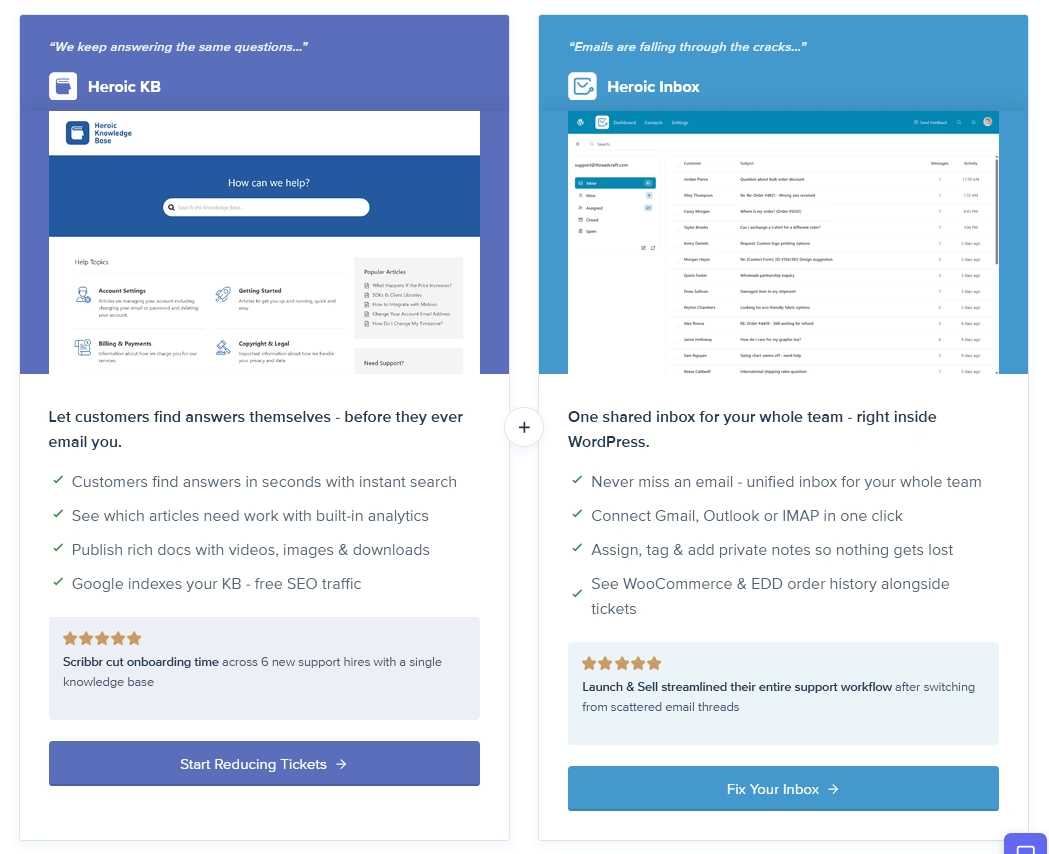
If your school already runs its website on WordPress, this is the first pairing I'd set up, and it's my overall pick for that audience.
Heroic Inbox turns your WordPress dashboard into a shared inbox, so support@, admissions@, and ITsupport@ all land in one threaded queue that the whole team works from.
While Heroic Knowledge Base helps you create a searchable article library that answers the repeat questions before anyone has to.
What makes this combo stand out for schools is not a single feature. It is the pricing model and the data ownership. Heroic plugins charge a flat annual fee per site with no per-agent limits. You can add every IT staffer, office assistant, and seasonal student worker without watching a per-seat meter climb.
What I Liked:
- Multiple mailboxes, one screen: connect support@, admissions@, ITsupport@ and more over Gmail, Google Workspace, Microsoft 365, or plain IMAP.
- No per-agent pricing. Unlimited users on every plan, which is unusual and genuinely useful for seasonal staffing.
- Collision detection so two people never answer the same parent twice.
- Admin, Manager, and Agent roles that map onto how school offices already divide work.
- Saved replies for the “how do I reset my password” emails, with the right signature attached automatically.
- Internal notes and mentions, so staff can sort something out behind the scenes without the parent seeing it.
- Rules that auto-assign and route incoming mail.
- Heroic KB with to create a searchable knowledge base.
- WooCommerce and Easy Digital Downloads support, handy if you sell event tickets or course materials.
What to Watch Out For:
- You need a WordPress site.
- Speed depends on your hosting.
- No free tier, just a money-back guarantee.
Pricing
You can start with Heroic Bundle at just $103.60 / year.
2. HelpJet
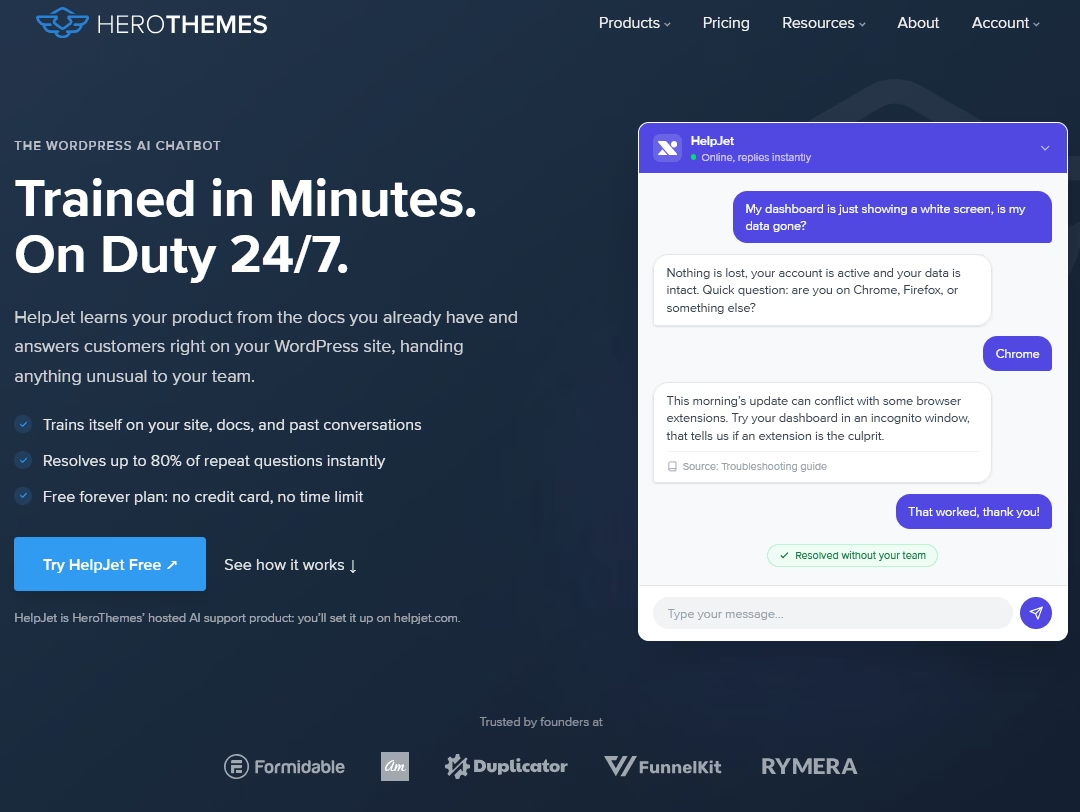
HelpJet is an AI support layer from the team behind Heroic Inbox. The idea is to prevent repetitive questions from ever reaching a human. You point it toward your website, help articles, and PDFs, and it trains itself to become a chatbot that provides around-the-clock support.
With HelpJet, you can get up and running in 15 minutes. Embed a widget on your website and help portal, and the HelpJet AI chatbot will answer repetitive questions like a human agent.
The best part? It’s free to start with.
What I Liked:
- Trains itself on your existing site content, help articles, and PDFs.
- Genuinely fast to set up. I had a working bot in under 15 minutes.
- Re-scans weekly on its own, with a manual refresh when you need it.
- Clean handoff to a human, and it learns from the resolution.
- Works on any platform via a single script.
- Pairs naturally with knowledge base and shared inbox tools
What to Watch Out For:
- It doesn't do tickets. No queue, no assignment, no shared inbox.
- Website widget only. No WhatsApp, Messenger, or Slack.
Pricing
HelpJet offers a genuine free forever plan with one bot and 100 interactions per month, and the Pro plan runs $29 per month (about $23 per month billed annually) with three bots and 1,000 monthly interactions, plus a 14-day trial.
3. TeamDynamix
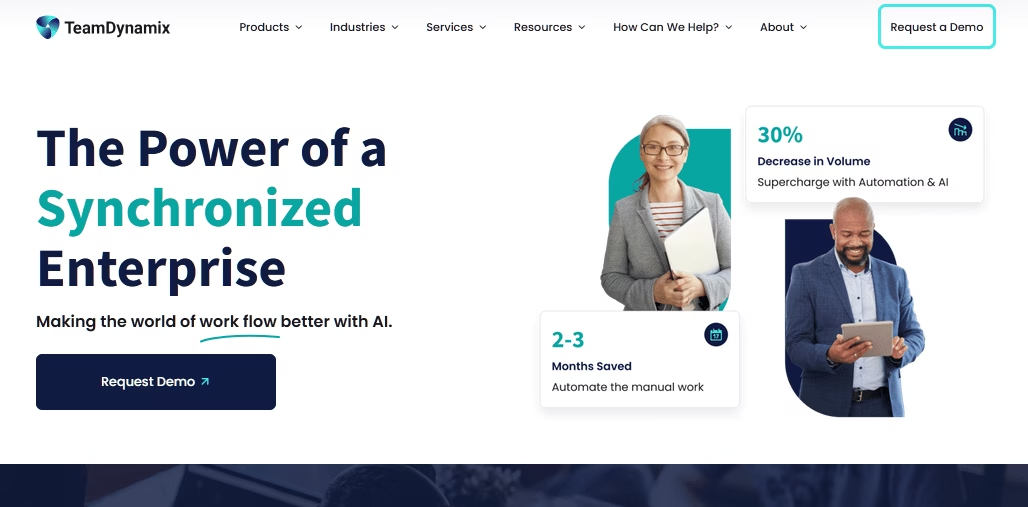
TeamDynamix began as an incubator project on the Ohio State University campus, and the world of higher education has been its home ever since. The company combines IT service management and project portfolio management on one no-code platform. This allows universities to run daily support and long-term projects without purchasing two systems.
The licensing model is what makes it work for schools. TeamDynamix charges only for technicians and administrators, while unlimited end users (students, faculty, and staff) can submit tickets through the portal at no extra cost.
When you're onboarding several thousand new students each fall, that structure is dramatically kinder than per-seat pricing.
What I Liked:
- Built for higher education: an unusually large base of college and university customers.
- ITSM and project portfolio management on one platform.
- Named-user licensing: only technicians pay, end users are free.
- No-code configuration for forms, workflows, and portals.
- Connects to campus systems (SIS, LMS, Active Directory, Microsoft 365) without custom work.
- Conversational AI and automation: deflect tickets and automate password resets, onboarding, and more.
- Extends past IT into HR, facilities, and marketing.
What to Watch Out For:
- No published pricing. Demo first, numbers later.
- Configurable platforms need an admin who owns them. Budget for that person's time.
- Genuinely too much for a small private school.
Pricing
Nothing is published, and public sector contracts point to roughly $400 to $742 per named user per year with unlimited free portal access for everyone else.
4. Freshservice and Freshdesk
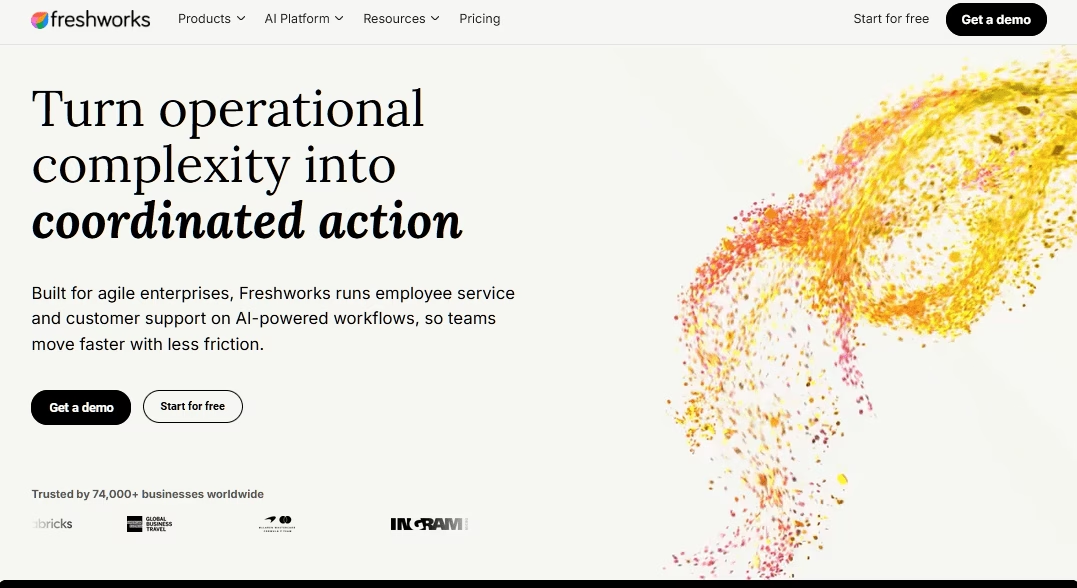
Freshworks is worth considering for schools that need separate tools for community support and IT service management.
Freshdesk handles parent, student, and admissions requests, while Freshservice provides school IT support, asset tracking, incident management, and ITIL workflows.
School IT teams usually want Freshservice. It layers incident, problem, and change management on top of ticketing, and it's the polish that stands out.
What I Liked:
- Two products covering both sides of school support (Freshdesk for community support, Freshservice for IT), in one ecosystem.
- Freshservice ITSM depth: asset, incident, problem, and change management with SLAs.
- Freddy AI for ticket summaries, reply suggestions, and triage across the platform.
- Clean interface with a short learning curve for non-technical staff.
- Google and Microsoft SSO plus a self-service portal out of the box.
- Freshdesk's free tier gives you two agents to start with.
What to Watch Out For:
- Per-agent pricing climbs fast
- The good AI features are add-ons, not included.
Pricing
Freshservice starts around $19 per agent per month, while Freshdesk starts around $29 per agent per month.
5. osTicket
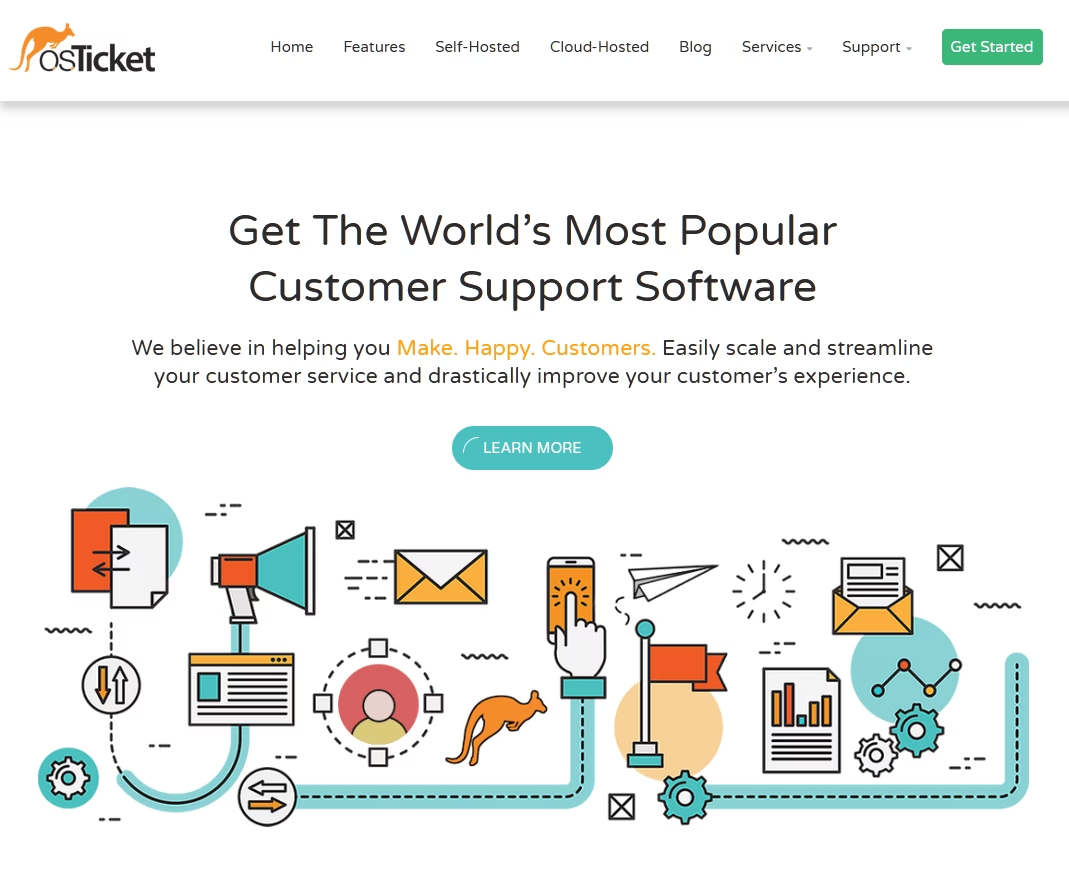
A veteran of the open-source world, osTicket has been running help desks since 2003 and still ships regular updates. It is free, open source under the GPL, and self-hosted, which means your tickets and data live on your own server rather than a vendor's cloud.
For a school that wants full data ownership and has the technical staff to run it, that is a powerful combination at zero license cost. It is a classic email-to-ticket system that can work well as a school ticketing solution when an IT team wants to keep support data on its own server.
If you want a wider view of what's available in this category, this rundown of open source helpdesk ticketing systems compares the main contenders in more depth than I can here.
What I Liked:
- GPL-licensed and free forever, with no agent fees.
- Tickets stay on your own server, which settles a lot of FERPA anxiety.
- Multi-channel intake: email piping, IMAP, web forms, API, and phone-logged tickets.
- A proper SLA engine with business hours and escalations, unusual in free software.
- Custom queues and filters that bend to how your school works.
- Plugin architecture: official and third-party add-ons for Slack, storage, and OAuth.
What to Watch Out For:
- The interface feels a decade old (osTicket 2.0 coming soon that aims to improve UI as well).
- You own the hosting, patching, security, and backups.
- Needs someone comfortable on a Linux server.
- Automation is thin by modern standards.
Pricing
osTicket is free to self-host, with an official cloud edition from around $12 per agent per month if you'd rather someone else handle uptime and backups.
Although the license is free, the real price of any self-hosted tool is staff time.
6. FreeScout
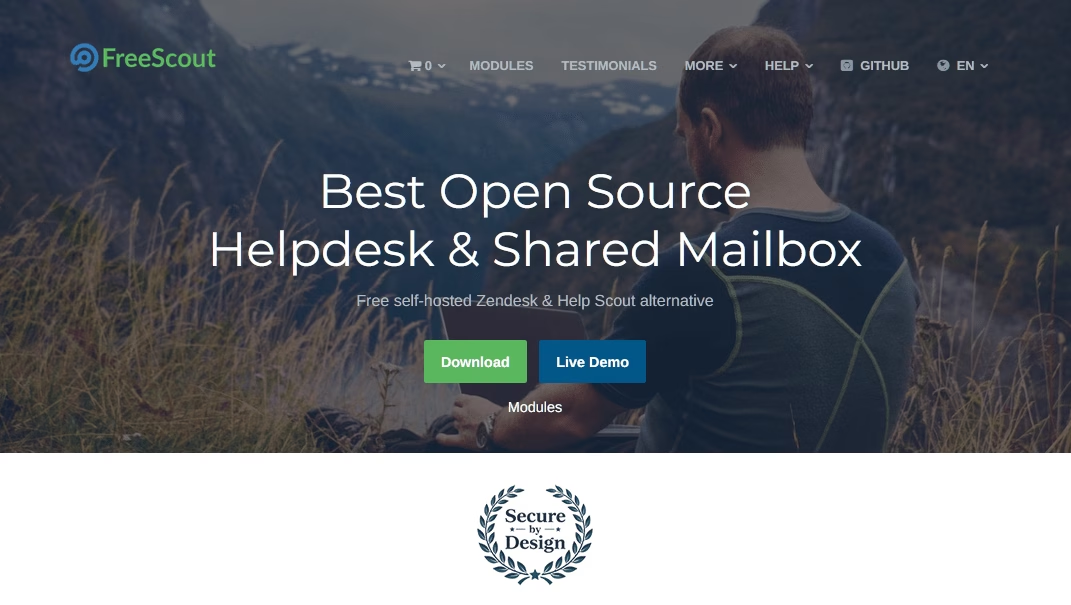
Think of FreeScout as an open-source alternative to Help Scout—and a surprisingly good one at that. It's free, self-hosted, and built with plain PHP, so it runs on standard LAMP hosting.
I set it up on shared hosting in an afternoon, which you can't say about most self-hosted help desks.
FreeScout's interface mimics Gmail closely enough that school staff need essentially no training. It includes collision detection, internal notes, auto-replies, and saved replies, making it a practical help desk option for smaller schools and education teams.
What I Liked:
- Free and open source with no caps on agents, tickets, or mailboxes.
- Runs on plain PHP and MySQL, even shared hosting.
- Staff learn the interface in minutes because it looks like their email.
- Modern OAuth for Microsoft 365 and Google Workspace.
- A module marketplace covers live chat, a knowledge base, WhatsApp, and SAML SSO. Those modules are one-time purchases rather than subscriptions, which I appreciate, though they're not free.
What to Watch Out For:
- Useful add-ons cost money, even though the core is free.
- Hosting, updates, and backups are your problem.
- Support means forums and GitHub, not a support team.
Pricing
Completely free to self-host under the AGPL, with premium modules sold as one-time purchases and third-party managed hosting available from around $9 a month.
7. SysAid
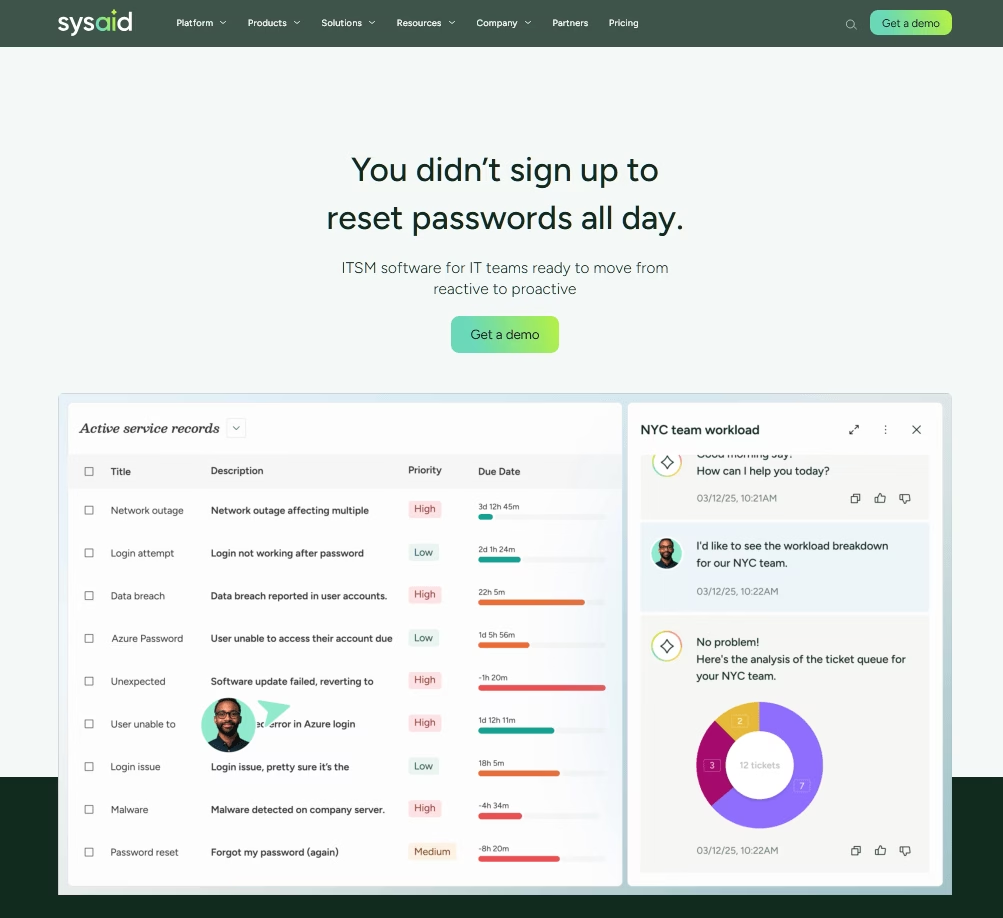
Mid-to-large school IT teams that want real ITSM should have SysAid on the radar. It's been in this business since 2002 and bundles ticketing, asset management, a self-service portal, and workflow automation, with agentic AI now handling categorization and suggested fixes.
The feature I'd highlight is the built-in remote control. Starting a remote session directly from a ticket saves you a separate license and a separate tool, and for a district technician supporting five buildings, that's meaningful.
What I Liked:
- Full ITSM: incident, problem, change, and asset management together.
- Unlimited end users on every edition.
- Remote control built in, launched straight from a ticket.
- Strong reporting that reviewers single out for SLA tracking.
- ISO 27001 and SOC 2 Type 2 certified.
What to Watch Out For:
- Expensive for what it is, relative to Freshservice.
- The interface takes real patience early on.
- Overkill for a small school office.
Pricing
The Professional plan runs about $89 per agent per month with unlimited end users, and Enterprise is quoted custom.
8. Zoho Desk
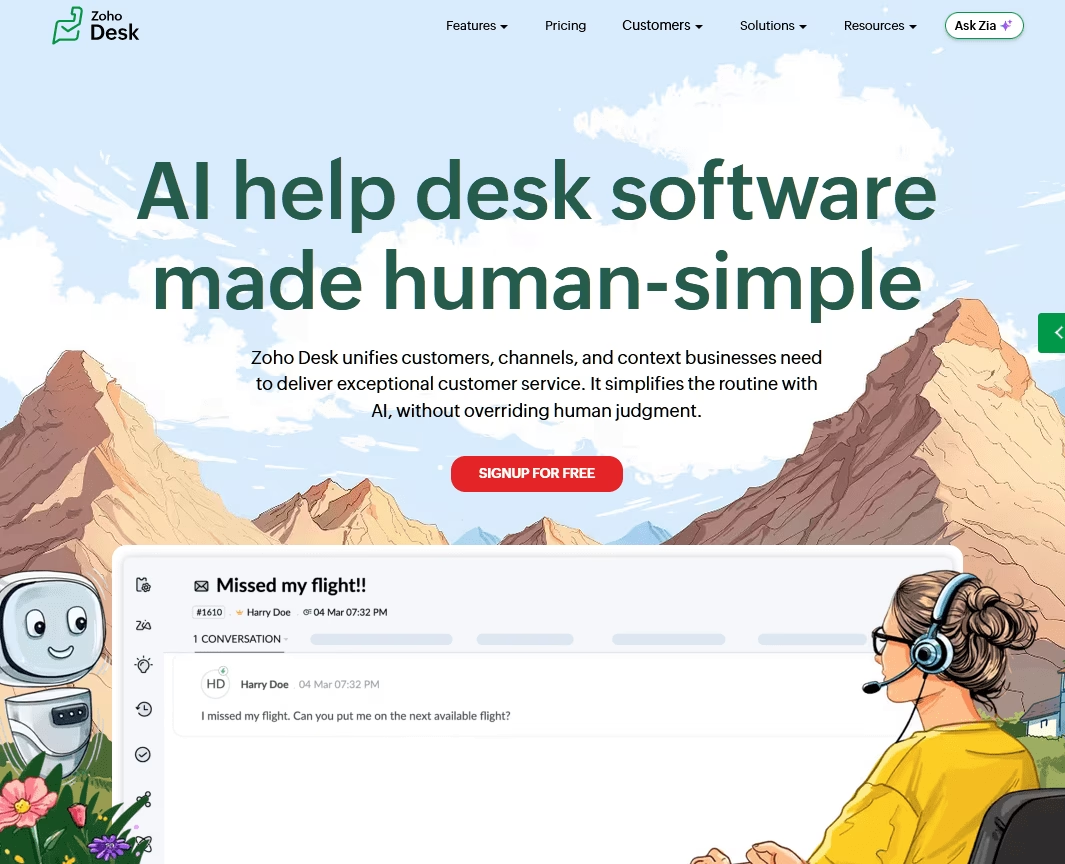
Seven dollars per agent per month for a full multichannel help desk is the kind of number that makes you check the page twice.
Zoho Desk really is that cheap, and the surprising part is how much you get: email, web forms, social, and chat on higher tiers, plus a help center and a knowledge base.
What I Liked:
- Paid plans start at $7 per agent per month, which is close to unbeatable for a real help desk.
- A free plan with no expiry: three agents, email ticketing, help center, private knowledge base.
- Blueprint automation enforces processes so nobody skips a step.
- Email, web, social, and chat in one queue on paid tiers.
- Zia AI: ticket summaries, reply assistance, and sentiment on paid tiers.
- Zoho ecosystem: deep, free CRM integration if you use other Zoho apps.
What to Watch Out For:
- Full Zia AI requires the top Enterprise tier.
- Navigation and configuration take some getting used to.
- Monthly billing costs noticeably more than annual.
Pricing
Zoho Desk offers a free plan that supports up to three agents, then paid plans start at $7, per month on annual billing.
Final Thoughts: Picking Help Desk Software for Your School
For schools looking for a simple and affordable help desk or ticketing system, these are the options I'd consider first for managing day-to-day IT, administrative, and student support requests:
- Create a knowledge base with Heroic KB.
- Use HelpJet to add an AI chatbot that can answer repetitive questions from your knowledge base.
- Use Heroic Inbox to efficiently manage queries that require human intervention.
The right choice depends on your school's size, technical resources, budget, and whether you need a basic help desk, an ITSM platform, or ticketing software designed specifically for educational institutions.
If you have tried any of the above software, do let me know what you think by commenting below.
Further Reading
What Is IT Help Desk? Types, Benefits, How Does It Work
Help Desk Best Practices for IT and Service Desk
7 IT Help Desk Ticket Examples and How to Handle Them Effectively
Proven Service Desk Automation Ideas to Streamline IT Support
What Is Customer Service Desk?
10 Support Ticket Response Templates for Fast, Consistent Customer Service





Leave A Comment?
You must be logged in to post a comment.