15 Best Job Offer Email Templates (Plus How to Write One That Gets Accepted)


The best job offer email templates are short, specific, and legally careful: they confirm the title, pay, start date, and response deadline in plain words, then hand the binding details to a formal offer letter.
You found the right person after weeks of screening, interviews, and debriefs. Now you have one email standing between “verbal yes” and a signed offer, and it's surprisingly easy to get wrong.
Vague numbers, pushy deadlines, and careless phrases like “long-term role” can cost you the candidate or create legal headaches later on.
In this guide, we will provide you with 25 job offer email templates for every scenario. They are professional and clear, and won't make employees think twice about joining.
Heroic Inbox
A simple and affordable helpdesk for small businesses.
Unlimited users and powerful features.
In This Guide
- Why the Job Offer Email Matters More Than Ever
- How to Write a Job Offer Email: Best Practices
- Most Used Job Offer Email Templates in 2026
- 1. Standard Formal Job Offer Email
- 3. Verbal Offer Follow-Up Email
- 4. Congratulations Job Offer Email
- 5. Executive-Level Job Offer Email
- 6. Entry-Level Job Offer Email
- 7. Remote Work Job Offer Email
- 8. Part-Time Job Offer Email
- 9. Contract or Freelance Job Offer Email
- 10. Internship Job Offer Email
- 11. Promotion Offer Email
- 12. Counter Job Offer Response Email
- 13. Rescinding a Job Offer Email (and the Ethics Behind It)
- 14. Delayed Job Offer Email
- 15. Job Offer Acceptance Acknowledgment Email
Why the Job Offer Email Matters More Than Ever
The offer stage used to be a mere formality. Candidates who made it this far usually accepted the offer, and recruiters treated the offer email like a receipt. That world is gone.
Here's what the current numbers tell me about the offer stage:
- Fewer candidates say yes. Gartner found that only 48% of job candidates accepted their most recent job offer in the fourth quarter of 2025, down from 85% two years earlier. Candidates are thinking twice before leaving their current roles and need a stronger reason to move.
- A yes isn't final. In a Gartner survey, 35% of candidates said they backed out after accepting a job offer. Your offer email is the start of the closing process, not the end.
A quick word on that Gartner figure: it measures the share of candidates who accepted the last offer they received.
Since many candidates juggle multiple offers, your per-offer acceptance rate in your applicant tracking system will likely appear higher
The trend still matters though, because it shows that candidates are pickier and more cautious.
How to Write a Job Offer Email: Best Practices
While copying and pasting job offer emails or using a template gets the job done, It's still best to learn a little about what makes these job offers successful.
The email should make the candidate excited to open the attachment and clear on what to do next. The letter holds the details you'd want a lawyer to read.
1. Essential Components of a Job Offer Email
Every job offer email template in this guide includes these core parts. Skip one, and you'll get a reply full of questions (or worse, silence).
- A clear subject line that says “job offer” and names the role
- A warm, personal opening that mentions something specific from the interviews
- Position title and whether the role is full-time, part-time, contract, or seasonal
- State the pay plainly, including the pay period. For example, “$72,000 per year, paid biweekly” or “$24 per hour.”
- FLSA status for U.S. roles (exempt or non-exempt)
- Start date and work location (office address, hybrid schedule, or remote)
- Manager's name and title
- A short benefits summary, with a pointer to the full benefits guide
- Contingencies, such as a background check or reference check
- At-will statement and a note that the attached letter contains the full terms
- A response deadline with a specific date
- Next steps, such as signing the letter electronically
- A real person's contact details so the candidate can call with questions
2. Subject Line Best Practices
Your subject line has one job: tell the candidate this is the offer they're waiting for.
And being clever doesn't help here. Use one of these formats:
- Job Offer: [Position Title] at [Company Name]
- Your Offer from [Company Name]: [Position Title]
- [Candidate First Name], your offer for the [Position Title] role
- Written Offer: [Position Title] (following our call today)
Avoid all caps, emojis in formal offers, and vague lines like “Great news!” or “Next steps.” Fake job offers are a big problem, so a generic or hype-heavy subject line can look like phishing.
Also, avoid putting salary in the subject line. Inbox previews may show up on lock screens and on shared family devices. Keep salary information in the body of the email and the attached letter.
Explore:
Good Subject Lines for Hiring and Recruitment Emails
The Best Interview Subject Lines to Simplify Scheduling
Subject Lines for Business Proposals, Plus Examples
3. Tone and Language Guidance
Match your tone to your company's style, but keep it warm and straightforward. Read your draft aloud. If it sounds like a terms-of-service page, rewrite it.
A few rules I follow:
- Lead with the good news. Put “We'd like to offer you the position” in the first two sentences.
- Be specific with praise. “Your plan for cutting onboarding time impressed the whole panel” beats “You were a great fit.”
- Use simple words for money. Say “your starting salary is $85,000 per year” rather than “your compensation shall be.”
- Keep excitement honest. It's fine to say “we're thrilled,” but skip phrases that sound like guarantees, such as “you'll be with us for years.”
- Write inclusively. Use the candidate's name as they wrote it, skip gendered phrases like “you guys,” and offer to share accommodation details if they need them for the first day.
- Name the flexibility clearly. If the job is hybrid, say which days. If you offer mental health benefits or flexible hours, name them in plain terms and point to the policy, instead of using fuzzy promises like “we care about balance.”
4. Legal Considerations and Disclaimers
This is where good intentions cause real damage. A job offer email can become evidence in a dispute, so every sentence should hold up if a judge reads it later.
At-Will Employment Language
In every U.S. state except Montana, employment is at-will by default. Either side can end the relationship at any time, with or without cause or notice.
Saying this plainly in your offer letter, and pointing to it in the email, helps prevent claims that you promised something more.
Phrases That Can Create Implied Contracts
Courts in many states recognize implied contracts, and those can come from offer letters, handbooks, and even oral promises. Keep these phrases out of your job offer emails:
- “Permanent position” or “permanent employee”
- “Job security” or “your job is secure”
- “Long-term role” or “a career with us for life”
- “You'll only be let go for cause”
- “Guaranteed raise after six months” or “guaranteed bonus”
- “Welcome to the family” (fine in spirit, risky in a legal document)
- Promises about future promotions, titles, or equity grants that haven't been approved
FLSA Classification
State whether the role is exempt or non-exempt from overtime under the Fair Labor Standards Act.
To be exempt, most employees must meet a duties test and be paid on a salary basis of at least $684 per week under the federal rule, and some states set a higher floor (California's minimum for most exempt employees rose to $70,304 a year on Jan. 1, 2026, according to law firm Thompson Coburn).
Contingencies: Background Checks, Medical Exams, and References
Under the Americans with Disabilities Act, employers can't ask disability-related questions or require medical exams before a conditional offer.
After a conditional offer, you can, but only if you require the same exam or questions for all entering employees in that job category.
That's why medical and drug-related conditions belong in a clearly “conditional” offer.
Restrictive Covenants and Repayment Agreements
The FTC voted on Sept. 5, 2025, to vacate its nationwide noncompete ban, so state law now controls whether a noncompete holds up.
Some states also set waiting periods: since Jan. 1, 2022, Illinois has required that employees get 14 days to review certain restrictive covenants.
Mention any noncompete or nonsolicitation agreement in the offer email, attach it, and give the candidate time to read it.
Pay Transparency Rules
A growing number of U.S. states and cities require pay ranges in job postings, and many ban questions about salary history.
In the European Union, the Pay Transparency Directive's transposition deadline passed on June 7, 2026, and it requires employers to tell candidates the starting pay or pay range before interviews.
If your offer lands far below the range you posted, expect pushback and possibly a legal problem.
5. What to Include in the Email vs. the Formal Offer Letter
My rule is simple: the email summarizes, the letter governs. Keep the email short enough to read on a phone, and put anything with legal weight in the attachment.
| Put it in the email | Leave it for the formal offer letter |
|---|---|
| Title, team, and manager | Full job duties and reporting details |
| Pay amount and pay period | Bonus plan rules, commission plan, and equity terms |
| Start date and location | Benefits eligibility rules and waiting periods |
| Short benefits highlights | At-will statement in full and integration clause |
| Contingencies in one line | Detailed background check and drug test terms |
| Response deadline and next steps | Restrictive covenants and repayment agreements |
| A real contact person | Signature block and acceptance language |
6. Timing: When to Send the Offer
The longer a finalist waits after the last interview, the more time a competitor or a counteroffer has to step in.
I aim to call the candidate within one to two business days of the final interview and send the written offer the same day.
Here's the order that works best:
- Pre-close before you offer. Confirm salary expectations, start date, and any competing offers on a short call.
- Call with the verbal offer. Let the hiring manager share the news if possible. It feels personal, and it gives the candidate a chance to react.
- Send the written email within a few hours. Recap what you discussed so nothing gets lost.
- Set a fair deadline. Three to five business days is reasonable for most roles. Senior roles may need a week or more.
- Send mid-week, during business hours.
Pro tip: Unless you have a real business reason, avoid “exploding offers” with 24- or 48-hour deadlines.
7. Common Mistakes to Avoid in Job Offer Emails
These mistakes all cost you trust at a time when you need it most.
- Hiding the number. “We'll go over the package on a call” makes candidates nervous. Put the pay in writing.
- Changing the terms. If the written offer doesn't match the verbal one, the candidate will wonder what else will change.
- Missing placeholders. Sending “Dear [Candidate Name]” is the fastest way to look careless. Proofread every field.
- Attaching ten documents. Send the offer letter and, at most, a benefits summary. Save tax forms and policy handbooks for onboarding.
- Making promises. Future raises, titles, or equity that aren't approved don't belong in an offer email.
- Copying the whole hiring team. Keep the email between the candidate, the recruiter, and the hiring manager.
- Going silent after sending. Follow up within two business days if you haven't heard back.
- Overpromising flexibility. If remote work depends on a manager's approval, say so.

Most Used Job Offer Email Templates in 2026
Copy the ready-made template below, replace the placeholder text with your own details and delete anything that doesn't apply. Then, have your legal team sign off on the at-will and contingency language so that you can reuse it.
1. Standard Formal Job Offer Email
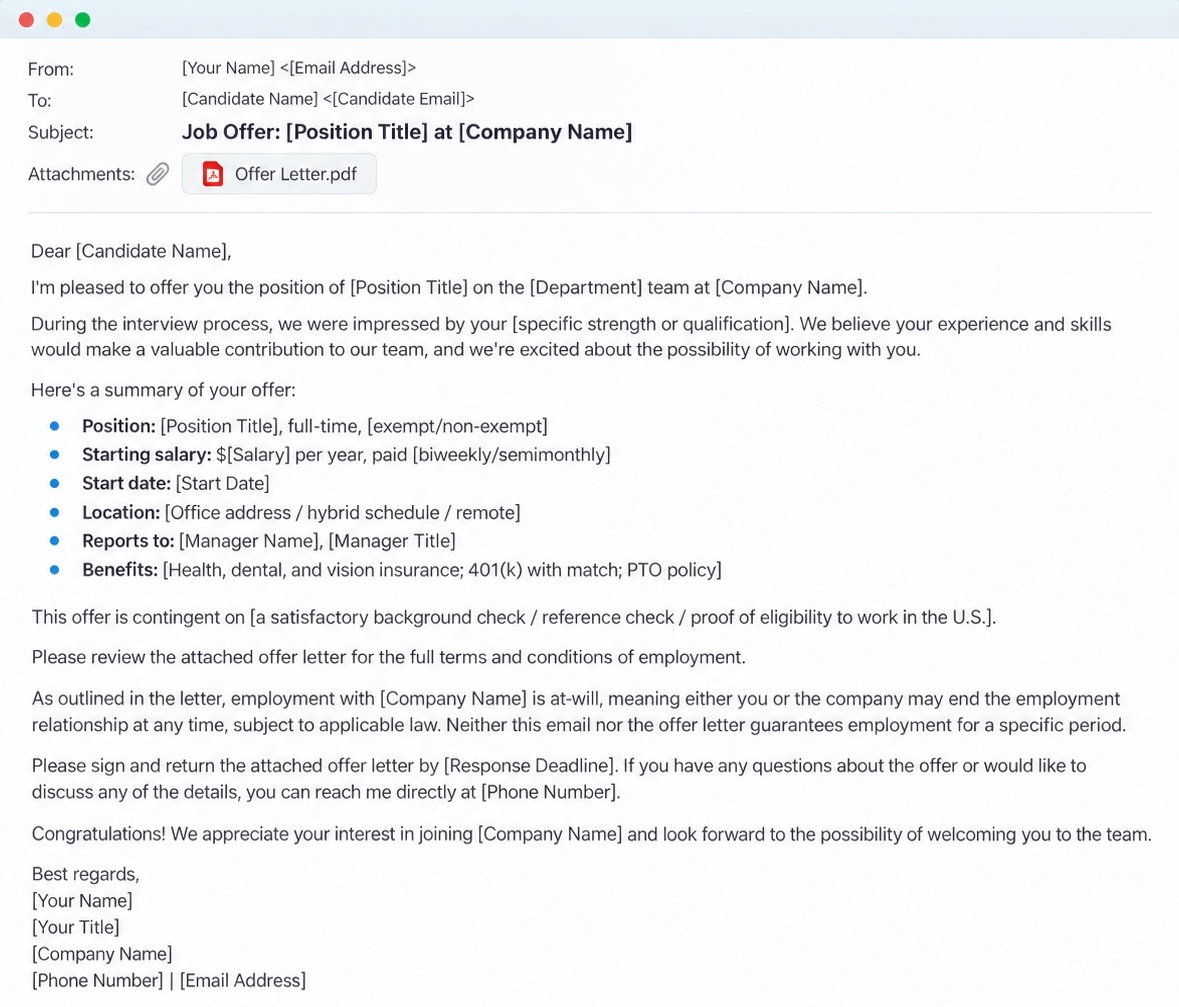
Use this template for most full-time professional roles at well-established companies.
If you only keep one, it's the default offer letter email to candidate sample I'd start with.
Subject: Job Offer: [Position Title] at [Company Name]

Dear [Candidate Name],

I'm pleased to offer you the position of [Position Title] on the [Department] team at [Company Name].

During the interview process, we were impressed by your [specific strength or qualification]. We believe your experience and skills would make a valuable contribution to our team, and we're excited about the possibility of working with you.

Here's a summary of your offer:

- Position: [Position Title], full-time, [exempt/non-exempt]
- Starting salary: $[Salary] per year, paid [biweekly/semimonthly]
- Start date: [Start Date]
- Location: [Office address / hybrid schedule / remote]
- Reports to: [Manager Name], [Manager Title]
- Benefits: [Health, dental, and vision insurance; 401(k) with match; PTO policy]

This offer is contingent on [a satisfactory background check / reference check / proof of eligibility to work in the U.S.].

Please review the attached offer letter for the full terms and conditions of employment.

As outlined in the letter, employment with [Company Name] is at-will, meaning either you or the company may end the employment relationship at any time, subject to applicable law. Neither this email nor the offer letter guarantees employment for a specific period.

Please sign and return the attached offer letter by [Response Deadline]. If you have any questions about the offer or would like to discuss any of the details, you can reach me directly at [Phone Number].

Congratulations! We appreciate your interest in joining [Company Name] and look forward to the possibility of welcoming you to the team.

Best regards,
[Your Name]
[Your Title]
[Company Name]
[Phone Number] | [Email Address]

2. Informal Job Offer Email for Startups

When to use it: You're a startup or small team with a casual culture, and a stiff corporate letter would feel off-brand. Keep the tone loose, but keep the facts tight.

Subject: [Candidate First Name], we'd love for you to join [Company Name]!

Hi [Candidate First Name],

I'll get right to it: we want you on the team!

After your session with [Interviewer Name] on [topic], the whole crew was sold.

Here's the offer in plain terms:

- Role: [Position Title]
- Pay: $[Salary] per year, paid [biweekly]
- Equity: [Number] stock options, subject to board approval and our equity plan
- Start date: [Start Date]
- Where you'll work: [Remote / our office at Address / hybrid]
- Your manager: [Manager Name]

The attached offer letter covers the full details, including benefits, at-will employment terms, and the background check required for new hires.

Can you let me know by [Response Deadline]? Happy to jump on a call if you want to talk anything through, even the boring stuff.

Cheers,
[Your Name]
[Your Title], [Company Name]
[Phone Number]
3. Verbal Offer Follow-Up Email
Use this email template when you just made the offer on the phone, and you need to confirm it in writing the same day.
Subject: Following up on today's call: your [Position Title] offer

Hi [Candidate Name],

Thanks for speaking with me today. It was great discussing the [Position Title] role with you, and I'm glad we could walk through the offer together.

As promised, here's a written summary of what we discussed:

- Starting salary: $[Salary] per year
- Start date: [Start Date]
- Schedule: [Days and hours, or hybrid arrangement]
- Manager: [Manager Name]

Your formal offer letter is attached with the full terms, including benefits and the at-will nature of employment.

Please review the letter and let me know if anything differs from what we discussed on the call. I'll be happy to clarify any details and correct any discrepancies.

Thanks again for your time. We're excited about the possibility of having you join [Company Name].

Talk soon,

[Your Name]
[Your Title], [Company Name]
[Phone Number]
4. Congratulations Job Offer Email
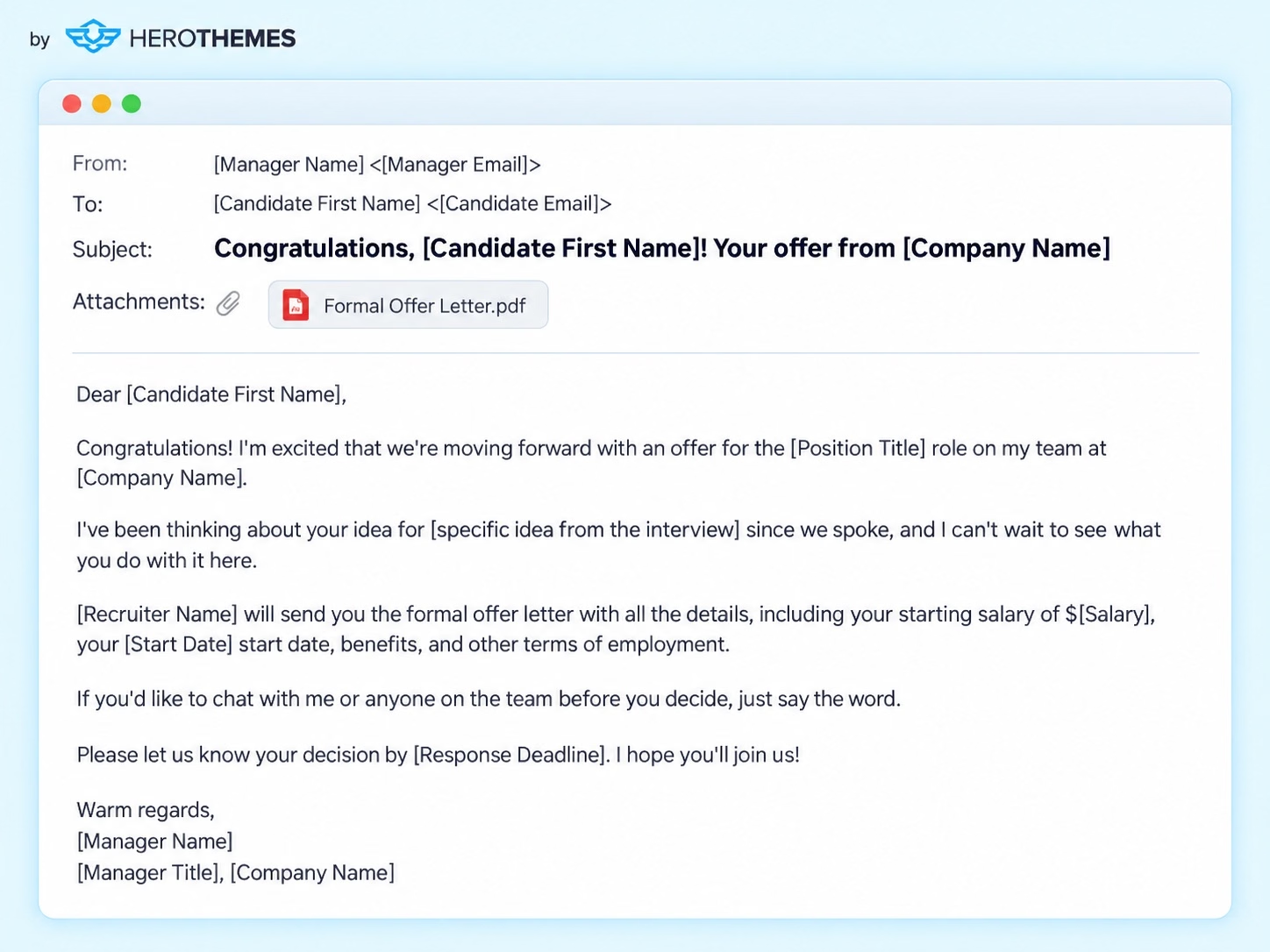
Candidates join managers, not companies. While the formal letter handles the legal side, a personal note from the future boss gives the candidate an emotional reason to say yes.
Subject: Congratulations, [Candidate First Name]! Your offer from [Company Name]

Dear [Candidate First Name],

Congratulations! I'm excited that we're moving forward with an offer for the [Position Title] role on my team at [Company Name].

I've been thinking about your idea for [specific idea from the interview] since we spoke, and I can't wait to see what you do with it here.

[Recruiter Name] will send you the formal offer letter with all the details, including your starting salary of $[Salary], your [Start Date] start date, benefits, and other terms of employment.

If you'd like to chat with me or anyone on the team before you decide, just say the word.

Please let us know your decision by [Response Deadline]. I hope you'll join us!

Warm regards,

[Manager Name]
[Manager Title], [Company Name]
5. Executive-Level Job Offer Email
When to use it: You're offering a director, VP, or C-suite role with equity, bonus targets, and often a negotiated employment agreement.
Subject: Offer of Employment: [Position Title] at [Company Name]

Dear [Candidate Name],

On behalf of [CEO Name] and the board of directors, I'm pleased to extend an offer for you to join [Company Name] as [Position Title], reporting to [Manager Name].

The board was impressed by your vision for [business priority], and we believe your experience leading [relevant achievement] is exactly what this stage of our growth requires.

The proposed terms of your offer are as follows:

- Base salary: $[Salary] per year
- Annual bonus target: [Percent]% of base salary, based on company and individual performance under the [Bonus Plan Name]
- Equity: [Number] [stock options/RSUs], subject to board approval and the terms of the [Equity Plan Name]
- Start date: [Start Date]
- Additional terms: [Severance terms, relocation, or other negotiated items]

The full terms are set out in the attached [offer letter/employment agreement], which governs if anything in this email differs. This offer is contingent on [background check and board approval].

I'd welcome a call to walk through the package and answer any questions.

We'd ask for your decision by [Response Deadline], and I'm happy to discuss timing if you need more.

Sincerely,

[Your Name]
[Your Title]
[Company Name]
[Phone Number]
6. Entry-Level Job Offer Email
Here's a good template for a job offer email to use when hiring a recent graduate or someone in their first professional position.
Subject: Job Offer: [Position Title] at [Company Name]

Hi [Candidate Name],

Congratulations! We'd love to have you join [Company Name] as our new [Position Title].

Your enthusiasm and your project on [topic] stood out during the interview process. We're excited about the opportunity to help you grow your skills and build your career with us.

Here's a summary of your offer:

- Pay: $[Hourly Rate] per hour (or $[Salary] per year), paid every two weeks
- Overtime: This role is non-exempt, which means you'll earn overtime pay for hours over 40 in a week
- Start date: [Start Date] at [Time]
- Location: [Address]
- Your manager: [Manager Name]
- Benefits: Health insurance starting [date], [Number] paid days off per year, and a retirement savings plan where we add [match details]

This offer depends on a successful background check, which we run for all new team members. Your offer letter is attached and includes the full terms, including the at-will nature of employment.

To accept the offer, please sign and return the letter by [Response Deadline].

If you have any questions at all, even ones you think are small, please call or email me. Everyone has questions about their first offer.

We're looking forward to welcoming you to the team!

Best regards,

[Your Name]
[Your Title], [Company Name]
[Phone Number]
7. Remote Work Job Offer Email
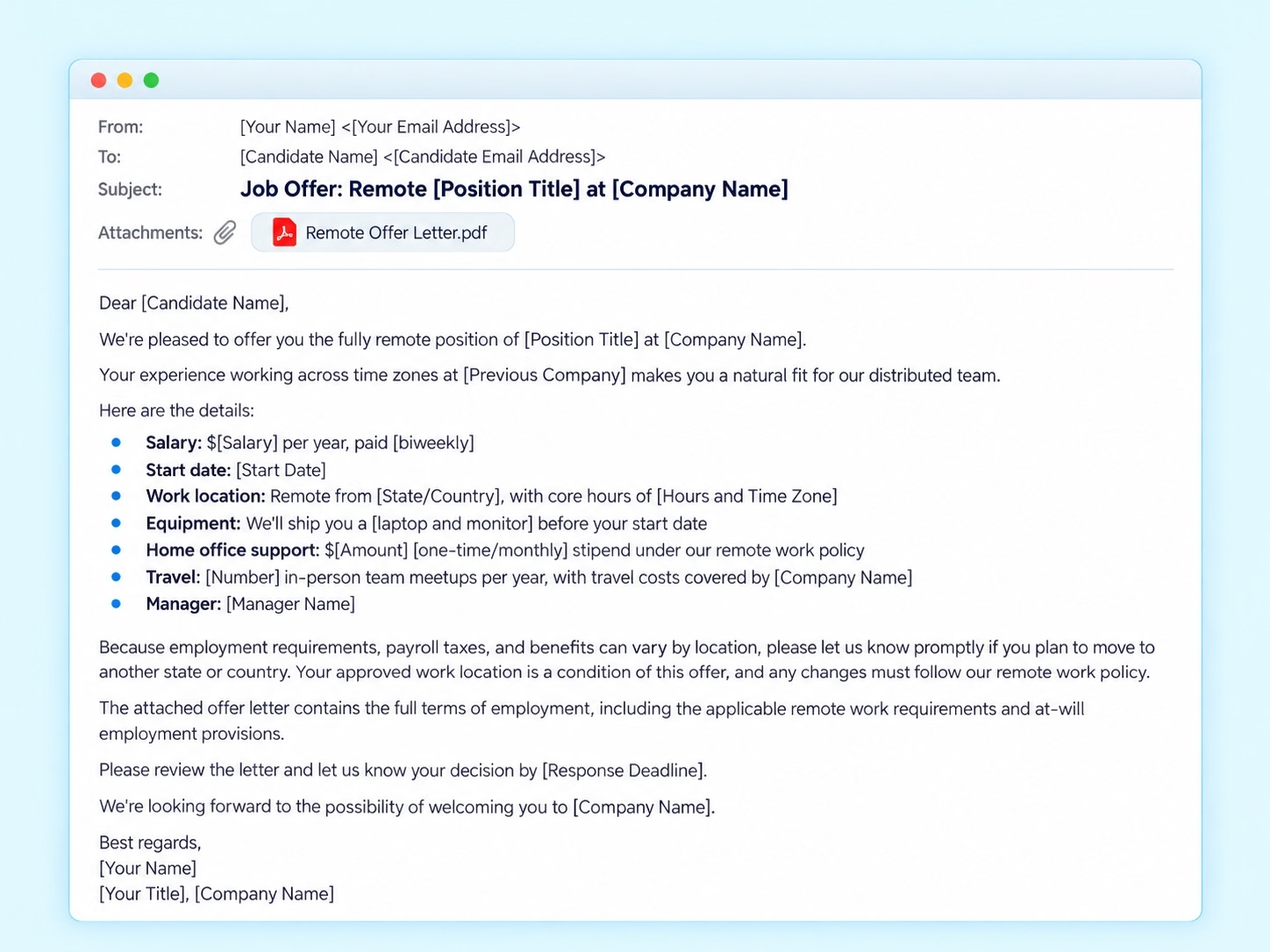
When to use it: The role is fully remote, and the candidate may live in another state, time zone, or country.
Subject: Job Offer: Remote [Position Title] at [Company Name]

Dear [Candidate Name],

We're pleased to offer you the fully remote position of [Position Title] at [Company Name].

Your experience working across time zones at [Previous Company] makes you a natural fit for our distributed team.

Here are the details:

- Salary: $[Salary] per year, paid [biweekly]
- Start date: [Start Date]
- Work location: Remote from [State/Country], with core hours of [Hours and Time Zone]
- Equipment: We'll ship you a [laptop and monitor] before your start date
- Home office support: $[Amount] [one-time/monthly] stipend under our remote work policy
- Travel: [Number] in-person team meetups per year, with travel costs covered by [Company Name]
- Manager: [Manager Name]

Because employment requirements, payroll taxes, and benefits can vary by location, please let us know promptly if you plan to move to another state or country. Your approved work location is a condition of this offer, and any changes must follow our remote work policy.

The attached offer letter contains the full terms of employment, including the applicable remote work requirements and at-will employment provisions.

Please review the letter and let us know your decision by [Response Deadline].

We're looking forward to the possibility of welcoming you to [Company Name].

Best regards,

[Your Name]
[Your Title], [Company Name]
8. Part-Time Job Offer Email
Part-time candidates care most about hours and pay, so those should come first in your email.
Subject: Part-Time Job Offer: [Position Title] at [Company Name]

Hi [Candidate Name],

Thanks for meeting with us last week. We're happy to offer you the part-time position of [Position Title] at [Company Name].

Here's a summary of your offer:

- Pay: $[Hourly Rate] per hour, paid [weekly/biweekly]
- Schedule: About [Number] hours per week, usually [days and times]
- Overtime: This is a non-exempt role, so any overtime hours are paid as required by law
- Start date: [Start Date]
- Location: [Address]
- Benefits: Part-time team members are eligible for [list eligible benefits]

Your schedule may vary based on business needs. We'll share your shifts at least [Number] days in advance, in line with our scheduling policy and applicable law.

The attached offer letter outlines the full terms of employment, including the applicable at-will employment provisions.

Please review the letter and let me know whether you accept the offer by [Response Deadline].

If you have questions about the schedule, pay, or benefits, feel free to contact me at [Phone Number].

We look forward to welcoming you to the team!

Thanks,

[Your Name]
[Your Title], [Company Name]
[Phone Number]
9. Contract or Freelance Job Offer Email
Subject: Contract Offer: [Project Name] with [Company Name]

Hi [Contractor Name],

We'd like to engage you as an independent contractor for [Project Name]. Your work on [specific portfolio example] stood out to us, and we believe your experience is a strong fit for this project.

Here's the proposed engagement:

- Scope: [Brief description of deliverables]
- Rate: $[Rate] per [hour/project/milestone]
- Estimated timeline: [Start Date] to [End Date]
- Invoicing: Submit invoices [monthly/at each milestone], payable within [Number] days
- Point of contact: [Name and Title]

The engagement will be governed by the terms of the attached independent contractor agreement and statement of work. These documents outline the project requirements, deliverables, payment terms, and other conditions of the engagement.

Please review and sign by [Response Deadline], or let me know if you'd like to discuss any changes.

Best regards,

[Your Name]
[Your Title], [Company Name]
[Phone Number] | [Email Address]
10. Internship Job Offer Email
Subject: Internship Offer: [Internship Title] at [Company Name]

Dear [Candidate Name],

Congratulations! We're thrilled to offer you a [summer/fall/spring] internship as a [Internship Title] at [Company Name].

We enjoyed learning about your interests and experience, and we're excited to give you the opportunity to apply your skills, work on meaningful projects, and learn from our team.

Here are the details:

- Dates: [Start Date] to [End Date]
- Pay: $[Hourly Rate] per hour, paid [biweekly]
- Schedule: [Number] hours per week, [days]
- Location: [Address / hybrid / remote]
- Mentor: [Mentor Name], [Mentor Title]
- What you'll work on: [One or two sentences about projects]

This is a temporary, at-will position with a planned end date of [End Date]. It does not guarantee a full-time offer, though strong interns are often considered for future openings.

Your formal offer letter is attached and contains the full terms of the internship. Please review it and confirm your acceptance by [Response Deadline].

We can't wait to work with you!

Best regards,

[Your Name]
[Your Title], [Company Name]
[Phone Number] | [Email Address]
11. Promotion Offer Email
When to use it: You're offering a current employee a promotion with a new title, pay, and responsibilities.
Subject: Congratulations on Your Promotion to [New Position Title]

Hi [Employee Name],

I'm excited to share that we'd like to promote you to [New Position Title], effective [Effective Date].

Your work on [specific project or achievement] has made a real difference to the team. You've demonstrated [specific skill or quality], and we're excited to see you take on greater responsibility in this new role.

Here's what your promotion includes:

- New title: [New Position Title]
- New salary: $[New Salary] per year, starting with the pay period that includes [Effective Date]
- New manager: [Manager Name, if different]
- FLSA status: [Exempt/non-exempt, and note if this is changing]
- Key new responsibilities: [Two or three main changes]

Everything else about your employment stays the same, including the at-will nature of your employment and our current policies.

The attached letter has the full details. Please review the letter and confirm your acceptance by [Response Deadline].

If you'd like to discuss any part of the promotion, feel free to schedule a meeting with me.

Congratulations on this well-deserved next step.

Best regards,

[Your Name]
[Your Title]
[Company Name]
12. Counter Job Offer Response Email
Subject: Re: Your offer for [Position Title]

Hi [Candidate Name],

Thank you for sharing your expectations and being open about what matters most to you. I've discussed your request with [Hiring Manager Name], and we've reviewed what we can offer.

[Choose one:]

[If yes] We're happy to increase your starting salary to $[New Salary]. An updated offer letter is attached.

[If partial] We can't reach $[Requested Salary], but we can offer $[New Salary] plus [extra PTO / a signing bonus of $X / an earlier review date for a merit increase]. An updated letter is attached.

[If no] We've reviewed our pay ranges carefully, and $[Original Salary] is the best we can offer for this role right now. I know that may not be the news you hoped for, and I understand if it changes your decision.

All other terms of the original offer remain unchanged.

Could you let me know your decision by [New Response Deadline]? I'm happy to talk by phone if that's easier.

Best regards,

[Your Name]
[Your Title], [Company Name]
[Phone Number] | [Email Address]
13. Rescinding a Job Offer Email (and the Ethics Behind It)
Rescinding an offer is the hardest email in this guide, and it should be rare. Some states, including New Jersey, allow candidates to sue under “promissory estoppel” if they relied on a firm offer, for example by quitting a job or moving.
If the reason is a background check from a screening company, you must follow the FCRA pre-adverse action process first, so don't use this template for that situation.
Subject: Update on your offer for [Position Title]

Dear [Candidate Name],

I'm writing to follow up on our call today. I'm very sorry to confirm that [Company Name] has to withdraw our offer for the [Position Title] role.

[One honest sentence explaining the reason, such as: "Due to an unexpected company-wide hiring freeze announced this week, we are unable to fill this position."]

This decision has nothing to do with your skills or how you performed in the interview process.

I know this news is hard, especially if you've already made plans based on our offer. [If applicable: "To help with the transition, we'd like to offer [severance-style payment / reimbursement of costs you incurred / placement support]. I'll follow up separately with details."]

If the role reopens, I'd like to contact you first, with your permission. I'm also happy to serve as a reference or introduce you to others in my network.

Please call me at [Phone Number] if you'd like to discuss the decision or have any questions.

I'm sorry that we can't move forward as planned, and I appreciate the time and effort you've invested in our hiring process.

Sincerely,

[Your Name]
[Your Title], [Company Name]
[Phone Number] | [Email Address]
14. Delayed Job Offer Email
Subject: Quick update on the [Position Title] role

Hi [Candidate Name],

I wanted to give you an update rather than leave you waiting. You're our top choice for the [Position Title] role, and we're working on the final internal approvals needed to send a formal offer.

That process is taking a bit longer than we planned. We expect to have an answer by [Date], and I'll contact you by then either way.

I know you may have other conversations going. If anything changes on your end, please let me know so we can see what's possible on our side.

Thanks for your patience,

[Your Name]
[Your Title], [Company Name]
15. Job Offer Acceptance Acknowledgment Email
Subject: Welcome to [Company Name], [Candidate First Name]!

Hi [Candidate First Name],

Welcome to [Company Name]! We're delighted you've accepted our offer, and I've received your signed offer letter.

Everyone on the [Team Name] team is looking forward to working with you. Your first day is scheduled for [Start Date], and here's what to expect between now and then.

Your onboarding timeline:

- [Date]: Background check results (we'll let you know once it clears)
- [Date]: Your equipment ships to [address]
- [Date]: Onboarding paperwork arrives by email
- [Start Date] at [Time]: Your first day, starting with [Manager Name] at [location or video link]

If your offer is contingent on a background check and you haven't received confirmation that it's complete, please wait until we confirm the check is cleared before giving notice at your current job.

[Manager Name] will also reach out before your start date to introduce themselves and answer any questions about your role or first week.

If anything comes up before your start date, I'm here to help.

Welcome aboard,

[Your Name]
[Your Title], [Company Name]
[Phone Number] | [Email Address]
Final Thoughts
A job offer email isn't paperwork. It's the moment a candidate decides whether your company keeps its word, and in a market where fewer people are willing to switch jobs, that moment carries a lot of weight.
If you remember only a few things from this guide, make them these:
- Call first, then email the same day
- Put the number in writing
- Let the letter govern
- Skip the promises
- Keep talking after the yes
If you are interested in similar topics check below guides.
Further Reading
Free AI Job Description Generator (No Sign-Up, Unlimited)
Documentation Writer: Complete Role Breakdown
26 Best Subject Lines for Rejection Emails for Fair, Fast Replies
22 HR Email Templates to Employees (Best Examples)
10 Best HR Chatbots (Tested for HR Support & Recruiting)
Internal Chatbots for Employee Support and Productivity




Leave A Comment?
You must be logged in to post a comment.